




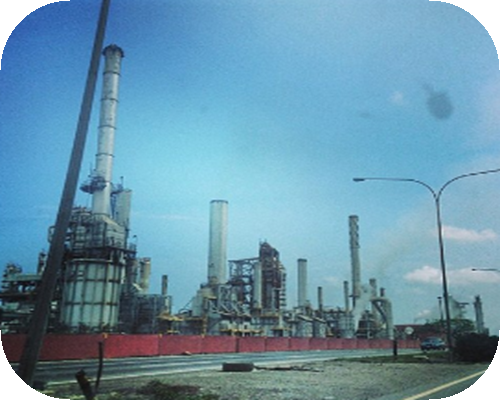
While crude oil gets most of the blame for today’s sky-high gas and diesel prices, the refiners that turn crude into fuel have been quietly making a killing and driving up costs in the process.
According to the U.S. Energy Information Administration, refining accounted for nearly 22% of the price of regular gasoline in May, up from about 17% in April. For diesel, refining made up 34% of the pump price in March and more than 25% in May.
Eight publicly traded independent U.S. refiners are projected to earn a combined $32.4 billion in profits from April through September 2026, compared with $6.8 billion in the same period in 2025, according to the Financial Times. Its Oct. 2 report combines reported second-quarter results with analysts’ third-quarter forecasts. That’s nearly five times as much profit.
That may sound backward. With war disrupting global oil supplies, shouldn’t refiners be struggling like everyone else? Not necessarily.
Refiners make money on the difference between what they pay for crude oil and what they receive for the gasoline, diesel and other products they make from it. The industry calls that difference the “crack spread,” named for cracking, a refining process that breaks larger hydrocarbon molecules into smaller ones.




If a refiner pays $80 for a barrel of crude oil and sells the resulting products — gasoline, diesel fuel, jet fuel — for $100, the refiner’s gross refining spread before operating expenses is $20. Now suppose a fuel shortage drives the value of those refined products to $120 while crude remains at $80. The refiner’s gross refining spread doubles to $40, without producing a single additional gallon of finished product.
Bottom line: Refineries operating at high capacity during an oil shortage can sell fuel into a market where buyers will pay premium prices. War damage to Middle Eastern and Russian refineries has further strengthened U.S. refiners by tightening the world’s finished-fuel supply. Several of those overseas refineries produced significant amounts of diesel fuel.
None of this means refiners are cheating consumers. The refining industry, like oil drilling, is a high-risk, high-reward enterprise that operates on long time and economic cycles. Bringing a new refinery online can take several years and billions of dollars. And robust profits are not guaranteed. In fact, the refining sector suffered a yearslong slump after the federal government imposed automotive fuel-efficiency standards in 1975. During the COVID-19 pandemic, when fuel consumption dropped dramatically, refiners’ profits and stock prices tumbled.
“I don’t see any evidence that refiners are doing anything anti-competitive,” said University of California, Berkeley, economist Severin Borenstein. “They are selling a scarce commodity, which results in large profits. That’s how markets are supposed to work.”
While the federal government has taken steps to reduce fuel costs, those efforts aim to increase available supplies and don’t address the extraordinary margins refiners are earning. For example, the U.S. and other Group of Seven nations recently agreed to release 100 million barrels of oil and petroleum products from emergency reserves.


Chet Thompson, president and CEO of the American Fuel & Petrochemical Manufacturers (AFPM), said his members understand the anger over high fuel prices but that higher margins result from U.S. refiners stepping up to fill the 10% reduction in global refining that has resulted from the wars in Ukraine and the Middle East. He defended refiners’ current high returns as necessary to maintain and expand their facilities.
“The current situation shows the importance of a strong domestic refining sector,” said Thompson. “Things would be so much worse [for consumers] if we weren’t at this current capacity.”
California lost Phillips 66’s Los Angeles refinery in October 2025 and Valero’s Benicia refinery in 2026.
To increase the number of U.S. refineries, he said, the industry needs the government to adopt consistent, long-term energy policies that build investor confidence. The Biden administration’s commitment to electric vehicles and recent state efforts to phase out internal combustion engines did the opposite.
“Why would an investor commit to a new refinery unless they know the project will be around long enough to be profitable?” said Thompson.
Of course, committing to expanded domestic refining capacity won’t ease the economy’s current pain. So what can be done?
“I don’t know that anything can be done now,” said Borenstein. “Except probably not starting wars of choice in the Middle East.”






Randall Bloomquist | INSIDE SOURCES
Recent Articles
CAFMA and Prescott Fire Department Invite Community to Help Shape Wildfire Protection Plan
City of Prescott Invites Community Members to Learn More About Long-Term Water Management Plan
October Gardening Classes Every Saturday at Watters Garden Center
City of Prescott to Host Public Meeting on Willow Lake Management Plan