



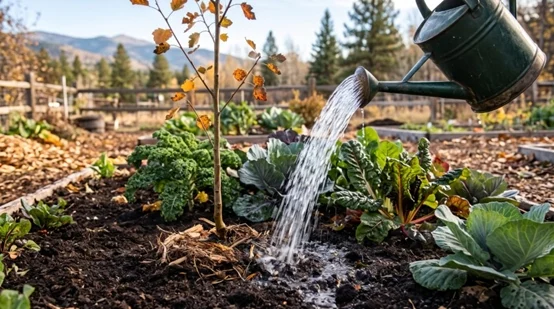
Autumn gardening is a great time to look back on garden successes and disappointments. There’s still plenty of time to do some garden maintenance. Fall gardening takes advantage of cooler temperatures and fewer weeds and insects. Putting the garden to bed is not as hectic as waking it up in the spring, and you will have time to really see how your plants are doing.
Here in the Central Highlands, gardening requires a completely different set of rules to deal with our intense sun, heavy wind, and local wildlife. Big-box store advice will often kill your plants. To help you cheat the heat, and the frost, here are the top five questions I am hearing from local gardeners this November, along with the exact strategies we use to build vibrant, blooming sanctuaries in USDA Zones 5–8.
- How should I adjust my watering schedule? As temperatures drop and daylight decreases, plants require less frequent watering. Water deeply to encourage downward root growth, and let the soil dry to your second knuckle between watering cycles. However, do not mistake dormancy for death. Keep trees and shrubs well-watered through winter. They may look dormant, but they’re still alive. If you have a mild, dry winter, continue watering throughout the season. This is especially true for trees planted this year. A good rule of thumb is to irrigate your landscape with a deep soak every two weeks.
- Is it too late to plant? Not at all. In fact, seasonal urgency is real, and November is an ideal time to plant new trees, cold-tolerant shrubs, and winter vegetables. Getting roots established right now in our Prescott soil guarantees they will be ready to push strong and grow in early spring. If you are planting this month, remember to give those fresh root systems a deep soak immediately after they go into the ground.

- Should I fertilize my plants right now? This is a tricky one. On one hand, November is a rest period for most plants in the Arizona mountains. Fertilizing frost-sensitive plants late in the year with high-nitrogen synthetic blends can spur delicate new growth that is highly susceptible to cold snaps. However, you absolutely should feed the entire yard with a mountain-specific formula like Watters 7-4-4 All Purpose Plant Food. This is especially true for young landscapes. A slow-release, natural food brings out the fall flowers and autumn colors. More importantly, your evergreens will keep their rich green color through winter and grow better next spring. While you are at it, treat your evergreen pine and spruce with Plant Protector. This easy-to-use plant drench keeps the bugs out of your trees and larger evergreens for the year to come.





- How do I protect my plants from freezing? With our first frost quickly upon us in Prescott, gardeners must be prepared. Keep frost cloth or blankets on hand to cover young, tender plants on cold nights, and remember to remove the coverings in the morning so the plants don’t bake in the afternoon sun. Bring tropical plants indoors right away. If you have cold frames for winter use, clean them out now. You won’t want to do it when temperatures hover below freezing, and cleaning them out in the fall makes it more likely you will use them in the spring. If you have a water garden, winterize it by getting ready to turn off the pump and turn on the ice breaker. Don’t forget to cover the water garden with netting to keep falling leaves out and the blue herons from getting in.

- What should I do to prepare my garden beds? Conduct a seasonal cleanup to eliminate weeds, dead summer annuals, and spent vegetable plants. This prevents pests and diseases from overwintering. Cut back most perennials, definitively removing all diseased foliage and disposing of it somewhere other than your compost. Gather herbs and flowers like hydrangea, lavender, and yarrow for drying indoors.
Once the beds are clear, enrich them with Watters Barnyard Manure. Spread a 2-3″ inch layer evenly over any exposed soil. Earthworms, along with the winter’s freeze-thaw cycle, will work this nutrient-rich manure into the soil, insulating roots, retaining moisture, and regulating soil temperature. While you are out there, collect dried seed from your flowers, vegetables, and herbs to save for next year, and be sure to clean, sand, and oil your garden tools before storing them.
There’s my personal list of autumn garden tasks and answers. You have plenty of time, but you should complete the entire list before Thanksgiving.
Until next time, I’ll be helping locals grow better gardens here at Watters Garden Center.


Throughout the week, Ken Lain can be found at Watters Garden Center, 1815 Iron Springs Road in Prescott, or contacted through his website at WattersGardenCenter.com and Top10Plants.com



Ken Lain | Watters Garden Center
Recent Articles
The Prescott Public Library Presents Star Talks: Mapping The Dark Side Of The Universe With The Nancy Grace Roman Space Telescope
Handel’s Ice Cream Brings Fresh, Handmade Ice Cream to Historic Downtown Prescott
Chino Valley Police Dept. Awarded $22,408 in Governor’s Office of Highway Safety Grants
Upcoming Community Meeting for the Effluent and Wastewater Pipelines & State Route 89 Improvements Project – City of Prescott