




Every few weeks, we hear about a collision caused by a foreign truck driver who cannot read English road signs or who didn’t receive proper training because he got his commercial driver’s license from a substandard school. The Departments of Transportation and Homeland Security are cracking down on these fake driving schools and non-compliant states.
Transportation Secretary Sean Duffy announced that his department is removing 110 CDL schools from the federal Training Provider Registry, forcing them to “immediately cease all operations.”
What’s good for the goose is good for the gander. This makes sense for trucks in America; it is good for our waterways.
What may be unfamiliar to most Americans is the Jones Act, which has regulated commerce between U.S. ports for more than a century and effectively applies to domestic shipping the kind of accountability Washington is working to restore on the roads. The act mandates that any cargo transported between U.S. ports must be carried on vessels that are built in the United States, owned by U.S. citizens, flagged in the United States, and crewed primarily by U.S. citizens or permanent residents.
Because of the war in Iran and shipping disruptions through the Strait of Hormuz, the Jones Act has been waived three times in 2026, the longest stretch of its suspension. Notably, the waivers have not lowered gas prices as proponents of ending the Jones Act argue. Instead, the waiver treats our waterways like a daily over-the-road trucking license for unskilled and ill-prepared long-haul truck operators. And although we haven’t had a maritime accident due to the Jones Act waiver, we should apply the same reasoning to American waterways before it’s too late.






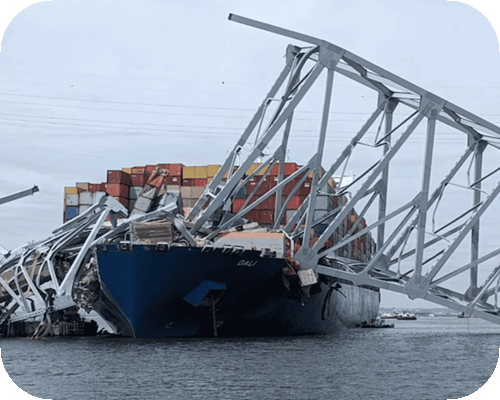
We need to look back no further than the Francis Scott Key Bridge collapse in Baltimore in March 2024 that claimed six lives to recognize the danger that providing foreign ship operators with unfettered access to American waterways poses to our domestic shipping industry and economy. The resilience of local officials in restoring shipping lanes quickly and managing new traffic patterns does not diminish the economic and environmental damage wrought on the region for the rest of the decade while the Key Bridge is rebuilt.
In May, the FBI announced federal charges against the operator of the container ship, Synergy Marine’s Singapore- and India-based operations. They were charged with conspiracy to defraud the United States, failing to inform the Coast Guard of a known hazardous condition, misconduct or neglect by ship officers causing death, false statements and obstructing an agency proceeding.
Jimmy Paul, the special agent in charge for the FBI’s Baltimore office, cut to the chase when announcing the charges. “The collapse should never have happened,” adding, “As alleged … those who were responsible for the ship’s operation deliberately cut corners at the expense of safety.”
This is starting to sound familiar.
In America, to be a mariner requires real training and certification. It includes background checks and is granted only to citizens and permanent residents who learn the importance of skilled and safe operations on our waterways. The Jones Act waiver bypasses these protections for foreign ship operators.






The Baltimore bridge disaster showed us that some foreign operators can cut corners that Americans expect and demand of our workforce and employers. Whether we are talking about commercial truckers or foreign ship crews, we do not know the level of their training or knowledge unless or until disaster strikes. A semitruck driver can wipe out a family; a ship poorly maintained and managed could take lives and cause billions of dollars in damage. By increasing foreign tanker traffic between U.S. ports in unfamiliar waterways through Jones Act waivers, we increase the likelihood of a deadly incident.
We should end the Jones Act waivers to ensure our waterways are just as safe as our roadways. U.S.-certified mariners are not only better trained and highly skilled, but their knowledge exceeds that of international competitors, and their ships and crews are compliant with all American safety and labor standards. We do not have those assurances from foreign operators.


Holly Smith | INSIDE SOURCES
Recent Articles
CAFMA and Prescott Fire Department Invite Community to Help Shape Wildfire Protection Plan
City of Prescott Invites Community Members to Learn More About Long-Term Water Management Plan
October Gardening Classes Every Saturday at Watters Garden Center
City of Prescott to Host Public Meeting on Willow Lake Management Plan