



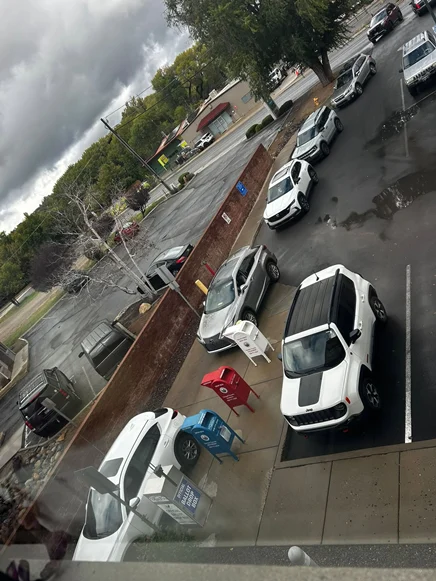
Photo: Cars lined up to the drop box located at the County Building
It appears that “yes” was the word of choice on election night for Arizona voters.
That’s the takeaway from the Grand Canyon State’s slate of statewide propositions, with five of the eight measures appearing set to pass on Wednesday afternoon. They include a measure related to preventing transgender athletes from competing on girls’ or women’s teams.
Other measures seeing success are a ban on per-mileage taxes, a cap on grocery taxes, border security and a ban on cameras to catch motorists speeding or running through red lights.
The three that appear to be dead in the water are measures surrounding diversity, equity and inclusion programs, as well as voter ID requirements and requiring school districts to devote 60% of their budgets to “direct instructional spending.”





While the Secretary of State’s Office continues counting the ballots, The Center Square has the latest results.
Proposition 141
Arizonans had a chance to prevent the state from implementing a per-mileage tax in the future at the ballot box this year, with the state’s electorate appearing to reject efforts to ban such surcharges in the future.
Four states currently have a per-mileage tax: Hawaii, Oregon, Utah and Virginia. Others like California, Massachusetts and Michigan have considered them.
The federal government considered experimenting with a per-mileage tax pilot program in 2021 as part of the Infrastructure Investment and Jobs Act to see if it could help sustain the Federal Highway Trust Fund.
As of Wednesday afternoon, “yes” votes had a slim lead on Prop. 141, with 50.7% of the ballots. The race, in which the “yes” votes led by just 1.4%, hasn’t been called.


Proposition 142
A proposition aimed at kneecapping what’s left of Arizona’s diversity, equity and inclusion programs went down by a big margin.
Proposition 142 aimed to prevent taxpayers from supporting race-based policies as a condition for admission at a state university or when it came to graduation, hiring or contracting.
The proposition also aimed to bar public institutions in Arizona from mandating their employees complete mandatory DEI training, make statements supporting DEI or talk about race relations at all.
On Tuesday evening, Arizona’s voters sent a clear message that DEI policies would not be changed, with 59.93% of voters choosing “no” on Prop. 142.
Proposition 144
A proposition that opponents warned would kneecap Arizona’s preferred method of voting was defeated on Tuesday night.
Proposition 144, which would require voter ID and ban noncitizens from voting or contributing to state and federal political campaigns, failed early, with 56.81% of voters choosing “no” on the measure. The proposition was also designed to give voters the option of having their ballot counted at their chosen voting location.
Opponents of the proposition, such as U.S. Sen. Mark Kelly, D-Tucson, said it would kill mail-in voting, which has been the chosen method for more than 80% of voters in the state in 2020, 2022 and 2024.
“This is the most common way to vote in Arizona. Over 80% of people vote by mail,” Kelly said of Prop. 144. “I think it’s no coincidence that we’re in a midterm election year and that the most popular way to vote in Arizona is under attack.”


As of Wednesday afternoon, “no” on Prop. 144 held a commanding lead, with 53.2% of voters opting against the beefed-up ID requirements.
Proposition 316
An effort to cap Arizona’s grocery taxes at 2% looks like it will sail through on Wednesday, with 61.38% of voters choosing yes on Prop. 316.
The proposition aimed to prevent local governments across the state from charging more than 2% in sales tax on food products at stores. Arizona does not impose a sales tax on unprepared food products, though many incorporated municipalities around the state do.
Arizona’s three biggest cities – Phoenix, Tucson and Mesa – are not among those that have a grocery tax on their books.
Proposition 317
An effort to designate Mexican drug cartels as terrorist groups on this year’s ballot appears set to pass with voters in Arizona.
Proposition 317 aimed to direct the Arizona Department of Homeland Security to do what it can within its authority to crack down on them, with 57.03% of voters choosing yes on the measure as of Tuesday night.
It appears the ballot proposition is on its way toward being cleared by voters, ushering in what supporters consider a new era in border security.
Proposition 318
A ballot proposition to further restrict transgender athletes apparently is passing.
Proposition 318 sought to expand the state’s existing ban on transgender athletes from competing in female sports by requiring athletic associations that sponsor interscholastic or intramural competitions to classify teams by biological sex.
Currently Arizona is one of 27 states with a law on its books stopping transgender athletes from playing in female sports.
As part of Prop. 318, schools and athletic associations would be prevented from letting transgender girls use female locker rooms, bathrooms or private spaces that were considered “integral to athletic engagement.”
Arizona voters sent a message that the state’s current policy did not go far enough, with yes votes holding a 58.9%-to-41.1% edge for Prop. 318 on Wednesday afternoon.
Proposition 319
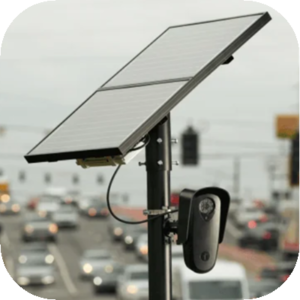
An effort to ban speed and red-light cameras passed, with Prop. 319 clearing through the 2026 cycle, with 61.05% of voters choosing yes on the measure as of Wednesday afternoon.
The initiative sought to force Arizona cities or towns that use speed and red-light cameras to win voter approval during the next election cycle to continue doing so, while ones that did not have either could not add them in the future.
Proponents of the proposition, such as Arizona state Sen. Wendy Rogers, R-Flagstaff, argued such an act would protect Arizonans’ privacy in the future.
“This is about Arizonans who intuitively want their freedom to navigate the roadways without having their picture taken against their will,” she told Arizona’s Family. “That’s wrong. It violates the Fourth Amendment.”
Arizona’s voters sided with Rogers, with Prop. 319 breezing through.
Proposition 320
The eighth and final statewide proposition on this year’s ballot concerned school budgets, with Prop. 320 requiring K-12 districts to spend at least 60% of their money on direct instructional spending.
The measure, which would only apply to districts with more than 7,500 students or in counties with more than 500,000 residents, appeared set to fail, with 51.38% of voters rejecting the measure.
While the proposition did not define what “direct instruction” was, it did include language about having the Arizona Auditor General’s Office provide that definition in the future.
Up north, the city of Flagstaff sought a third sales tax increase in 11 years, with Prop. 404 bumping the rate by 0.5%.
The proposition, which would fund the city’s public safety apparatus, came two years after city voters approved Prop. 488, which upped the local rate from 2.281% (where it stood since 2019) to the current 2.486%. Before that, Flagstaff’s sales tax increase in 2015 (to 2.051%) and 2008 (to 1.721%).
The goal of the measure was to generate an additional $18.2 million per year in tax revenue over the next decade-and-a-half, with proceeds going toward fire and police operations.
As of Wednesday afternoon, voters in the heart of Coconino County appear to be cool on the measure, with 53.62% saying no so far.



Christopher Boan | The Center Square
Recent Articles
The Prescott Public Library Presents Star Talks: Mapping The Dark Side Of The Universe With The Nancy Grace Roman Space Telescope
Handel’s Ice Cream Brings Fresh, Handmade Ice Cream to Historic Downtown Prescott
Chino Valley Police Dept. Awarded $22,408 in Governor’s Office of Highway Safety Grants
Upcoming Community Meeting for the Effluent and Wastewater Pipelines & State Route 89 Improvements Project – City of Prescott