




I am not opposed to autonomous vehicles. I understand why they appeal to many disabled people, including people who cannot drive themselves or for whom a human driver creates problems. I think autonomous transportation could be genuinely useful. I just want it to include me.
The District of Columbia is considering legislation that would establish a framework for commercial autonomous-vehicle deployment, yet the proposal does not require passenger AVs to accommodate people who must remain in their wheelchairs. That means D.C. could authorize a new transportation system I might never be able to use physically, while risking the truly accessible system already in place.
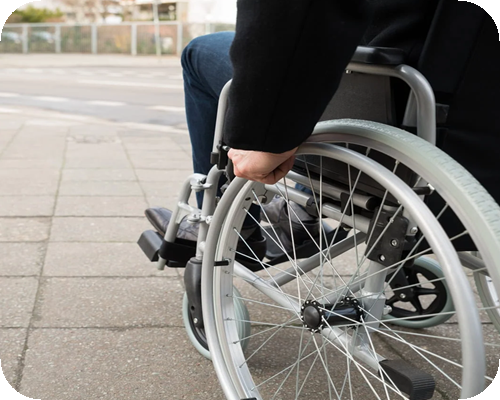
I rely on a custom prescription Permobil M3 Corpus complex power wheelchair. Mine weighs 388 pounds as configured. It does not fold. I cannot transfer out of it into an ordinary passenger seat and stow the wheelchair somewhere else. When I travel by car, the vehicle has to accommodate me while I remain seated in the chair, with enough room to enter, maneuver and travel safely.
Lots of other disabled people are in the same position. We cannot just climb into the autonomous vehicles now rapidly rolling. Somehow that physical reality vanishes when companies such as Waymo are discussed as though they occupy some special category of exciting futuristic technology rather than the much more ordinary category of passenger transportation.
Taxi and rideshare companies are expected to carry disabled passengers safely and equitably. Autonomous-vehicle companies should not be exempt from the same basic principle merely because software has replaced the driver. A robotaxi is still a taxi in the part of the transaction that matters to the passenger: you request transportation, a vehicle arrives, and it takes you somewhere.





If someone can request an autonomous trip, an accessible vehicle needs to exist within that actual service architecture, rather than requiring a wheelchair user to enter a separate system with different availability, waits, geography or reliability.
Until wheelchair-accessible AVs exist, that could mean sending a human-driven wheelchair-accessible vehicle when a wheelchair user requests an AV trip.
If another passenger can open an app, request an autonomous vehicle and leave 10 minutes later, I should not have to use another company, make an advance reservation, wait much longer, travel within a smaller service area or depend on another person to help me complete the trip.
Disabled people should be able to travel spontaneously and alone. We go to appointments and dinner dates. Meetings run late. Plans change. Independence isn’t meaningful if the disabled passenger has to organize her life around a transportation system that everyone else can summon on demand.
We have already run this experiment with another transformative transportation system. Disabled Americans fought throughout the 1970s and 1980s for accessible public buses after Section 504 became law. Lift-equipped buses existed, but transit operators resisted the argument that they had to provide them, while transportation systems kept developing around inaccessible vehicles and separate paratransit. The ADA imposed stronger vehicle-accessibility requirements in 1990.




Now Waymo says developing a wheelchair-accessible autonomous vehicle is not its responsibility. We should not spend another generation allowing a transportation system to crystallize around inaccessibility and then try to fix it later.
The AV industry also needs to be more precise with the word “accessible.” Waymo has described accessibility as fundamental to its mission and created a Waymo Accessibility Network involving disability organizations, but that framing selectively emphasizes the disabilities its existing vehicles can accommodate while wheelchair users who cannot transfer remain excluded. Some disabled people may find Waymo’s current service genuinely useful, but wheelchair users who need to remain seated in their chairs still cannot take the ordinary autonomous Waymo trip offered to other passengers.
There’s another major problem. Waymo is using disability access as part of the public case for autonomous transportation while a substantial group of disabled passengers remains physically excluded from the vehicles themselves.
Words like accessibility and mobility have specific meanings in the disability community. They are not tech buzzwords. A blind passenger and a full-time complex-power-wheelchair user can both be disabled and have completely different transportation requirements. If some disabled passengers cannot physically enter the vehicles, the fleet is not broadly accessible and should be regulated accordingly until it is.
D.C. can address this now. Autonomous-vehicle operators should be required to deploy a purpose-built wheelchair-accessible AV by a specified date, with intermediate requirements showing actual progress toward deployment. The deadline should reflect vehicle-development and manufacturing realities without allowing accessibility to remain permanently several years away.
Once vehicles have been designed, purchased, deployed and integrated into a transportation system, inaccessibility becomes the system. Accessibility for autonomous vehicles in D.C. cannot wait 20 more years. D.C. should preserve accessible transportation while requiring AVs to become accessible, too. I do not want AVs banned or anyone to lose independence. I want more people to have it. Including me.




Kelsey Brickl | INSIDE SOURCES
Recent Articles
Freaky Foot Tours Presents the Prescott Haunted History Tour
November Voter Publicity Pamphlet has Error in it
CAFMA and Prescott Fire Department Invite Community to Help Shape Wildfire Protection Plan
City of Prescott Invites Community Members to Learn More About Long-Term Water Management Plan