
In 2024, Donald Trump led a party of Reagan-era conservatives, tech-savvy New Righters, and disaffected Democrats to victory. Come 2028, the GOP presidential nominee must retain and expand this base. Dan Greaney and Greg Bovino, who are either exploring or mounting candidacies, are already showing why their approaches don’t meet the moment.
Neither Greaney nor Bovino brings meaningful political experience. Greaney, a Harvard-educated television writer, predicted a Trump presidency in a 2000 episode of “The Simpsons.” Bovino rose through the U.S. Border Patrol, overseeing operations as commander-at-large in Minneapolis before his removal. He lasted four months in the role.
Both seek to turn a flash-in-the-pan moment into national momentum. Yet, their thin records lead them to adopt beliefs on American rule of law that misunderstand federalism and lessen their credibility.
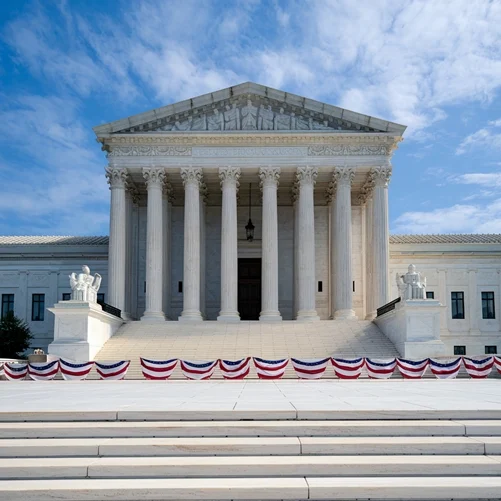
Greaney believes that American “democracy is under attack … demolished by a rogue Supreme Court, by a lawless president.” His platform? Balloon the Supreme Court from nine to 13 members to root out “extremists” and “Trump administration lawlessness.”
His diagnosis collapses under scrutiny. Since 2025, the courts repeatedly blocked Trump’s agenda, from tariffs to election integrity, and even symbolic name changes. Since Trump assumed office, federal judges halted administration initiatives through injunctions or restraining orders in 150 instances. Contginuing litigation against Trump now exceeds 320 active cases, with some state attorneys general suing the administration almost weekly.






Greaney’s worries that the current executive is rudderless and unchecked are disconnected from legal reality. Massive permitting reform, small-business protection, and voting-rights bills, among others, linger in Congress, slowing the executive’s governing abilities. Thus, when opportunities to secure deliverables and wins for the GOP base arise, Trump must get crafty by using executive orders, emergency powers or creating leverage.
The executive must operate, as Federalist No. 70 argues, with “decision, activity, secrecy and dispatch.” Trump acknowledges this founding principle, as he pushes against institutional limits to acts within a system of contested authority rather than outside law altogether. Expanding the court would weaken the executive’s dynamism, and further and unnecessarily empower other branches of government.
If Greaney dislikes the Supreme Court as is, his proposal would only intensify the issue.
Bovino wants his own justice, demanding “men fight back” against a rigged system. He scorched the administration’s “weak” immigration policy and accused leaders of “watering down” mass deportations. Bovino sought to deport 100 million people while in control — an implausible number that estimates suggest would illegally include U.S. citizens.
However, Bovino’s court history demonstrates that hard-power operatives can score both setbacks and victories.






In October 2025, a federal district judge ordered Bovino to testify and report to court daily over alleged use-of-force issues in Chicago. The 7th Circuit intervened, pausing Judge Sara Ellis’ decision, saying she overstepped her supervision.
Ellis then imposed a broader injunction limiting Border Patrol crowd-control and related tactics, which the 7th Circuit also stayed. This March, the 7th Circuit vacated the injunction in the Chicago use-of-force case, ending most lower-court constraints. Bovino celebrated the ruling online: “Chicago efforts vindicated!!! Well done.”
A separate ruling allowed operations in Minneapolis to continue, too.
These outcomes, considering Bovino’s admission of lying and purported evasion of questions under oath, favored him. If anything, the potential candidate and his lawyers proved that the district’s remedies were an overreach, and that mattered more for the republic’s survival than any of his reported misconduct. Power is constrained, but those constraints are contestable in court. He can’t bank on rebellion if the judiciary can still render, as Bovino once said, “creative and innovative solutions” to a problem.
Whether one views the judiciary as fair or unfair toward the second Trump administration, its core function remains intact. Greaney and Bovino must acknowledge that power remains subordinate to law, evidence and reasonable judgment. This process keeps the presidency and its critics within the same constitutional order and promotes the ordered liberty necessary for the American project’s flourishing. Governance is a tool for good, and understanding that message is the first step in getting their campaigns off the ground.