

As the old joke goes, “A woman had two sons. One went to sea as a sailor; the other became vice president of the United States. And neither was ever heard from again.”
Let’s face it, there are few memorable figures among the 49 men and one woman who’ve held our nation’s #2 job. Being a second banana isn’t the kind of gig that gets your face on a postage stamp. You’ve always got to be careful to never outshine the boss. Which is why most Veeps have been dull entities who spanned the vast gulf between vanilla and French vanilla.
Yet there was one exception, and a remarkable one at that. Not only were his many accomplishments praiseworthy, but he also did something nobody else in his position has ever done. This is his forgotten story.
Of all the characters who’ve appeared on the stage of American history, Charles Dawes is among the most interesting.
His father had been a Union general in the Civil War. His brothers all became prominent businessmen and political leaders; his sisters married well. But Charles outshone them all.






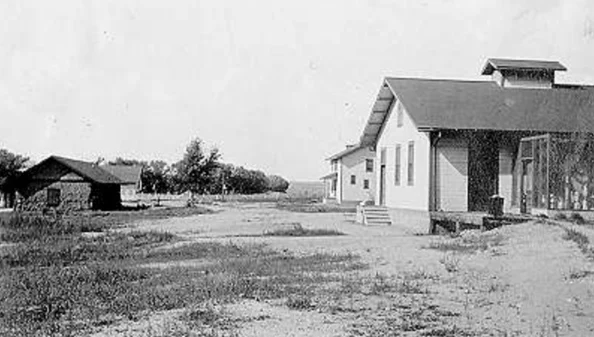
After law school, he began practicing in Nebraska, where he struck up a friendship with rising army officer John J. Pershing, who even suggested they open a law practice together. (Dawes didn’t think that was a good idea.)
Moving to Chicago, he became president of two gas-light companies. Managing William McKinley’s 1896 presidential campaign in Illinois paid off when Dawes was appointed the Treasury Department’s Comptroller of the Currency. The young man was clearly headed to the big leagues.
He suffered a terrible loss in 1912 when his son drowned in a lake, prompting Dawes to open homeless shelters and donate a college dormitory in his memory.
When America entered World War I, he dutifully enlisted and, thanks to help from his old pal Pershing, who now commanded U.S. forces, he quickly became a brigadier general. His logistical and staff services were eventually rewarded with the Distinguished Service Medal, a major military honor. (During a post-war Senate investigation into wartime spending, an exasperated Dawes erupted, “Hell and Maria, we weren’t trying to keep a set of books over there. We were trying to win a war!”)
President Warren Harding named him the first director of the Bureau of the Budget (forerunner of today’s Office of Management and Budget). In 1923, he chaired a group that came up with the Dawes Plan, enabling American banks to pump money into cash-strapped Weimar Germany’s flimsy economy. For that, he received the Nobel Peace Prize in 1925.






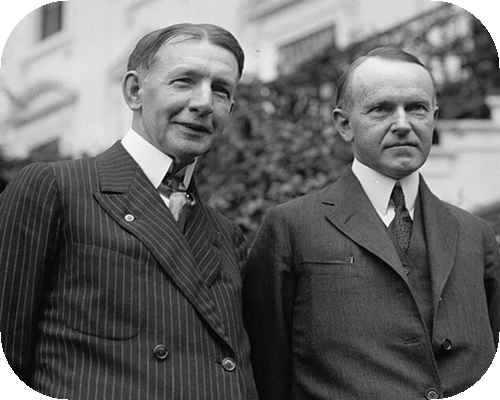
By then, he was vice president under the notoriously taciturn Calvin Coolidge, whose successor, Herbert Hoover, gave Dawes a prime diplomatic plum: ambassador to Great Britain.
All in all, a solid resume. Yet Dawes also holds a distinction no other vice president or Nobel Peace Prize laureate can claim.
He was the only one to ever write a hit song.
No, really, he did!
Dawes was a self-taught musician. An avid pianist and flutist, he loved composing scores in his spare time. One piece in particular from 1911 stood out. He gave it the ho-hum title “Melody in A Major.” While not as catchy as, say, “Play That Funky Music White Boy,” the music did move people. A piano-and-violin version enjoyed mild popularity in 1912, as did a different orchestra arrangement in 1921. Still, it was missing something.
The piece lay idle for several decades until songwriter Carl Sigman came along and instantly spotted the problem. The tune needed one simple thing: words.
Sigman’s remarkable career stretched from the Big Band era (he penned “Pennsylvania 6-5000” for the Glenn Miller Orchestra) into modern pop (writing the lyrics for “Where Do I Begin?”, the wildly successful theme song from 1970’s “Love Story”).
He put pen to paper in 1951 and, when he was finished, renamed the song “It’s All in the Game.” Singer Tommy Edwards recorded it as a rock-and-roll ballad and, when it came out in August 1958, it shot straight up to No. 1 on the Billboard Hot 100, the R&B Best-Seller list, and the UK Singles Chart. It racked up another important distinction as well; Edwards became the first Black entertainer to reach No. 1 on the Hot 100.


“It’s All in the Game” became a standard over the years, covered by everyone from Nat King Cole to Merle Haggard.
Alas, Dawes never got to see his creation’s biggest success. He had passed away seven years earlier at the age of 85.