


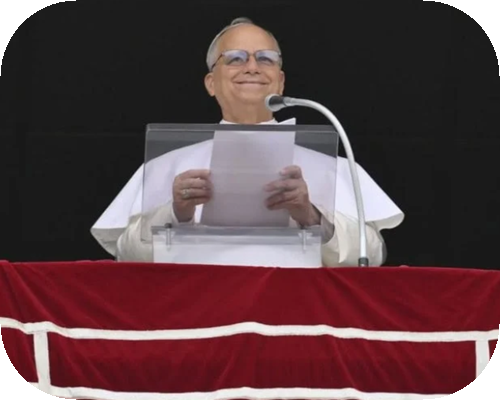
How can we safeguard the human person in the time of artificial intelligence? Pope Leo XIV offers two broad pathways in his new encyclical, Magnifica Humanitas.
Its most persistent warning is that AI is putting too much power into the hands of too few people, especially those who design AI programs and run the AI giants. In particular, it cautions that “control over platforms, infrastructure, data and computing power does not rest with States.”
The typical American’s biggest AI worry is massive, permanent job displacement. Seventy-one percent express this fear. With this concern in mind, the encyclical suggests that “one viable path is … to establish social criteria for innovation. Here, every introduction of automation and AI should be accompanied by verifiable measures to protect the employment, retraining and participation of workers.”
This path — a more powerful state and economic planning — heads into a dangerous swamp. Would the State, which already has immense powers, use these additional powers wisely? Could it? Does it have the necessary knowledge? Does it have moral bearings?
The idea of the State needing to greenlight new technology and work out a job-protection plan seems especially unworkable. Imagine that before ChatGPT could be introduced to the unsuspecting world, a committee of bureaucrats was tasked with assessing its effect and that OpenAI or a government agency had to offer a plan whereby employment would be protected. Even if everyone were to act in good faith, they would simply have no way of knowing the technology’s effect.





The impact of innovations isn’t known in advance. It is discovered that the innovation is spontaneously adopted, adapted and evolves.
For example, suppose companies were told they couldn’t adopt AI technology until they made promises not to downsize their workforces. With the moratorium in place, many employees would start using the technology without their supervisors’ consent. They would become more productive, and those not adopting the technology might start losing their jobs anyway. In addition, startup firms, including those in other countries, would quickly enter the market and wrest business away from the businesses that didn’t have permission to adopt the technology. Or would we need to block all the startups — and foreign competition — too?
Imagine that a law like this was in place 100 or 50 or 25 years ago. What would the American economy look like today? At best, it would be pretty rusty. At worst, it would be completely bogged down.
If a law like this had been adopted, the entire world would be much poorer now.
Although, the encyclical mentions “growing” and “widening” inequality and suggests that we always need to wait for the benefits of economic growth and new technologies to reach the poor, the record shows that global inequality (as measured, for example, by the Gini ratio) has fallen substantially since 2000 and is now the lowest it has been since 1880, when rich countries pulled ahead of poor ones.




Likewise, the greatest reduction in extreme poverty in the history of the world has occurred since 1990 — when China and other developing countries turned toward markets and new technologies transformed poor countries.
The other path forward in Magnifica Humanitas seems much more viable. It recognizes that the power in the AI game lies mostly in users’ hands, not in AI firms or the State. “Let us invest in education, beginning with ourselves! We all need to learn how to engage with the digital world in a human way.” We especially need to educate our children about how to lead human lives.
Pope Leo explains that “when AI systems present themselves as neutral and objective, they end up reflecting and reinforcing the stereotypes or ideological bias of their designers and developers.” We need to educate ourselves about these biases. For example, Google AI reports that “most AI designers and computer scientists do not believe in a personal God.”
Pope Leo’s sober plan for facing the uncertainty arising from AI (and earthly life in general) also includes lots of prayer and living a devout life. I’m surprised that he didn’t include the advice that my parish priests occasionally offer — digital fasting.
Consciously pulling ourselves away from the constant allure of the electronic world may be the best way to ensure that we get the benefits of AI without suffering the worst of its potential costs — our dehumanization. Good advice, even if you aren’t religious.