




The promise of government-provided healthcare and other social programs without premiums, deductibles or copays has a powerful appeal. However, politicians promoting Democratic Socialism rarely answer a key question: What will it actually cost, and how will we pay for it?
To understand what these promises mean for middle-income families, we need to look beyond the sales pitch and examine the numbers.
Democratic nominee for the Senate in Michigan, Abdul El-Sayed recently said about universal healthcare that “it is guaranteed health insurance from cradle to the moment you pass away. It comes without premiums or co-pay for deductions. It guarantees you care when you need it. This is a level of security we have never known in the United States.”
Any country that has adopted some version of national healthcare proves it does not work as the advocates promise. They are paid for through substantial taxes, there are fees and co-pays required for service, and long waits for many of the medical procedures.
What does it cost and how will it be paid? Advocates argue that taxing the rich can pay for these programs. However, studies have repeatedly shown that the additional revenue from taxing high-income earners would fall far short of covering the costs. Even substantially higher taxes on the wealthy cannot close a funding gap of this magnitude, leaving middle- and lower-income taxpayers to shoulder much of the burden.




Sweden provides a useful example. Its tax structure includes a 32 percent tax on wages to fund pensions and other programs, a minimum income tax rate of approximately 32 percent, and a rate of 52 percent on income above $62,000. In addition, Sweden has a value-added tax that averages 19 percent on consumption, along with gasoline taxes that are $2.70 per gallon higher than those in the United States. These taxes are essential to fund the programs that politicians often hold up as “free.”
For the $70,000 employee in Sweden, an employer pays $17,000 in pension and other taxes. The employee pays about $17,000 in income taxes on wages. Value-added tax would add $6,500, plus an additional $1,350 in gasoline taxes, compared with what Americans pay. That brings the total tax to $41,850.
For the same employee in the United States, Social Security taxes would be about $8,000, Medicare taxes, about $1,800, and medical insurance $1,000, assuming the employer provides it. Income taxes on wages would add about $3,500, and state sales taxes would add $3,900. That brings the total to $18,200.
Based on this comparison, if we wanted the same programs Sweden offers, we would need a tax structure that raises comparable revenue; that would mean paying an additional $23,650 in taxes.
The United States is not paying for the programs it already has. For 2026, the gross domestic product was $32.4 trillion. Expenses were $7.4 trillion, and revenue was $5.4 trillion, leaving a $2 trillion deficit. Covering current expenses would require a 37 percent tax increase or a 27 percent spending cut. According to a Cato Institute study, adding Democratic Socialist programs would add at least $7 trillion to expenses, and tax revenue would need to rise to 266 percent of current levels.


Economies grow fastest and the standard of living improves much more rapidly when the government is limited, and taxes cover the cost of government. Adding “free” programs will cause the government to increase dramatically and will slow growth remarkably. This is a fact that is proven repeatedly in the real world, not a theory.
There is nothing inherently wrong with choosing a different model of government, as Sweden has done. That choice has real financial consequences, and middle-income families deserve to know them. Then we can make an intelligent choice.
Before embracing the promise of Democratic Socialism, voters should ask whether these benefits are worth the added cost, and whether we’re prepared to pay for them. Americans should make that decision with their eyes open, not based on empty promises that gloss over the important facts about cost and how to pay for them.
Remember, there is no free lunch, so quit looking for it.


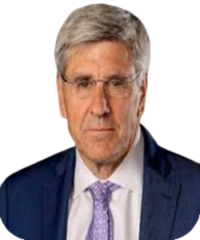
Les Rubin | INSIDE SOURCES
Recent Articles
Freaky Foot Tours Presents the Prescott Haunted History Tour
November Voter Publicity Pamphlet has Error in it
CAFMA and Prescott Fire Department Invite Community to Help Shape Wildfire Protection Plan
City of Prescott Invites Community Members to Learn More About Long-Term Water Management Plan