

The newly appointed director of the Centers for Disease Control and Prevention, Dr. Erica Schwartz, made federal priorities clear during her recent confirmation hearing: “Abortion surveillance is absolutely a critical component of what the CDC is currently doing.” She assured members of Congress she would ensure that states weren’t “hiding abortions” under the auspices of “emergency care.”
Abortion defenders were quick to condemn Schwartz’s comments, while others pointed out that the post-Roe v. Wade landscape affects not only elective abortions but also women facing miscarriages and obstetric emergencies.
Discussions about abortion and related policies will undoubtedly continue. But the issue of “abortion surveillance” should ring alarm bells even for those who disapprove of abortion. Schwartz’s comment clearly revealed a broader trend in state surveillance, government overreach and “surveillance cronyism.”
Consider the context of “abortion surveillance” specifically. The CDC has collected data on abortion since 1969 as part of its monitoring of health trends. Since 2022 and the overturning of Roe, however, that system has come to a screeching halt. The agency stopped publishing its annual reports and no longer accepts state data.
This is puzzling, considering that Schwartz suggested certain states are concealing abortion services. How can she know if the agency she now heads is not accepting state data? This sudden lack of data and supposed “concealment” establishes something important, however—a political pretext for federal surveillance.




Federal surveillance is not new, but today’s scale and scope are unprecedented. Biometric screening is pervasive across federal, state and local agencies, which share this information. Recently, the FBI announced the development of predictive AI models designed to detect potential criminal activity before it takes place.
Even the laziest researcher can find many examples of abuse or the potential for abuse. Consider the North Carolina police officer who used license-plate surveillance technology to stalk her boyfriend’s ex-wife, or a recent case in Texas in which officials, under the auspices of a missing-person report, surveilled individuals with out-of-state license plates to investigate an abortion. In Wisconsin, police tracked a resident crossing state lines to purchase marijuana legally.
This systemic creep from local policing to federal overreach is part of a broader pattern. Historically, government surveillance was rarely about public safety; rather, it was a weapon against individuals and groups that presented “problems” for the political elite.
Consider COINTELPRO’s infiltration of civil rights and anti-war groups during the Cold War or the post-9/11 targeting of Muslim Americans. Today, under directives like National Security Presidential Memorandum 7 (NSPM-7), that machinery is being modernized. Operating behind a shroud of state secrecy and weak congressional oversight, federal law enforcement has been directed to target left-leaning advocacy groups and civil liberties organizations under the guise of preventing “domestic terrorism.”
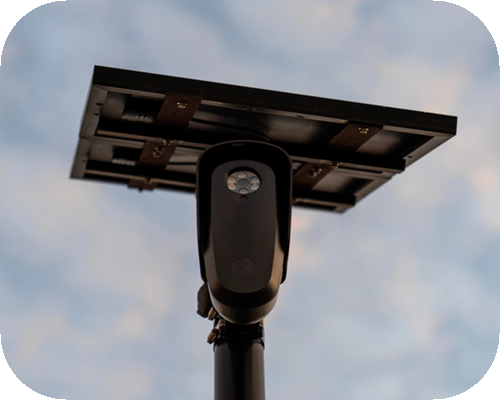
What makes this apparatus uniquely dangerous, however, is the integration of new technology and private industry with the machinery of the state. Private data brokers and tech firms, like Flock Safety, Palantir and Babel Street, have gladly cozied up to Uncle Sam, enticed by his promises of lucrative contracts; they couldn’t be more willing or able to provide their technologies and data to the government. Others have become unwilling appendages of the national surveillance state—via court order or other means.


While some are quick to say, “If you have nothing to hide, you shouldn’t have a problem,” this mentality misses the point. As these examples illustrate, what government officials consider objectionable behavior—and what they surveil—is subject to change. During the COVID-19 pandemic, going to church meant your movements were subject to state surveillance. Today, seeking reproductive care; being a possible immigrant, union member or Romani; or exercising one’s First Amendment rights are all apparent rationales for gross violations of civil liberties.
Reversing the slide into universal surveillance is difficult but not impossible. The courts must continue to affirm that the types of technological surveillance that government agencies wield so brazenly are unconstitutional. Legislators at the state and federal levels must do what is in the best interests of their constituents: protect their liberties rather than actively or passively allow their erosion.
Above all, citizens must actively protect their own rights. Recent protests against the widespread use of Flock cameras show that when the people speak up, policymakers are forced to listen.