
Arizona housing conversations lately tend to focus on affordability, taxes, and new development reshaping towns across the state. Prescott’s population has been rising since 2020, and the city still draws older adults thanks to its four-season climate and manageable living costs.
But for many local families, the most pressing housing question isn’t about market trends or zoning. It’s deeply personal: when a spouse passes away, who actually gets the house? The answer isn’t always as simple as people expect.
Does the Surviving Spouse Automatically Get the House?
Most residents assume a surviving spouse simply takes over the family home. That’s often true in straightforward first marriages, but the outcome depends heavily on how the property is titled. Marriage by itself doesn’t automatically transfer property in Arizona.
Arizona is a community property state. Under those rules, community property is generally divided in half when one spouse dies. The surviving partner keeps their 50 percent share, while the deceased spouse’s 50 percent passes according to a will, a trust, or, if none of those exist, state intestacy laws.
Why the Deed Matters More Than Most Families Expect




Title wording and family structure can drastically change what happens next, especially in second marriages or blended families, which are common in a retirement-friendly community like Prescott. If a deceased partner had children from a previous relationship, the surviving spouse keeps their own half of the community assets, while the deceased partner’s half may legally pass to those children instead.
Think of the deed as the rulebook. Without the right language, assumptions about who inherits the home can fall apart quickly.
What If the Home Is Held as Community Property With Right of Survivorship?
This specific deed structure offers one of the easiest paths for married Arizona homeowners. It’s common among long-married Prescott couples who updated their estate plans years ago during a routine visit with an attorney or a community legal workshop. The wording on the deed acts as a legal shortcut that saves everyone a lot of hassle.
Holding a home’s title as community property with right of survivorship means that if one partner passes away, the other immediately inherits 100% of the property automatically, with no need to go through probate court. To complete the transfer, the surviving spouse typically only needs to record a certified death certificate and a survivorship affidavit with Yavapai County.


Not all community property includes survivorship language, so checking the deed is a step worth taking. If you’re not sure what your deed says, ask an estate planning attorney to review it.
What If the Home Is in a Living Trust?
A properly funded living trust usually keeps the family home out of probate court. If the house is titled in the name of a revocable living trust, the trust document directly controls what happens after the first spouse dies. In most cases, the surviving spouse continues managing the trust property without interruption, which is one of the main reasons couples set up trusts in the first place.
However, the legal defaults of a joint trust under state law are strict. Pursuant to Arizona Revised Statutes Section 14-10602(B)(1), a joint trust consisting of community property can only be amended by the joint action of both spouses. Because joint action is impossible after a death, the surviving spouse generally cannot change the trust’s joint terms or alter where the deceased spouse’s share of the property goes, unless the trust agreement explicitly overrides the statute and grants them that specific authority.
Avoiding probate doesn’t eliminate all legal responsibilities. If you’re trying to understand the exact limits of a joint trust after a loss, you can read more about how trust terms and trustee duties restrict a survivor’s actions in this comprehensive guide to What Happens to a Trust When a Spouse Dies in Arizona.
Avoiding Probate Doesn’t Mean Avoiding All Paperwork
Many residents misunderstand the trust administration process. A trust avoids court, but it still requires someone to manage it correctly, and the “no probate” part is just the beginning.
A surviving spouse acting as trustee may need to locate the trust document, confirm the home was actually transferred into the trust, identify beneficiaries, maintain records, handle ongoing property expenses such as taxes and insurance, and follow the trust’s instructions before selling or re-titling the home.


What If the House Is Still in One Spouse’s Name Only?
This scenario presents the highest risk of probate. If the deceased spouse owned the Prescott home individually, the house usually becomes part of their probate estate. That assumes no trust, survivorship deed, or automatic beneficiary mechanism is in place.
Whether the surviving spouse ultimately receives the house depends on several factors, including whether a valid will exists, how the home was classified, and whether children from another relationship are involved.
Why Blended Families Face the Most Surprises
In a first marriage with only shared children, outcomes usually stay straightforward. But adult children in blended families are often shocked to learn that title structure overrides their assumptions, and a surviving spouse might not inherit the deceased partner’s entire interest automatically, even if everyone thought that was “the plan.”
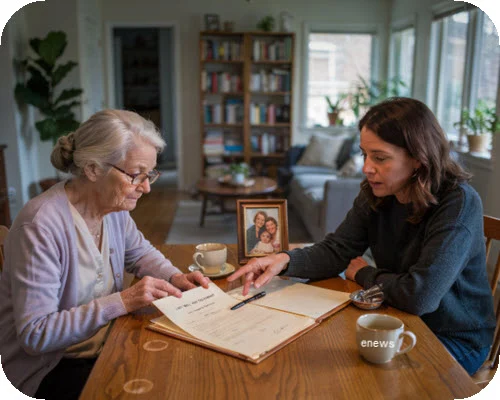
This issue frequently surfaces when adult children help a surviving parent sort through files after a funeral, only to discover the house was never properly planned for. The family might then face unexpected court delays, divided ownership, or conflicts that nobody saw coming.
What’s the Difference Between Probate and Non-Probate Transfers in Arizona?
Probate property includes assets titled in the deceased person’s name alone, with no automatic transfer mechanism. Non-probate property includes assets that pass directly through a trust, a survivorship title, or a beneficiary designation.
A home qualifies as non-probate if it sits in a trust or features survivorship wording on the deed. It generally becomes probate property if it remains titled solely in the deceased spouse’s name.
Why This Question Deserves Attention Before a Crisis
In Arizona, who gets the house depends less on assumption and more on the title. A trust-owned home and a survivorship deed typically avoid probate court. By contrast, a property held in one spouse’s name alone will likely require legal intervention, adding time, expense, and stress at the worst possible moment.
For Prescott families hoping to keep a surviving spouse secure in their home, these distinctions matter more than most people think. Checking the deed and updating estate plans before a crisis occurs can prevent major confusion later and give clearer direction to the adult children who’ll eventually help them navigate whatever comes next.
If the home is titled as Living trust, the usual outcome at the first death is that Trust terms control; surviving spouse may keep managing as trustee. The next step is to Usually no.
If the home is titled as Community property with right of survivorship, the usual outcome at the first death is that Surviving spouse usually becomes sole owner. The next step is to Usually no.
If the home is titled as One spouse’s name only, the usual outcome at the first death is that Home may become part of probate estate. The next step is to Often yes.