

In an era of digital signatures, 20-page contracts, and “just looping in legal,” there’s a growing sense that something simpler has been lost. Not everywhere, though. In pockets of North America, business is still built on reputation, relationships, and the kind of trust that doesn’t need a paper trail. Advance Funds Network, a business financing company, wanted to explore where that mindset still holds, surveying 3,005 small business owners to uncover the towns and communities where people believe a handshake can still carry real weight, and whether, in 2026, your word alone is ever enough.
Specifically, the survey asked small business owners whether people in their town are still more likely to do business on a verbal agreement or handshake than through written contracts. Based on their responses, these are the top 3 “handshake economies” in Arizona:
#55. Cottonwood
Cottonwood’s handshake economy likely comes from its position as a practical, relationship-driven hub in the Verde Valley. It has the feel of a place where local businesses, trades, wineries, tourism operators, retirees, ranching influences, and long-time residents all cross paths. In that kind of setting, reputation does not stay tucked away inside a Google review; it moves through conversations, referrals, and repeat dealings. A handshake here feels like a local trust signal — especially when people want to know who is dependable.
#76. Payson
Payson’s handshake economy feels shaped by mountain practicality. It is far enough from the Phoenix sprawl to have its own local rhythm, with trades, tourism, retirees, ranching influences, outdoor businesses, and long-time residents all feeding into the same trust network. In a place where people often ask around before hiring someone or choosing a service, reputation becomes a shortcut. A handshake here feels less like nostalgia and more like a quiet test of dependability.
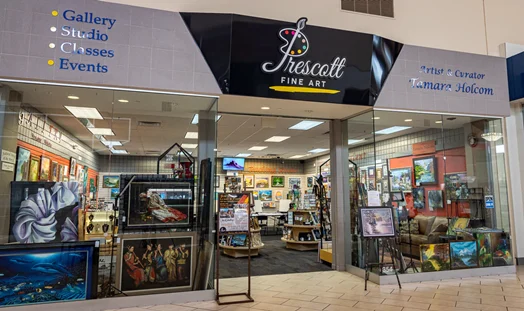
#77. Prescott Valley
Prescott Valley brings a newer-growth version of the handshake economy. It is not frozen in small-town time; it has expanded quickly, drawing in families, retirees, contractors, healthcare workers, retailers, and service businesses. But that growth can actually make trust more valuable. When a community is changing, people lean harder on referrals, neighbor recommendations, and local names that have already proved themselves. In Prescott Valley, the handshake works because people still want reassurance before they commit.





The survey also explored what small business owners actually look for before trusting someone in business, and the results suggest that relationships still matter more than paperwork. Nearly a quarter said having done business with someone before is the biggest trust factor, while 22% pointed to a person’s reputation in the local community, and 20% said a personal recommendation from someone they trust matters most.
When asked what would make them nervous about a handshake deal, respondents were most concerned about what happens if things go wrong:
- 27% said they would worry about having no legal protection.
- 20% feared the other person changing their mind.
- 18% worried about damaging the relationship if a dispute arose.
- 15% said they would be concerned about the work not being completed properly.
- 11% pointed to disagreement over price or payment.
- 9% said they might simply forget exactly what had been agreed.
The findings also reveal why many believe handshake deals have become less common. The biggest reason, cited by 32% of respondents, was simple: people are less trusting now. A further 20% blamed scams and fraud for making people more cautious, while 11% each pointed to fear of being sued, business becoming more complex, and online transactions making business less personal.
Still, the handshake is not dead. Small business owners said it can still be enough in certain low-risk, community-based situations:
- 21% said a handshake is still enough for a favor between local business owners.
- 20% said it works for borrowing or lending tools or equipment.
- 20% said it can still apply to a small business partnership.
- 17% said selling goods locally.
- 14% said hiring a local tradesperson for a small job.
- 9% said letting someone pay later.
One of the clearest findings was the role of small-town reputation. A combined 85% of respondents agreed that reputation travels faster in small communities, with 58% strongly agreeing and 27% somewhat agreeing.






When asked for the biggest sign that someone is trustworthy in business, 30% said they are known for keeping their word. Another 20% said being recommended by several locals was the clearest sign, while 16% pointed to being in business for many years.
The survey also asked what feels most frustrating about modern business compared with the old-fashioned “your word is your bond” approach. The most common answer was lack of personal relationships, chosen by 23% of respondents. Others pointed to long contracts at 17%, legal jargon at 16%, online-only customer service at 15%, payment delays at 14%, and too many emails at 12%.
“The handshake economy has not disappeared; it has just become more selective,” says Irving Betesh, CRO of Advance Funds Network. “Small business owners clearly understand the value of contracts, but they also know that trust is often built long before anything is signed. In smaller communities, especially, reputation still acts like a form of credit. People remember who follows through, who pays on time, who treats others fairly, and who keeps their word. That kind of local trust can be incredibly powerful, particularly for small businesses that depend on repeat relationships and word-of-mouth.”