


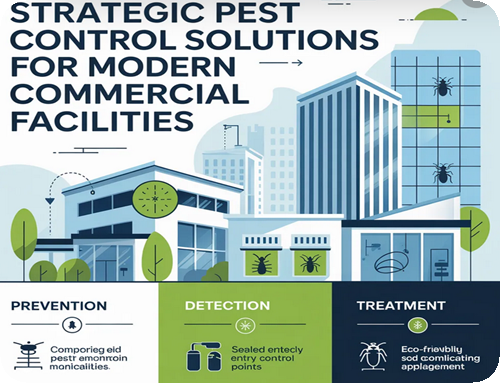
Pest invasions are not just an annual nuisance, but a serious business risk for organizations in numerous sectors. Whether in food production facilities, warehouses and office buildings or medical clinics, pests can impact work flow, deteriorate property value, threaten sanitation levels and undermine public trust. The stakes are even higher in the case of infestation hotspots such as commercial premises – which not only have to manage risks at scale, but also meet stricter compliance standards and face greater public scrutiny.
The nuances of pest control in commercial environments must be properly considered, for long term prevention, compliance with regulations and brand protection.
The Changing Landscape of Commercial Pest Risks
Commercial settings have changed dramatically over the last ten years. Higher population densities, globalized supply chains, climate change, and extended business hours all lead to increased pest pressures. Large buildings with complex systems of multi-level structures, shared ventilation, loading docks, and food service areas provide multiple entry points and harborage sites.
Warehouses receiving international cargo may inadvertently introduce invasive species. Food service establishments, such as restaurants and hotels, are constantly at risk from food waste and high foot traffic. Healthcare facilities must maintain high levels of sanitation, where even small infestations can pose serious compliance risks. Office buildings, while appearing to pose low risk, may harbor hidden problems in break rooms, storage areas, and utility spaces.
With increasingly complex commercial properties comes the need for increasingly complex pest management strategies. A single treatment or recurring spray is no longer adequate. Effective, long-term pest management requires a systems-based approach that takes into account building design, human behavior, environmental factors, and business operations.





Routine inspections and tenant education play a major role in prevention.
From Reactive Response to Preventative Strategy
Traditional extermination models focused on eliminating visible infestations after they occurred. While immediate treatment remains important, modern facilities benefit far more from preventative strategies that address root causes. This shift emphasizes early detection, environmental modification, and ongoing monitoring.
Preventative pest control begins with a comprehensive facility assessment. Technicians evaluate structural vulnerabilities such as cracks in foundations, gaps around utility lines, improperly sealed doors, and moisture-prone areas. Identifying these weaknesses allows property managers to implement exclusion techniques that physically block pest entry before infestations begin.
Sanitation protocols also play a critical role. Proper waste management, routine cleaning schedules, and secure food storage reduce attractants that draw pests indoors. Landscaping adjustments, such as trimming vegetation away from buildings and correcting drainage issues, further minimize risk.
Modern commercial pest control programs are designed to integrate these preventative measures into daily facility operations. Instead of waiting for complaints or sightings, facility managers collaborate with pest professionals to establish routine inspections and performance benchmarks that maintain consistent protection.
The Role of Integrated Pest Management






Integrated Pest Management (IPM) has emerged as the best practice for today’s commercial facilities. Instead of using pesticides as the sole means of control, IPM uses a combination of methods to achieve long-term control with minimal environmental impact.
Monitoring devices such as traps, sensors, and computer tracking systems offer real-time information on pest activity. This enables professionals to detect trends and take action before an infestation becomes a problem. By focusing on specific areas of concern, facilities can decrease overall pesticide use while increasing efficiency.
Environmental controls are another key aspect of IPM. By correcting moisture problems, repairing damaged structures, improving ventilation, and optimizing lighting conditions, facilities can increase pest mortality rates. But education is also a crucial part of the process. Employee training helps ensure that personnel understand how their daily activities, such as leaving doors open or disposing of trash improperly, can lead to infestations.
Compliance, Health, and Industry Standards
Commercial facilities operate under varying regulatory frameworks depending on their industry. Food processing plants, healthcare institutions, and pharmaceutical manufacturers are subject to stringent health and safety standards. Even minor pest activity can jeopardize inspections, certifications, and licensing requirements.
Documentation is therefore a critical aspect of strategic pest control. Detailed service records, inspection reports, and corrective action plans demonstrate compliance with industry regulations. Digital reporting platforms allow facility managers to access service histories, trend analyses, and treatment summaries instantly.
In industries where audits are routine, proactive pest management is not optional—it is foundational. Maintaining detailed documentation and consistent monitoring reduces the risk of violations and protects the organization’s standing with regulatory bodies.
Technology and Data-Driven Protection
Technology has brought about a significant change in the way commercial properties deal with pest control. Remote monitoring systems, which are equipped with sensors, can monitor rodent movements, temperature changes, and moisture levels without the need for constant human observation.
Data analytics is also a significant addition to strategic planning. With the help of data analysis, properties can analyze past trends and pinpoint areas of vulnerability or peak pest activity during certain times of the year.


Cloud-based reporting systems also help facility managers compare performance data across multiple properties. For companies with regional or national chains of properties, cloud-based systems provide a centralized view and facilitate communication between management and service providers.
Technology is not a substitute for human knowledge but an addition to it. With the help of data analysis and human observation, pest control services can be highly customized.
Protecting Brand Reputation and Customer Trust
In the digital age, a single pest sighting can quickly become public knowledge. Online reviews, social media posts, and customer feedback platforms amplify even minor incidents. For hospitality venues, retail stores, and office complexes, reputational damage can be immediate and lasting.
Strategic pest management protects more than physical property—it safeguards brand integrity. Customers and tenants expect clean, safe environments. Visible pest activity undermines confidence and may lead to lost contracts or reduced occupancy rates.
Proactive programs that emphasize prevention and transparency reassure stakeholders that facility management prioritizes safety and quality. In competitive markets, this reassurance can be a distinguishing factor that strengthens customer loyalty.
Conclusion: A Strategic Investment in Operational Stability
The days of mere eradication are behind us. Today, modern commercial facilities require holistic approaches that incorporate prevention, technology, compliance, and sustainability. Pest control is no longer a reactive spend but a proactive investment that can help ensure operational resilience, regulatory compliance, and brand integrity.
With a proactive attitude and a data-driven approach, commercial facilities can minimize risks, uphold high standards of cleanliness, and safeguard their reputation in a competitive marketplace. Going beyond mere pest eradication, strategic pest management can help enhance the very foundation of commercial facilities.
In today’s world where efficiency, safety, and public image are of utmost importance, progressive organizations understand that pest control is more than just a means of addressing challenges—it is a means of preventing them. With careful planning, cooperation, and innovation, today’s facilities can achieve long-term protection and resilience.