




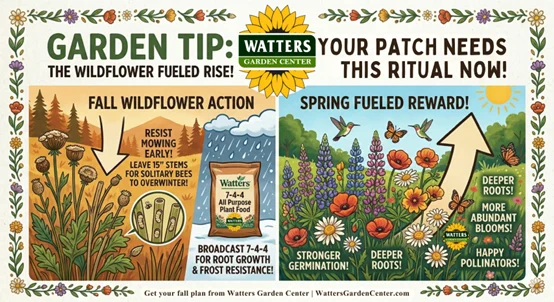
As the crisp air settles over the Prescott Highlands and the last of the Mexican Hats and Indian Blankets begin to fade, many gardeners feel a sudden urge to ‘tidy up.’ In a traditional rose garden or a manicured lawn, that instinct is correct. But when it comes to your wildflower patch, the best thing you can do this fall is, quite literally, almost nothing—with one very important exception.
A wildflower patch in autumn is not a mess; it is a biological powerhouse. Understanding how to manage it during this shoulder season determines whether your garden will return with a roar next spring or dwindle into a patch of weeds.
Resisting the Urge to Mow
The most common mistake gardeners make in October and November is mowing the patch down too early. Wildflowers are clever; they spend the late summer and early fall producing seeds. If you cut them down while the seed heads are still green or damp, you are effectively ‘sterilizing’ your garden for the following year.
Wait until the stalks are brown and brittle. If you shake a stem and see small, dark specks falling to the earth, the mission is accomplished. These seeds need to make direct contact with the soil. By leaving the stalks standing through the first few frosts, you also provide a vital service to our local ecosystem.
The ‘Hotel’ in the Stems
We often think of wildflowers only as nectar sources for bees and butterflies in the summer. However, they are equally important as winter housing. Many of our native solitary bees—the best pollinators we have—overwinter as larvae inside the hollow or pithy stems of wildflowers.






If you must ‘clean up’ for aesthetic reasons, consider the ‘15-inch Rule.’ Instead of cutting the plants to the ground, leave 15 inches of stalk standing. This provides enough structure for beneficial insects to hibernate while signaling to the neighborhood that the garden is being intentionally managed.
The Secret Ingredient: Fall Fertilizing
While we often think of wildflowers as ‘self-sufficient,’ the rocky, alkaline soil of the Prescott area can be taxing. To ensure those falling seeds have the energy to sprout and establish deep roots before the ground freezes, a fall feeding is essential.
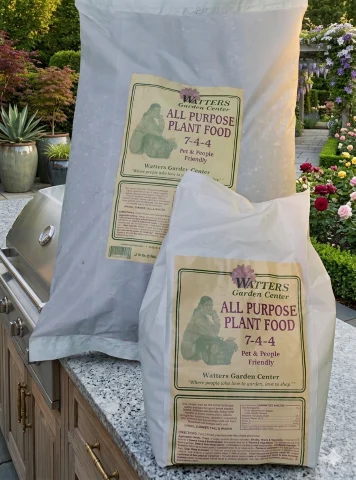
This is the perfect time to broadcast Watters 7-4-4 All Purpose Plant Food across the patch. Unlike synthetic ‘quick-fix’ fertilizers that can burn delicate seedlings or encourage weak, leggy growth, our 7-4-4 is a natural, slow-release formula.
- The 7% Nitrogen provides just enough fuel for the final green push.
- The 4% Phosphorus is the ‘magic number’ for root development and future flower production.
- The 4% Potassium strengthens the plants’ cellular walls, making them far more resistant to the harsh winter freezes and mountain winds.
Simply scatter the granules over the area after you’ve cleared any heavy debris. The winter snows and rains will slowly break down the fertilizer, ‘charging’ the soil for a spectacular spring show.


Managing the ‘Bully’ Weeds
Fall is the strategic time to identify who belongs in the patch and who doesn’t. While the wildflowers are dormant, invasive grasses or noxious weeds such as Cheatgrass or Star Thistle may still be visible. Hand-pull these now. If you let them over-winter, they will have a head start on your wildflowers come March, eventually choking out the ‘good’ plants.
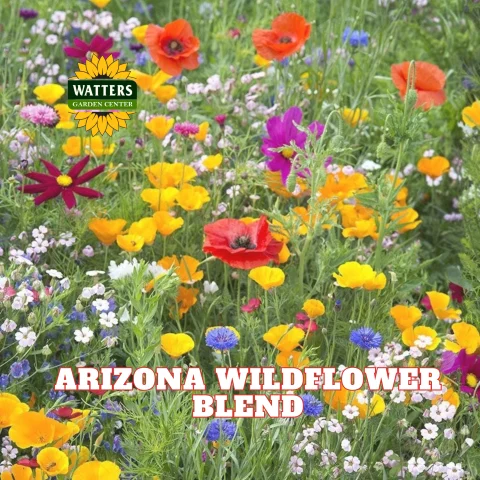
If your patch looked a little thin this year, fall is the ideal time to ‘overseed.’ In our region, many wildflower seeds—especially Lupine and California Poppies—require cold stratification. Scatter a fresh mix of Watters ‘Arizona Wildflower Mix‘ directly over the area after applying your 7-4-4 Plant Food. The fertilizer will be right there waiting for the seeds the moment they germinate.
Your wildflower patch is a living cycle, not a static display. By embracing the “brown phase” of autumn and nourishing the soil now, you aren’t just being a lazy gardener—you’re being a steward of the next generation of color.
Until next week, I’ll provide garden success here at Watters Garden Center.
Ken Lain can be found throughout the week at Watters Garden Center, 1815 Iron Springs Rd in Prescott, or contacted through his website at WattersGardenCenter.com or Top10Plants.com




Ken Lain | Watters Garden Center
Recent Articles
City of Prescott Announces Holger Durre as New Deputy City Manager
Prescott Regional Communications Center Earns Third Place Nationwide in T-Mobile Innovation in Community Competition
‘Art for Everyone’ Returns to Prescott
Prescott Valley Voters Shoot Down Local Propositions – Bill Williams