



Starter homes can move the housing supply needle, and the demand for them is there, according to leaders at the American Enterprise Institute Housing Center.
During the organization’s 15th annual housing conference in Washington, DC, Co-Director and Senior Fellow Ed Pinto said surveys show that 87% of people nationwide want to live in a single-family home.
“They do not say an apartment. They do not say an apartment that the government somehow is subsidizing. They do not say an ADU. They say, ‘I want a single-family home.’ That could be largely detached. It could be attached. But that’s what they want,” Pinto said.
“People do want this aspiration of the American Dream and their own home that is not an apartment.”
The demand for single-family homes is there across demographics, and it’s not just for homeownership. Pinto said the vast majority of low-wage workers are living in single-family homes because these rentals are available and most apartments do not have three to four bedrooms.




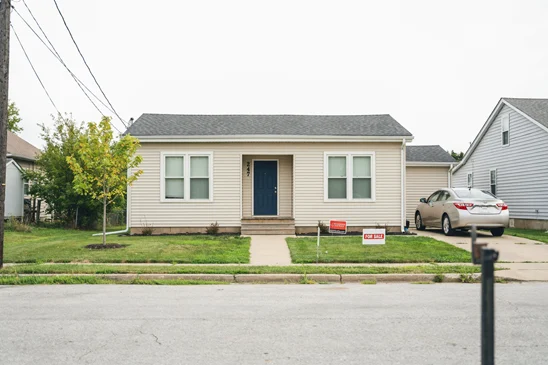
The problem is, out of the roughly 4.6 million homes built in new subdivisions between 2015 and 2024, only about 750,000, or 16%, met AEI’s definition of a starter home, meaning a home valued at no more than four times the county median household income.
Instead, the median home built in a single-family residential subdivision sat on a lot of about 7,000 square feet, had about 2,200 square feet of living area, and was valued in 2025 at about $476,000. That’s roughly 5.5 times the median county-based household income.
Leaders at AEI don’t blame the builders. They say that residential land values have risen to nearly four times their 2012 level, while wages and construction costs have risen 1.5 times their 2012 level.
They do point to lot size requirements as both a problem and solution. They say if states had a 1,000-square-foot minimum lot size for residential subdivisions in effect between 2015 and 2024, new-home production would have been about 85% higher, resulting in roughly 2.4 million additional starter homes.
At the AEI conference, the question about manufactured housing’s ability to meet demand was raised. Cheaper to build and more affordable than existing homes, excitement has built about the manufactured housing market since the passage of the 21st Century ROAD to Housing Act.




The federal chassis mandate was eliminated under the law, and Matt Jones, deputy assistant secretary for Single Family Housing at HUD, told the crowd at the MBA Annual Convention and Expo in Chicago earlier this month that he thinks the removal of that mandate is one of the most impactful measures in the sweeping bipartisan bill.
“I think for most people they wouldn’t even be able to tell the difference between a site-built home and a factory-built home,” Jones said.
Pinto addressed the question at AEI’s conference by referencing a Realtor.com report that shows just 17% of the nation is zoned to explicitly allow manufactured housing communities. He said they are rare.
“There are only two states, North Carolina and South Carolina, and little bits and pieces of some other states, where they are at all common. But even there, they are only common in rural areas,” Pinto said.
Pinto said there was another HUD effort to expand this type of housing in the 1970s. He called it “an unmitigated disaster.”
“My conclusion is, if we’re talking about moving the needle, I’m not waiting for that. I’m going to focus on the things that we’re focused on,” Pinto said.
Leaders at AEI say that to move the housing supply needle, 1,400- to 1,500-square foot starter homes on 1,000- to 1,400-square foot lots need to be included in subdivision plans, there needs to be more flexibility for the use of existing home lots, and communities need to allow for residential buildings near workplaces.
____


The three primary objectives of the AEI Housing Center are to provide information about mortgage and housing market trends, foster a stable system of mortgage finance that promotes sustainable homeownership, and develop market-based solutions to the nation’s shortage of economical housing.




Kimberley Haas | The Mortgage Note
Recent Articles
Upcoming Community Meeting for the Effluent and Wastewater Pipelines & State Route 89 Improvements Project – City of Prescott
The Pine Ridge Prowl is Coming on October 24
New 4-way stop at Granite Street and Willis Street
Freaky Foot Tours Presents the Prescott Haunted History Tour