




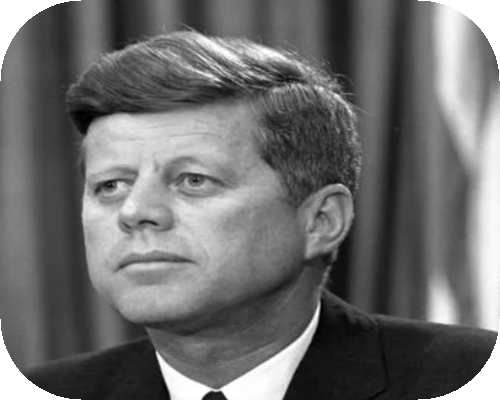
On Sunday, the 63rd anniversary of the tragic assassination of President John F. Kennedy, the Kennedy Vietnam legend is alive and well.
If only Kennedy had not been murdered, according to the legend, the thousands of troops we had in Vietnam would have been pulled out, and the sending of hundreds of thousands more troops would have been avoided, along with another decade of a useless war. If only Kennedy had lived, U.S. participation in the war would have ended.
It’s easy to blame everything on his successor, Lyndon Baines Johnson, who lied to the American people about Vietnam in the 1964 election.
Is the case proven that Kennedy would have withdrawn if he had a second term?
It is not.




Kennedy inherited the Vietnam problem when he came to office in 1961. The United States had a small number of advisers in Vietnam, but their role would change under Kennedy as the commitment deepened, unlike under his predecessor, whose policies were flawed but not disastrous.
In 1954, President Dwight Eisenhower decided not to save the French by sending troops. But in 1961, Ike was gone. Policies changed.
In his 1961 inaugural speech, Kennedy virtually declared war on the Soviet Union, vowing that “let every nation know, whether it wishes us well or ill, that we shall pay any price, bear any burden, meet any hardship, support any friend, oppose any foe to assure the survival and the success of liberty.”
President Kennedy’s initial actions signaled a more forceful foreign policy. The Missile Crisis of October 1962 nearly led to World War III. In Vietnam, by 1963, Kennedy expanded the U.S. “adviser” presence from a few hundred to thousands.
The advisers began going into the field. Some died. In late 1961, according to “The Pentagon Papers,” Kennedy opted “to expand the American military advisory mission in Vietnam and for the first time put American servicemen in combat support roles that involved them increasingly in actual fighting.”






In October 1963, Sen. Ernest Gruening, D-Alaska, noticed.
“We have been heavily engaged in Vietnam to the extent of 12,000 advisers. They are supposedly technicians, but of course they are troops and it is sheer hypocrisy to pretend they are anything else,” he wrote in “Many Battles” (Page 467).
Still, those who believe in the Kennedy legend don’t think he has any responsibility for the Vietnam War. They cite the interview he gave to CBS News’ Walter Cronkite on Labor Day 1963. Kennedy said the South Vietnamese regime would have to defeat communism itself.
Here the Kennedy legend begins. It ignores that when he was asked about Vietnam and whether we should stay, he gave a dovish and a hawkish answer: “Our best judgment is that he can’t be successful on this basis. We hope that he comes to see that, but in the final analysis it is the people and the government itself who have to win or lose this struggle. All we can do is help, and we are making it very clear, but I don’t agree with those who say we should withdraw. That would be a great mistake. I know people don’t like Americans to be engaged in this kind of an effort. Forty-seven Americans have been killed in combat with the enemy, but this is a very important struggle even though it is far away.”
Kennedy also advocated the domino theory, warning the fall of Vietnam would lead to all of Southeast Asia going communist. Kennedy, in his last days, also signed an order to bring home some advisers. Here is the great Kennedy contradiction: Cold Warrior policies mixed with some actions that possibly might have led him to reverse the belligerence of his administration.
So, while it is true that President Johnson should face the indictment of history for expanding the U.S. role in Vietnam, the verdict on Kennedy is different. The correct judgment is that no one can know exactly what would have happened in a second Kennedy administration because Kennedy himself faced many unanswerable questions: Would he have been re-elected? Probably yes.
Assuming Kennedy won in 1964, we don’t know what kind of Congress he would have had. Kennedy was a moderate, in some ways almost a conservative Democrat like his friend Sen. Henry Jackson, D-Wash. Kennedy was very different from many of today’s Democrats.
Would JFK have pulled the U.S. out of Vietnam? We don’t know. Still, Kennedy was no dove. He expanded the U.S. commitment in Vietnam. Without hard evidence, something more than comments from those upholding the Camelot legend, it’s wrong to say Kennedy would have pulled out.




Gregory Bresiger | INSIDE SOURCES
Recent Articles
City of Prescott Improves Searching Online City Code with Updates to Public Portal
City of Prescott Announces Holger Durre as New Deputy City Manager
Prescott Regional Communications Center Earns Third Place Nationwide in T-Mobile Innovation in Community Competition
‘Art for Everyone’ Returns to Prescott