




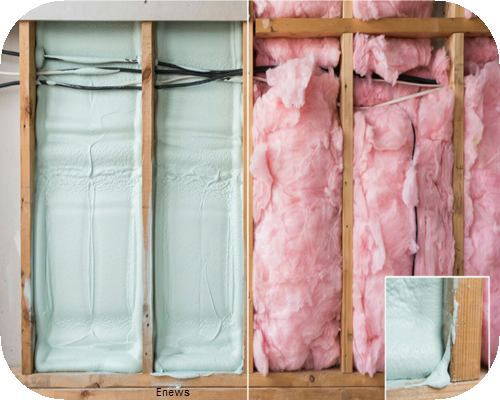
Older Cincinnati homes often have wall cavities that standard fiberglass batts cannot fill evenly. Batts require open, accessible spaces, so framing irregularities, wiring, plumbing, and previous repairs can create gaps that allow air to move through the walls. Injection foam enters enclosed cavities through small access holes, expands into voids, and creates a continuous seal without removing drywall. This method is well suited to existing homes where hidden wall gaps contribute to inconsistent indoor temperatures and drafts. Its performance becomes clearer when the materials are compared directly.
Why Batts Leave Gaps
For homeowners comparing options, wall assembly matters as much as the insulation material. Standard batts work best when installers can access every cavity and place each piece without compression or gaps. Existing walls rarely provide those conditions. An evaluation identifies gaps and obstructions. In that setting, Southwest Ohio Injection Foam Services provides a relevant service path for enclosed wall problems in Cincinnati homes.
Batts are cut to fit between studs, but they do not always fit snugly around obstructions. A small gap beside a stud, outlet box, pipe, or wire creates a route for heat transfer and air movement. Compression also reduces the intended thickness, while an oversized piece can buckle, leaving empty pockets. Those defects matter because wall insulation works best when the cavity has consistent coverage.
How Injection Foam Reaches Hidden Voids
Technicians drill small holes through interior or exterior surfaces, then pump injectable foam into each enclosed cavity. The material flows around framing details and fills spaces that a rigid batt cannot reach. As the foam expands, it contacts the cavity sides and reduces open channels. Installers then plug each access point, leaving the wall surface restored. This process avoids drywall removal and limits disruption in an existing home.
Air Movement And Comfort
Air leakage carries heat through wall cavities, making rooms feel colder during winter and warmer during summer. A continuous foam fill reduces the number of pathways across the insulated section. It does not replace proper heating and cooling equipment sizing or weatherization, but it addresses hidden wall leakage that attic work cannot correct. Homeowners often notice the difference near exterior walls and rooms above uninsulated sections.





Where The Method Fits Best
Injection foam suits existing homes with enclosed wall cavities, including older two-story houses, Cape Cod homes, ranches, colonials, bungalows, and split-level designs. The approach works especially well where removing finished surfaces would create unnecessary repairs. A technician first checks cavity access and insulation needs because foam belongs in suitable enclosed spaces rather than every part of a house.
A Practical Installation Sequence
The process begins with an evaluation of the walls and problem areas. Access holes follow from the interior or exterior, based on the home’s construction. Foam fills each cavity, and installers plug the openings afterward. Most work stays localized, so residents avoid broad demolition, drywall disposal, and reconstruction.
What A Wall Evaluation Checks
An evaluation checks wall thickness, cavity access, existing insulation, and signs of air movement. Technicians also consider electrical boxes, plumbing lines, framing changes, and repairs that interrupt the cavity. These details determine drilling locations and the amount of foam each section requires. A careful review prevents blind filling, protects concealed components, and connects the recommended work to the home’s actual construction. It also identifies areas where other insulation methods may belong elsewhere.
Fire And Pest Considerations
The inspected service page states that its injection foam is Class 1 Fire Rated, does not off-gas, and deters pests by sealing entry gaps. These claims relate to the installed material and should not be interpreted as a replacement for smoke alarms, required fire barriers, or professional pest control. Proper placement still matters, since every cavity must receive enough foam to close open paths.
Choosing Between Wall Insulation Methods
Batts remain practical during new construction, when wall cavities are open and measurements are visible. Injection foam fits retrofit work, where finished walls hide irregular spaces, and access is limited. Spray foam serves open surfaces such as attics and rim joists, while injection foam is made for enclosed wall cavities. Matching the material to the location prevents wasted labor and uneven coverage.





Conclusion
A wall that looks finished can still contain open channels around framing, wiring, and previous repairs. Standard batts cannot correct those conditions after drywall closes the cavity. Injection foam reaches the enclosed space through small access points, fills voids, and leaves the surface restored. The practical next step is a wall evaluation that identifies cavity access, missing insulation, and air pathways. For Cincinnati-area homeowners, that assessment shows whether injection foam fits the home’s construction and comfort needs.




Ollie Sinser
Recent Articles
City of Prescott Announces Holger Durre as New Deputy City Manager
Prescott Regional Communications Center Earns Third Place Nationwide in T-Mobile Innovation in Community Competition
‘Art for Everyone’ Returns to Prescott
Prescott Valley Voters Shoot Down Local Propositions – Bill Williams