




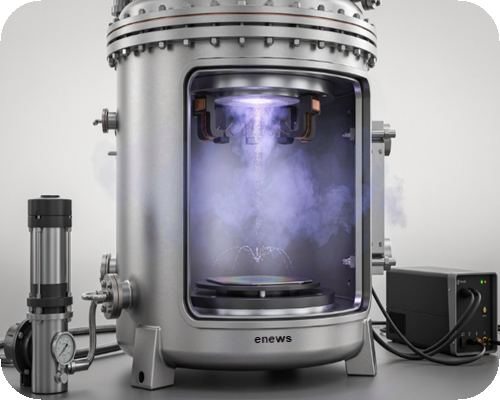
Physical vapor deposition sputtering applies a thin material coating by ejecting atoms from a solid target inside a vacuum chamber. The atoms travel through the chamber and condense on a component, wafer, or glass surface. Industry uses this process to control hardness, conductivity, reflectivity, corrosion resistance, and appearance. Its performance depends on target composition, gas pressure, power delivery, substrate preparation, and coating control, which together determine how the process works in production.
For a clear explanation of how physical vapor deposition sputtering works, engineers can examine the relationships among the target material, plasma generation, and the substrate coating. The process begins when gas ions strike a solid target, removing atoms from its surface. Those atoms then travel through the vacuum before condensing on a prepared component. This sequence lets manufacturers deposit controlled films without melting the entire substrate.
The Basic Sputtering Process
A sputtering system contains a vacuum chamber, a target, a substrate, and a controlled gas supply. The chamber first removes air and moisture, then introduces a small amount of an inert gas, usually argon.
An electric field ionizes the gas, creating a plasma. Positive gas ions accelerate towards the negatively charged target, striking its surface with enough energy to eject target atoms. Those atoms cross the chamber and form a film on the substrate.
The target supplies the coating material. Its composition affects the film’s chemical properties, deposition rate, electrical behavior, and wear resistance. Manufacturers select target materials based on the component’s operating conditions and the required film performance.




Why Vacuum Conditions Matter
Vacuum conditions control how freely sputtered atoms travel. At lower pressure, atoms experience fewer collisions before reaching the substrate, which supports a more direct deposition path. Pressure also affects plasma stability and the energy carried by particles in the chamber.
A production system must remove contaminants before coating begins. Water vapor, hydrocarbons, and residual gases can affect film adhesion, color, density, and electrical performance. Operators therefore control pump-down time, gas flow, chamber cleanliness, and substrate temperature.
Substrate preparation also affects the finished coating. Cleaning removes surface contamination, while ion etching can remove weak surface layers and improve adhesion. The substrate must remain stable under the selected electrical and thermal conditions.
Common Sputtering Methods
DC sputtering applies direct current to conductive targets. It suits metals and other electrically conductive materials because the power supply maintains the required target potential during plasma operation.
Radio-frequency sputtering enables the processing of insulating targets. Alternating electrical power prevents charge from building continuously on the target surface. This approach supports deposition of ceramics, oxides, and other non-conductive materials.






Magnetron sputtering places magnets behind the target. The magnetic field confines electrons near the target surface, increasing ionization in that region. This arrangement raises deposition efficiency and allows industrial systems to operate at lower gas pressures.
Reactive sputtering introduces a reactive gas, such as oxygen or nitrogen, alongside the inert process gas. The reactive gas combines with target atoms during film formation, producing compounds such as oxides or nitrides. Gas flow requires tight control because excessive reaction can reduce deposition rate and alter film composition.
Process Variables That Affect Film Quality
Power controls the energy supplied to the plasma and influences the rate at which target atoms leave the surface. Excessive power can raise substrate temperature, increase particle formation, or damage sensitive materials.
The target-to-substrate distance affects the arrival angle and energy of sputtered atoms. A shorter distance can increase deposition rate, while a greater distance can improve coverage across complex surfaces. Chamber geometry also affects thickness uniformity.
Substrate bias controls the energy of ions reaching the growing film. Higher ion energy can produce denser coatings, but excessive bombardment can create stress or damage the substrate. Production teams set the bias based on the material pair and the required film structure.
Film thickness depends on deposition time, power, target condition, gas pressure, and substrate movement. Sensors and process controls help maintain repeatable results across production batches. Regular target inspection also identifies erosion patterns that could affect uniformity.
Industrial Uses and Production Control
Sputtered coatings appear on semiconductor components, optical parts, display panels, architectural glass, cutting tools, and wear-resistant components. Each application uses a different combination of materials, thicknesses, surface preparations, and process conditions.
Production engineers measure coating thickness, adhesion, electrical resistance, hardness, optical transmission, and surface defects. These checks connect chamber settings with the final specification. A stable process reduces rework and supports consistent performance across large batches.


Conclusion
Physical vapor deposition sputtering works by transferring atoms from a solid target through a controlled plasma and vacuum environment. Reliable industrial results depend on matching the target material, power method, gas chemistry, substrate preparation, and monitoring system. Engineers assessing a sputtering line should first define the required film properties, then review target compatibility and process controls against those requirements. That sequence provides a practical basis for selecting settings, identifying risks, and improving coating consistency.




Phillip Veperro
Recent Articles
Prescott Fine Art Launches Monthly Art Auctions at Pine Ridge Marketplace
Town of Chino Valley Selected for Community Beautification Project as APS Celebrates 140 Years in Arizona
City of Prescott Reminds Citizens of Political Sign Regulations and No Campaign Materials in City Facilities
Trust for Public Land, Local Partners Secure Permanent Protection of Upper Sullivan Canyon, Safeguarding Key Verde River Rock Climbing Site