


Sharing a lane line with a loaded semi is part of driving Interstate 25. It is easy to stop noticing, right up until a trailer eases toward your lane and you realize the driver may not see you.
The gap between what a truck driver can see and what a car driver assumes they can see is where a surprising number of close calls live. After something goes wrong, a truck accident attorney Denver residents can reach out to matters, though the more useful thing on any morning is knowing where you disappear.
Where Denver Drivers Share the Road With Trucks
Freight moves through the Denver metro on the same highways people use to get to work. That means a commute and a freight route are often the same stretch of road, with passenger cars and long-haul trucks side by side.
Major interchanges pack merging, weaving, and large trucks into a tight footprint. Traffic like that leaves little room to recover, so the margin you build in advance is the only margin you get.
The Four Zones Where a Car Disappears
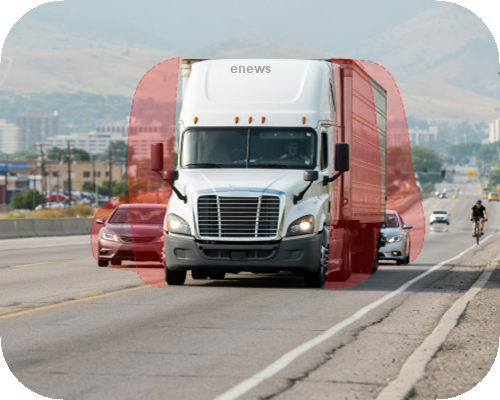
Every large truck has areas around it where the driver cannot see a passenger car. These areas fall into four broad zones, and each behaves a little differently.






- Directly in front: The high cab hides a car tucked close to the bumper.
- Directly behind: A trailer blocks the view straight back, so a close follower is hidden.
- Along the right side: The largest of the four, running the length of the trailer and spreading wider than a single lane.
- Along the left side: Smaller than the right, though it still swallows a car riding behind the cab.
Sitting briefly in one of these zones is not a crisis. It becomes a problem when it lasts, because a driver who cannot see you cannot account for you when a sudden slowdown forces a quick decision.
The Mirror Check Worth Making a Habit
Driving instructors teach a simple check: if you cannot see the truck driver’s face in their side mirror, they probably cannot see you. It works because mirrors are essentially all a truck driver has along the sides of the vehicle.
Try it the next time you are pacing a trailer on I-70. If the mirror shows nothing but the side of the cab, ease back or move ahead, and do it before you have a reason to.
The Right Side Is Wider Than It Looks
The area along the right side of a truck stretches farther out than people expect. A car can sit a lane or two over and still be hard for the driver to place.
Passing on the right also puts you where a truck is likely to move. Drivers shift right for exits, slower traffic, and closed lanes, so it helps to pass on the left and to pass decisively rather than linger alongside.






Why a Right Turn Often Starts With a Swing Left
A truck turning right often swings left first to bring the trailer around the corner. From behind, that swing can look like a lane change, and the space near the curb can look like an invitation.
It is not one. Staying out of the gap between a truck and the curb keeps you clear of the sweep, as does hanging back when a trailer drifts the wrong way ahead of a turn.
Why Trucks Leave a Cushion Out Front
Loaded trucks need far more distance to stop than a car does, and the driver builds that cushion on purpose. When a car slides into it and brakes for an exit, the cushion vanishes.
Merging ahead of a truck works well when you leave real room and keep your speed up. Cutting across the nose of one to catch a ramp is the move that goes wrong.
Where Trucks Run Out of Room
Risk builds wherever the road forces a quick sideways move. Lanes that end, short merges, and the shifting cones of a work zone all ask for something a loaded truck cannot do quickly.
Reading the signs early solves much of that. Choosing your lane well ahead of the last painted stripe keeps you from handing a truck driver a problem you created.
Winter Spray and Mountain Grades
Spray off a trailer can blank your windshield for a moment, and the same slush coats the mirrors a truck driver depends on. Winter takes visibility from both sides at once.
Grades matter too. Trucks climb slowly heading into the mountains and manage their speed carefully coming down, so patience behind one on a hill costs you a minute and buys everybody room.


A Calmer Way to Share the Road
None of this asks much. Extra following distance, a glance at the mirror before you linger, and patience on hills cover nearly everything a Denver commuter meets.
If a crash involving a truck has already happened, the next steps rarely feel obvious. Sitting down with a truck accident attorney Denver drivers turn to for questions like that can help you sort out your options, with no pressure to decide anything.