

The SEC football conference may struggle to win a national championship, but the Southeast economy has been booming. Five of the 10 states with the highest per capita population growth are SEC states. Florida and South Carolina are tied for the fastest-growing economy. And traffic through the region’s seaports is surging. Charleston’s has grown more than 25 percent, and Savannah’s has more than doubled, making it the nation’s fourth-largest container gateway.
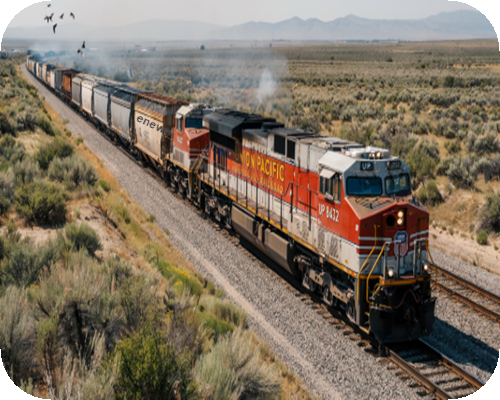
A critical part of making this growth possible, transportation experts say, is rail. As the Southeast’s trade activity grows, they say it is vital that a competitive freight rail system keep pace.
Freight rail is a critical — and often overlooked — link in that supply chain. Nationally, railroads carry 40 percent of long-distance freight measured by ton-miles, more than any other mode of transportation. Across Alabama, Florida, Georgia, Louisiana, North Carolina and South Carolina, freight railroads operate 18,600 route miles and directly employ more than 17,500 people, according to the Association of American Railroads.
AAR reports more than 440 million tons of freight originating or terminating in those six states, moving 8.1 million carloads and intermodal units. Because some interstate shipments can be counted in both their originating and terminating states, the figures measure rail activity rather than unique shipments.
The jobs are among the better-paying positions in the transportation industry. Class I craft railroad employees earn average annual wages of $111,000, according to AAR, with total pay and benefits averaging $160,000.


“Freight rail is an essential part of the Southeast’s freight transportation network and has helped support the region’s remarkable economic and port growth over the past several decades,” said Ted Greener, senior vice president of communications at AAR.
Rail also provides relief to motorists. Moving the same freight carried by rail in the six Southeastern states would have required 35.5 million additional truck trips, based on AAR’s state calculations.
Trucking nevertheless remains indispensable to the supply chain.
“The modern supply chain depends on an integrated transportation network where ships, ports, railroads and trucks each perform the role they are best suited to perform,” Greener said. “Rail and trucking are complementary: Trucks provide first- and last-mile delivery, while rail moves large volumes over longer distances to inland manufacturers, distribution centers and consumer markets.”
The future of that system could be affected by Union Pacific’s proposed acquisition of Norfolk Southern, which is based in Atlanta and operates an extensive network throughout the Southeast.



The $85 billion transaction would create the nation’s first single-line transcontinental railroad, combining Union Pacific’s western system with Norfolk Southern’s eastern network. The resulting railroad would operate more than 50,000 route miles across 43 states and connect 100 North American ports.
Union Pacific and Norfolk Southern argue that eliminating railroad handoffs would shorten transit times, reduce delays at congested interchange points, and make rail more competitive with long-haul trucking. They estimate the merger could save shippers $3.5 billion annually and eventually divert the equivalent of 2.1 million truck trips away from crowded highways.
For Southeastern ports and manufacturers, the potential advantage is direct coast-to-coast rail service. Containers arriving in Savannah, Charleston and other eastern ports could move to western destinations without being transferred between two Class I railroads.
The proposal has opposition. Shipper organizations, labor unions and competing railroads warn that the merger would give one company control of 40 percent of U.S. rail traffic, potentially reducing competition, raising rates and triggering another round of industry consolidation.
The Surface Transportation Board will evaluate the proposal under stricter merger rules adopted after disruptive railroad combinations during the 1990s. Those rules require applicants to demonstrate that a major merger would enhance competition and serve the public interest, rather than merely preserve existing competition.
At the same time, railroads face pressure to innovate as autonomous trucking technology advances.
Georgia has become a proving ground for self-propelled, battery-electric railcars developed by the startup Parallel Systems. The Federal Railroad Administration approved a seven-phase pilot program on parts of the Heart of Georgia and Georgia Central railroads, two short-line systems extending from central Georgia toward the Savannah area.
Initial testing began on an isolated two-mile section of track before expanding to a 30-mile segment. Later phases envision testing over 160 miles, eventually mixing the vehicles with conventional rail traffic and moving loaded containers.


The Parallel vehicles are designed to operate individually or in small groups, potentially allowing railroads to move smaller numbers of containers without assembling a conventional train or routing the cars through a large classification yard.
“We founded Parallel to allow railroads to open new markets, increase infrastructure utilization and improve service to accelerate freight decarbonization,” said Parallel Systems co-founder and CEO Matt Soule.
The technology could help short-line railroads compete for freight currently moved by truck, particularly on routes that lack sufficient volume to justify a traditional train. Commercial deployment will depend on the results of the Georgia tests and additional federal approval.
Transportation policy analyst Marc Scribner argues that public policy has not kept pace with the technology.
“Automation is a key area that rail needs to develop to remain competitive in the coming years with increasingly automated trucks,” said Scribner, a senior policy analyst at Reason Foundation. “Unfortunately, we’ve seen both Congress and the administration embrace automated trucking while seeking to limit freight rail automation.”
As supply chains continue to shift toward the Sun Belt, the Southeast’s economic resilience will depend on keeping goods moving at competitive prices.