


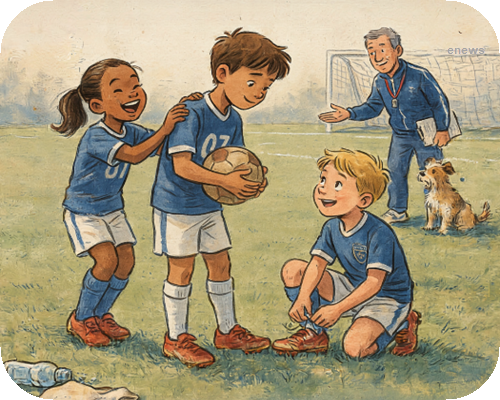
Staying in the same sports club or team can be one of the few constants in a child’s life when everything else is changing, whether that’s a house move, a new school, a family separation or a child settling into a new foster placement. The pitch, the changing room and the faces of teammates and coaches stay the same even when almost everything else has.
Parents, carers and social workers juggling a big transition can be tempted to treat clubs and hobbies as optional extras that can wait until the bigger logistics are sorted. In reality, keeping a child enrolled in the same team often does more for how they settle than anything said directly about the change, because it gives them a part of their week that still looks exactly like it always has.
What a Club Actually Gives a Child During Change
A sports club offers a child something a new school or new home cannot provide straight away, a group of people who already know them and expect them to turn up. Coaches and teammates who knew the child before the change was mentioned represent one of the few relationships not reshaped by whatever else is going on. Guidance for families going through a house move has pointed out that signing children up for clubs or sports teams helps them bond with peers who share their interests, and the logic works just as well in reverse.
Preserving Continuity for Children in New Placements
When a child moves into a new foster placement, keeping them connected to whatever they already had running before the move, a football team, a swimming squad, a drama group, is treated as part of the plan rather than an afterthought. Carers are usually encouraged to ask early which clubs a child belongs to, and to build transport and timing around that link. Encouraging this kind of continuity is something agencies such as Fosterplus Scotland usually build into how it supports new placements, asking carers early which teams a child belongs to and helping arrange the logistics to keep that connection going.
Why Adults Managing a Big Change Sometimes Overlook This
During a house move, a divorce, or a child entering care, attention goes to schools, housing and paperwork, and a weekly training session can look like the easiest thing to drop when the diary gets complicated. Family specialists writing about separation and divorce have stressed that staying involved in a child’s extracurricular activities does more to help them adjust than most of the logistical arrangements parents spend their energy on, because it tells a child that at least one part of their life is not up for negotiation.






What This Looks Like Week to Week
Keeping a child in their club usually means more effort from whoever drives them there, coordinating lifts around a new address, or explaining the situation to a coach so training does not become one more thing a child has to manage alone. None of that guarantees a smooth transition, but it removes one more thing a child has to grieve on top of everything else changing. A child who can still turn up on Saturday to the same pitch and the same teammates has one part of their week that asks nothing new of them.