
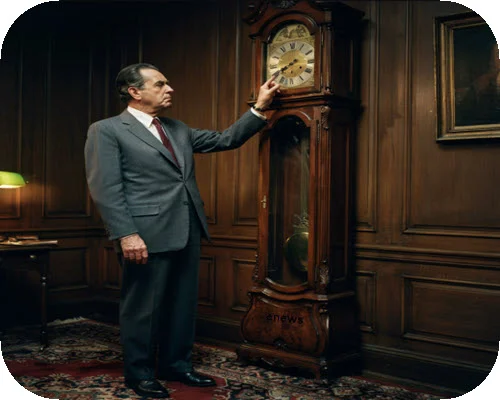
In an age when it seems Americans can’t agree on much, one thing—and maybe just one—enjoys broad popular support: scrapping changing the clock. Poll after poll shows a clear majority of Democrats, Republicans, and independents think it’s time to stop the twice-annual pain in the neck.
Congress is considering a bill that would make Daylight Saving Time (DST) permanent. While this column never concerns itself with contemporary issues, the current debate makes this the perfect opportunity to visit what happened the last time Congress changed the time change 50-plus years ago.
And believe it or not, it all started in the Middle East. No, really!
On Saturday, Oct. 6, 1973, a coalition of Arab nations unleashed a major surprise attack on the Jewish state of Israel. It happened on Yom Kippur, Judaism’s holiest day of the year. The Israelis were caught flat-footed, and initial Arab successes had them on the ropes. Things looked dicey until President Richard Nixon authorized a massive airlift to resupply the Jewish defenders.
The attackers responded by following up with a long-promised threat. On Oct. 17, the Arab members of the Organization of Petroleum Exporting Countries set in motion plans to cut oil output.




With that, a new phrase entered the American vocabulary: the Energy Crisis. And America went into total freakout mode. It was arguably the largest single instance of mass public hysteria since the Cuban Missile Crisis a decade earlier.
Congress in particular got its panties in a wad. Driven by a persistently repeated ominous threat that the world would run out of oil and natural gas by the year 2000 (spoiler alert: it didn’t), it rolled into action. It passed a slew of legislation intended to promote home insulation and energy conservation. Then it passed the Emergency Highway Energy Conservation Act of 1974, whose draconian impact was immortalized in Sammy Hagar’s classic rock hit, “I Can’t Drive 55,” imposing a national speed limit that stayed in effect for 13 years.
But by far, its most controversial step was passing the clunky-sounding Emergency Daylight Saving Energy Conservation Act of 1973. Starting at 2:00 a.m. on Sunday, Jan. 6 of the new year, the nation moved its clock ahead one hour on an experimental basis. The theory was that an extra hour of daylight would save power with reduced lighting and heating. (The same argument had been made 30 years earlier when the U.S. was placed on year-round DST time during World War II, with the only difference being it was called War Time then.)
Then, an interesting thing happened. Americans changed their mind in bulk.
In the closing weeks of 1973, when fear of empty gas stations and power outlets without electricity was at its peak, around 79% of Americans told pollsters they supported year-round DST. However, when alarm clocks started ringing in January, and people were roused out of bed in pitch darkness, they began having second thoughts.


Opponents pounced. They painted dark prospects in the minds of worried parents. Would little junior, now trudging to the local schoolhouse in near-total blackout conditions, be embarking on a Death March? Concerned civic groups even donated adhesive reflective strips to place on kids’ coats as a safety precaution.
Soon, people all around the country were whispering to one another, “Have you heard about all the kids killed walking to school in the dark?”
Except, there weren’t. That is, there wasn’t a noticeable increase in child-related accidents. Yes, some children were injured or killed. But no more than before. Researchers have been unable to document the often-repeated claim that “many children were hurt” by the switch to DST.
In the end, the whisper campaign’s unfounded claims, coupled with mom and dad growling about waking up in the dark, swung public opinion against the change. By February 1974, only 40% favored permanent DST, a nearly 40% drop in just six weeks.
The experiment died a quick and quiet death. Congress pulled the plug on it, and the country returned to Standard Time as usual that Oct. 27.
As for the Energy Crisis itself, it remained one of the great national boogeymen for the rest of the decade. No one can say precisely when it ended; it just sort of faded into the sunset sometime during the Reagan administration and was never heard from again.
As if more proof that history repeats itself was needed, opponents of the current push to make DST permanent are again putting forth the exact same “children will be endangered in the dark” argument heard a half century earlier.
You can’t help wondering whether history would repeat even more should DST proponents wake up one cold, wintry morning soon and discover, just as their grandparents before them did, that getting up when it’s still dark outside really sucks.