


In 1942, Ford Motor Co. was building heavy bombers. At Willow Run in Michigan, a mile-long factory produced a B-24 Liberator every 63 minutes. Ford had never built bombers before. It did it anyway.
Across the country, General Motors produced tanks and aircraft engines. Chrysler built Sherman tanks. Packard manufactured Rolls-Royce Merlin engines that powered P-51 Mustangs.
These companies were fierce competitors in peacetime. In wartime, they became something else: an industrial ecosystem capable of outproducing every adversary on earth.
That ecosystem did not emerge because Washington concentrated work among a few dominant firms. It emerged because American industry competed and collaborated simultaneously, with companies contributing specialized capabilities into a network stronger than any single contractor. The government created the conditions for production to scale. American industry delivered victory.
Today, the United States faces a different challenge and a military-industrial base designed for a bygone era.


I spent two decades in the Air Force flying gunships and commanding special-operations drone squadrons. I now lead a military technology company that develops contested-autonomy systems. From those perspectives, I think America risks entering its next conflict with an acquisition system optimized for the last one.
Over the last three decades, Pentagon procurement has consolidated around a small number of prime contractors. Smaller technology firms still emerge, but too often they are slowed by acquisition processes that reward incumbency over speed and experimentation. Promising capabilities can spend years navigating bureaucratic barriers before reaching operational units.
That model delivered important advantages in an earlier era. It is poorly suited for the one now taking shape.
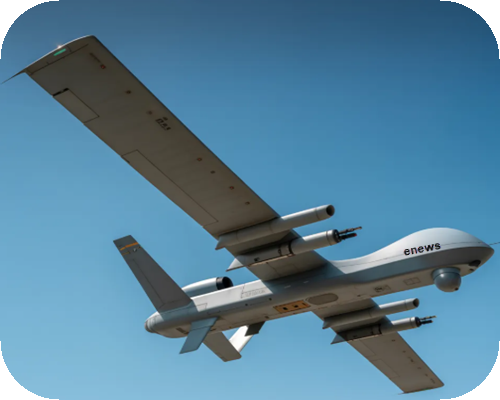
Future conflicts will depend heavily on autonomous systems operating across every domain — air, land, sea, space and cyberspace. Success will require technological breakthroughs and the ability to produce, integrate and adapt systems faster than adversaries can counter them.
China understands this. Beijing aligns state financing, industrial policy and military strategy to scale asymmetric capabilities at speed. America retains enormous advantages in innovation and talent, but innovation alone is not enough if our industrial structure cannot rapidly translate capability into fielded systems. No single company, regardless of size, can provide the full range of technologies the joint force will require. The answer is not further consolidation. It is rebuilding a more competitive and collaborative defense ecosystem.



That means expanding acquisition pathways for nontraditional firms, incentivizing open architectures and modular systems, and rewarding companies that integrate capabilities quickly rather than simply managing large legacy programs. Prime contractors will continue to play a critical role, but they cannot be the only pathway for delivering capability to the warfighter.
In military aviation, pilots use the term “track angle bias” to describe the adjustment of course toward a shared objective. America’s military industrial base needs a similar bias toward partnership. The challenges ahead are too complex for isolated players operating behind closed walls.
In 1942, American industry recognized what the mission required and adapted with extraordinary speed. Companies with different expertise aligned around a national objective and built the industrial ecosystem that the moment demanded.
We face another moment like that now.
The question is whether policymakers will enable the kind of competitive, collaborative industrial base needed for the next era of conflict — or continue relying on a structure increasingly optimized for a different time.
The warfighter does not have the luxury of waiting for us to decide.