



Introduction
Technology has become a core part of how businesses operate every day. From internal communication tools to cloud platforms and cybersecurity systems, most tasks rely on technology functioning smoothly in the background. When these systems are stable and well organized, teams can collaborate easily, complete projects faster, and serve customers without interruption.
However, many companies still reactively manage technology. New tools are added when problems appear, infrastructure upgrades happen only when systems fail, and long-term planning rarely takes priority. Over time, this approach creates inefficiencies and exposes organizations to unnecessary risks.
Strategic technology planning helps solve this challenge. Instead of making isolated decisions about software or hardware, businesses take a broader view of how technology should support their long-term goals. With proper planning, organizations can build systems that improve efficiency, strengthen security, and support future growth.
Key Takeaways
Strategic technology planning connects IT investments with long-term business goals.
A Virtual Chief Information Officer, or vCIO, offers executive-level technology guidance without requiring a full-time CIO.






A structured technology roadmap helps organizations remain competitive as they grow.
Strategic planning improves cybersecurity, infrastructure stability, and operational efficiency.
Why Businesses Need Strategic Technology Planning
Many organizations depend heavily on technology but do not have a clear vision for how their systems should evolve. Without a long-term strategy, technology decisions often happen one at a time and without coordination.
This approach can lead to several common issues. Companies may operate with aging hardware, disconnected software platforms, or network infrastructure that cannot support increasing workloads. These limitations might not seem urgent at first, but they gradually reduce productivity and increase operational risk.
As businesses grow, these technology gaps become more noticeable. Employees may struggle with slow applications or limited access to shared data. IT teams may spend most of their time responding to problems rather than improving systems.






Strategic planning helps organizations step back and evaluate their technology environment as a whole. Instead of reacting to individual issues, leadership can identify which improvements will provide the greatest value.
This shift in perspective allows businesses to treat technology as a strategic asset rather than simply a support function.
The Role of a Virtual Chief Information Officer
A Virtual Chief Information Officer, commonly referred to as a vCIO, plays an important role in helping organizations plan their technology strategy. This position provides executive-level technology leadership without requiring a company to hire a full-time CIO.
Rather than focusing only on technical troubleshooting, a vCIO works with leadership teams to align technology decisions with business objectives. They review current infrastructure, identify potential risks, and recommend improvements that support growth and efficiency.
One of the most valuable aspects of a vCIO is the ability to translate technical concepts into practical business decisions. Many executives understand the importance of technology but may not have the technical background needed to evaluate different solutions. A vCIO helps bridge this gap.
For small and mid-sized businesses, this approach provides access to high-level expertise in a flexible and cost-effective way. Internal IT teams can continue managing daily support tasks, while the vCIO focuses on long-term strategy, cybersecurity oversight, and infrastructure planning.
This partnership creates a balanced IT environment where both operational support and strategic direction receive the attention they need.
Building a Strong Technology Roadmap
A technology roadmap provides a clear plan for how systems should develop over time. Without a roadmap, organizations often purchase tools or upgrade systems based on immediate needs rather than long-term goals.


Infrastructure planning is a key part of this process. Businesses need reliable networks, stable internet connections, and systems that can support employees across different locations. A well-designed infrastructure ensures that technology can handle increased workloads as the company grows.
Cybersecurity planning is another essential element. Organizations manage sensitive information every day, including customer data, financial records, and internal documents. A strategic security plan includes layered protection such as firewalls, endpoint monitoring, regular system updates, and employee awareness training.
Hardware lifecycle management also plays an important role. All equipment eventually becomes outdated or unreliable. A roadmap helps businesses replace devices before they cause operational problems. This proactive approach prevents unexpected downtime and ensures employees always have the tools they need.
Cloud technology has also become a major factor in modern infrastructure planning. Cloud platforms allow businesses to store data, run applications, and collaborate from multiple locations. When implemented strategically, cloud solutions can improve flexibility and support hybrid or remote work environments.
Many organizations looking to strengthen their infrastructure and plan for future growth work with providers that deliver solutions such as reliable IT services in Augusta to guide long-term technology development and ensure systems remain scalable.
A Practical Framework for Strategic IT Planning
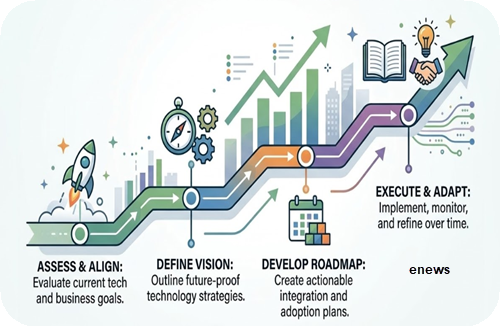
Organizations often benefit from following a structured process when developing their technology strategy. A clear framework ensures decisions are based on accurate information rather than assumptions.
The first step is discovery. During this stage, businesses conduct a detailed assessment of their current technology environment. This includes reviewing network infrastructure, evaluating hardware performance, analyzing cybersecurity protections, and examining data backup systems. The goal is to gain a complete understanding of how existing systems support daily operations.
Once this information is gathered, the next step is strategy development. Technology leaders use the findings from the assessment to create a roadmap that aligns with the company’s long-term goals. This roadmap prioritizes upgrades, identifies security improvements, and outlines future investments that will strengthen the organization’s infrastructure.
The final stage focuses on implementation and ongoing management. Upgrades are deployed, security measures are strengthened, and monitoring tools are introduced to maintain system stability. Continuous oversight ensures the environment remains secure and adaptable as business needs change.
By following this structured process, organizations can make technology decisions with greater confidence and clarity.
Measuring the Impact of Strategic IT Leadership
Strategic IT leadership provides benefits that go far beyond everyday technical support. When organizations follow a clear technology roadmap, they often experience improvements across multiple areas of the business.
Financial predictability is one of the most noticeable advantages. Instead of facing unexpected repair costs or emergency upgrades, companies can plan technology investments in advance. This makes budgeting easier and reduces financial uncertainty.
Operational efficiency also improves when systems are stable and well maintained. Employees experience fewer interruptions, applications perform more reliably, and teams can focus on their responsibilities without constant technical distractions.
Cybersecurity protection becomes stronger as well. Strategic planning ensures that systems remain updated, vulnerabilities are addressed quickly, and security practices evolve as new threats emerge.
Another important benefit is scalability. Businesses that plan their technology infrastructure carefully can expand operations without major disruptions. Whether adding new employees, opening additional locations, or launching new services, their systems are ready to support growth.
Conclusion
Technology should make business operations smoother, not more complicated. Without proper planning, organizations often find themselves managing outdated systems, security vulnerabilities, and infrastructure that struggles to keep up with modern demands.
Strategic technology planning provides a clear path forward. By aligning IT decisions with long-term goals, businesses can create reliable systems that improve productivity and protect valuable information.
With the support of experienced technology leaders and a well-defined roadmap, organizations can transform their technology environment into a foundation for growth.
When technology is planned thoughtfully and managed consistently, it becomes more than just a support tool. It becomes a strategic resource that helps businesses operate efficiently, adapt to change, and succeed in an increasingly digital world.