

These are the kinds of frustrations that many painters encounter. We all know that applying paint evenly over large areas can be difficult. Keeping colour consistent provides a professional-looking and appealing visual. Achieving this objective requires careful attention to detail, thorough planning, and adherence to the best processes and techniques. One could understand the painstaking effort behind a perfect result and how painters tackle this task.
Surface Preparation Matters
A clean surface is essential for achieving consistent coverage. The first step for painters is usually to wash the walls of their area to get rid of any dust, grease, or remnants of old paint. Filler compounds are quickly applied to seal any crevices or chips. They sand down the area lightly while checking for an even appearance before application. Surface preparation also ensures that paint sticks evenly, minimizing the chance of patches. The appeal of house painters in South Auckland lies in their ability to deliver smooth, even finishes that elevate the look of large spaces.
Quality Paint and Tools
Good quality paint is essential for smooth distribution. Better products provide better coverage and do a better job of hiding imperfections with fewer coats. Professional painters will pick brushes and rollers according to the surface composition. For example, short-nap rollers are best for smooth surfaces, while long-nap rollers are good for textured walls. The correct equipment helps distribute the colour evenly and in a non-streaky manner.
Mixing Paint Thoroughly
Proper mixing enables colour uniformity. Some projects require a few cans of paint. This is why painters mix all the cans in one large container to prevent colour shade variations between different batches. Most often, painters usually box the paint to keep the colour consistent throughout the painting process. Frequent mixing makes sure the pigments do not settle down during the application.
Priming for Consistency
Primer seals the surface of the wall, creating a blank canvas for the paint to adhere to. It stops stains or old colours from leaching up into the new coat. It also promotes better adhesion for the topcoat and an even appearance; if you skip this step, you will have irregular absorption and uneven colour in the area.


Maintaining a Wet Edge
Then, one of the major techniques is to keep your edge wet. That means the painters move in small sections, each pass overlapping the last before it dries. There should be no visible lines or marks where the sections meet because they overlap wet paint. By doing it like this, it is particularly important to work on bigger walls, as the paint can dry too fast and you can get uneven patches.
Consistent Application Techniques
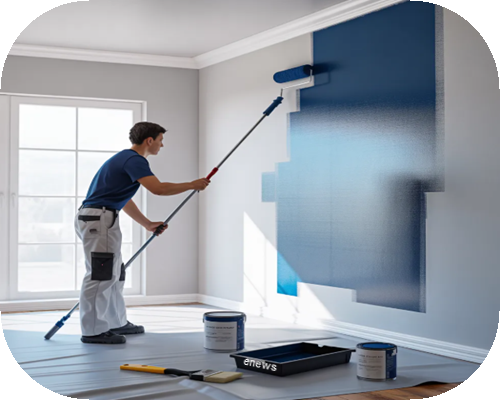
Brush and roller strokes should also be uniform. A painter uses smooth, steady strokes with even pressure to deliver colour without leaving behind buildup. When you roll in a W or M pattern, it distributes the paint on the surface evenly. After it’s given this coating, they will roll over the area lightly once again with a dry roller to level out any high points.
Environmental Factors
Drying time and look depend on temperature and humidity. Professionals will prefer moderate conditions to prevent extreme heat or cold. Good ventilation will allow the paint to dry at an even rate, making it less prone to streaks or blotches. By monitoring the atmosphere, painters can achieve improved results over broad swaths.
Multiple Thin Coats
Several thin layers help take control of the process and cover better than one thick layer. Every layer adds to the last, boosting consistency and complexity. Painters will allow each coat to dry thoroughly before applying another. Rushing this process can result in drips, uneven coverage, or visible brush marks.
Inspecting and Touching Up
Inspect after the final coat dries, as it is an important step. Painters search for missed areas, streaks, or shade variances. Any imperfections are immediately touched up with the same application methods. Getting things right at this point ensures the final surface will look perfect all around.



Conclusion
Getting large spans equal in colour requires a combination of preparation, skill, and patience. Each phase in processing, each wash, each final inspection stage, leaves nothing but a smooth finish. Understanding these techniques demonstrates their effectiveness in creating pleasing, professional results over large areas.