There is a specific kind of magic that happens when you pluck a sun-warmed peach or a crisp apple directly from a tree you planted with your own hands. I often tell folks at the garden center that planting a fruit tree is more than just landscaping; it is a long-term investment in your family’s health and your own backyard joy. While it’s true that fruit can take anywhere from 2 to 10 years to bear, the wait is part of the journey. If you plan to be harvesting for years to come, it pays to do some upfront planning now.
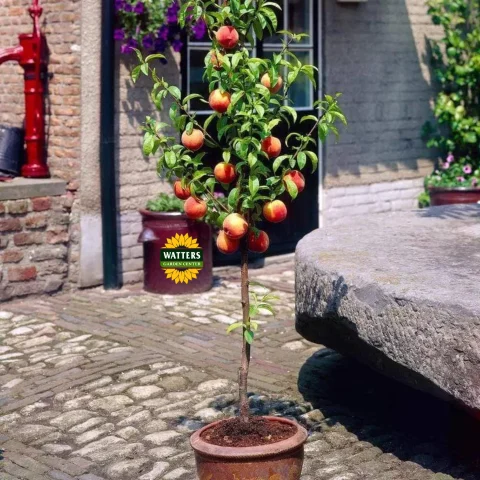
Photo: Peach Tree in Container
Choosing Your Size: Dwarf vs. Semi-Dwarf
Years ago, you needed a back-forty or a massive estate to grow fruit. Today, dwarf and semi-dwarf varieties have changed the game, allowing a bounty to grow in just about any yard. Standard-sized trees can reach 25 feet tall and wide, taking up a massive chunk of the yard and making pruning a chore that requires a tall ladder.
The terms “dwarf” and “semi-dwarf” can be a bit confusing, so let’s break them down. Dwarf fruit trees reach about 8-10 feet. They are wonderful because you can tend and harvest them without a ladder. However, they tend to be shorter-lived. Semi-dwarf trees are a bit larger, topping out at 12-16 feet. While they might require a ladder for the very top, the average yield is about 8-12 bushels—roughly twice what you’d get from a dwarf tree, and they live much longer. Both types should start producing fruit at 5-7 years of age.





The Secret to Pollination
One question I hear constantly is: “Do I need two trees?” Most fruit trees produce better if two or more are planted nearby. You can grow them anywhere in the landscape, just don’t put the house or the barn between them. The trick is to plant the same type of fruit but a different variety. For instance, two different kinds of apples will cross-pollinate if they bloom at the same time.
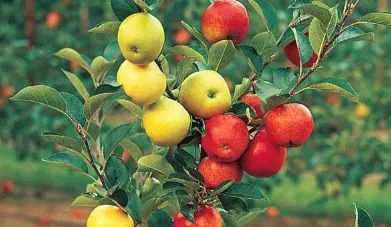
If you only have space for one lone tree, look for “self-fruitful” varieties. Peaches, apricots, nectarines, and sour cherries are great options that pollinate themselves with a bit of help from the bees. A notable exception in the cherry world is the ‘Stella’ Sweet Cherry, which is also self-fruitful. Another clever option is the “Fruit Cocktail Tree,” where three or more varieties are grafted onto a single trunk.
Mountain Proven Producers
In our neck of the woods, apples and pears are the undisputed kings of production. Why? Because they are the last to blossom in the spring, which reduces the chance of a late mountain frost nipping your harvest in the bud.


For those looking for the “easy button,” cherries are the lowest maintenance. They generally only need pruning if branches are damaged or crossing. Stone fruits like peaches and plums are also relatively easy to grow. However, they do benefit from some pruning to keep the center open to the light.

Care and Feeding
Every fruit tree needs a little TLC to perform its best. They require annual pruning and a regular diet of my locally formulated Fruit & Vegetable Food. Also, keep in mind that fruit trees need “chill hours”—a period where temperatures drop below 45°F during dormancy. Without this, they won’t set much fruit the following spring. We make sure to stock locally proven varieties here at Watters Garden Center that are guaranteed to get the chill they need.
Timing is Everything
If you are dreaming of fresh fruit, the time to plant is now. Late winter and early spring are the ideal windows because you want to get them in the ground before they leaf out or bloom. Starting with the right tree for our mountain soil and getting it off to a healthy start is the most solid step you can take toward that first harvest.
Stop by the garden center, and let’s find the perfect tree for your backyard. We even offer free classes every Saturday at 9:30 am to help you grow better.

Free Gardening Classes Every Saturday @ 9:30 am
Join us for these upcoming topics:
- February 7: Sweet Rewards – A Gardener’s Guide to Home Orchards
- February 14: Beginners Guide to Small Spaces with Big Garden Rewards
- February 21: Surprising Evergreens with a Colorful Spring Secret
Until next week, I’ll be here at Watters Garden Center helping neighbors plant their own sweet rewards.


Ken Lain can be found at Watters Garden Center, 1815 W. Iron Springs Rd., in Prescott, or contacted via his websites, WattersGardenCenter.com or Top10FruitTrees.com.