

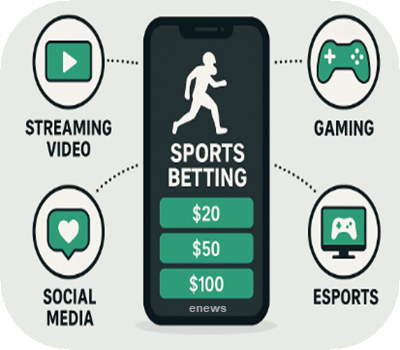
Sports betting is often discussed as if it sits apart from other digital activities. In reality, it has blended into the same environment where people already watch, scroll, play, and react. Its growth is less about betting itself and more about how digital entertainment has evolved as a whole.
Entertainment no longer happens in isolation
Digital entertainment used to be event based. You planned time around a match, a show, or a game. That structure faded as streaming platforms, mobile apps, and on-demand services removed schedules and barriers. Sports betting followed that same path. It stopped being an activity with a clear start and end and became something accessible at any moment. This shift placed it alongside other always-available forms of entertainment rather than outside them.
Second-screen habits created natural overlap
Watching sport today rarely involves a single screen. Phones are close by. Messages arrive. Clips circulate. Stats refresh while the game is still playing. Sports betting on sportsbooks like Betway fits into this layered experience because it reacts to the same moments that already draw attention. A goal, a red card, a momentum swing. Betting does not interrupt viewing. It runs alongside it, much like live commentary or social reaction. This overlap is one reason betting feels integrated rather than separate.
App design followed entertainment standards
Modern betting platforms do not feel like traditional financial tools. Their design is closer to mobile games and media apps. Screens are simple. Actions are obvious. Feedback is immediate. These choices reflect expectations shaped elsewhere in the digital entertainment economy. Users now expect clarity within seconds. Anything that feels slow or confusing is abandoned. Betting platforms adapted because they compete for attention in the same crowded space as other apps.
Short interactions match modern usage
Digital entertainment today is fragmented. People dip in and out of apps throughout the day. Long, uninterrupted sessions are the exception rather than the norm. Sports betting adjusted by supporting brief interactions. Engagement is designed to be quick and self-contained. There is no assumption of sustained focus or preparation. This places betting closer to casual gaming and short-form media than to traditional leisure activities.






Data-driven presentation feels familiar
Across digital entertainment, platforms prioritise relevance. Streaming services suggest what to watch. Social apps surface what matters now. Sports betting uses the same logic. Information is ordered and presented based on timing and context. Users recognise this behaviour because it mirrors how other entertainment apps work. Nothing about this approach is unique. It reflects shared digital habits.
Sports media reinforced the convergence
Sports coverage itself has shifted. Analysis, reaction, and prediction now unfold at the same time as live action. Language around expectation and likelihood appears naturally alongside highlights and commentary. Even when betting is not the focus, its logic shapes how sport is discussed. This further embeds betting within the broader entertainment landscape.
At a business level, sports betting competes with streaming platforms, games, and social media for time on the same screen. It is shaped by the same pressures. Ease of access matters. Speed matters. Returning without friction matters. These priorities align betting with digital entertainment rather than separating it from it.
Part of the same system
Sports betting fits into the broader digital entertainment economy because it follows the same rules. It respects fragmented attention. It assumes interruption. It values immediacy over ceremony. Its current form is not an anomaly. It is a reflection of how people already interact with digital entertainment every day.