



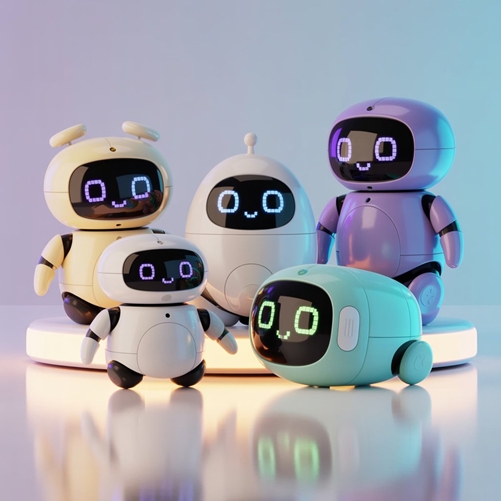
If you’re shopping for a child in your life this holiday season, you may soon run into an AI toy – a stuffed animal or toy robot – that can connect to the internet and use a chatbot like ChatGPT to have conversations with children. The toys come with built-in microphones that record what you say to them and the chatbot then decides what to say back. While AI toys have the capacity to be educational or entertaining, they also come with concrete risks and plenty of unknowns, ranging from data collection to what it means for a child to have an AI friend.
We tested AI toys and found they have real problems
In our testing and conversations with AI and children’s health experts, we found five main reasons for caution:
AI toys can expose children to inappropriate content. The toys we tested are marketed for kids ages 3-12, a broad age range. We wanted to see if the toys we tested would give us instructions on how to find harmful items in the home or give us age-inappropriate information about drugs or sex. Some of them did.
AI companion toys could have long-term impacts on children’s well-being. Experts have raised that introducing AI toys that simulate friendship during early childhood could have a negative impact on a child’s social development as these toys could shape expectations of the human friends in their life – or become addictive replacements.


AI toys come with privacy and security concerns. Children may disclose a lot to a toy they view as a trusted friend, not realizing behind the toy can be multiple companies that are doing the listening and the talking. The more companies collect, store, and share children’s data, the higher the likelihood that data will eventually be exposed in a breach or hack and end up in the hands of scammers or other bad actors.
AI toys may lack sufficient parental controls. Parents should have the ability to set time limits and receive full transcripts of a child’s conversations with an AI toy. None of the toys we tested included the parental controls we think they should.
AI toys market themselves as educational, but that doesn’t mean they are. AI chatbots could have significant educational benefits, similar to personalized tutors. However, given the risks AI toys pose, it’s worth asking if the potential upsides outweigh the possible downsides.
Next steps for AI and children
Since AI is very likely to become part of childhood, it is important to understand the potential risks and introduce AI to children with wisdom and care. And it is up to companies to not design AI toys to be a child’s best friend; be more transparent about the models powering their toys and what they’re doing to ensure they’re safe for kids; and to provide parents with tools to help set boundaries around and monitor the use of AI toys.



R.J. Cross is the Director of Arizona PIRG Education Fund’s Don’t Sell My Data Campaign and author of AI comes to playtime: Artificial companions, real risks.