

When you’ve invested time and money into creating a beautiful outdoor space, the last thing you want is to compromise that aesthetic just to add some privacy. Can retractable privacy screens be integrated with existing landscaping designs?
Yes, retractable privacy screens can be seamlessly integrated with existing landscaping through strategic placement around trees, shrubs, and hardscaping elements. They’re designed to complement various outdoor styles and can be mounted on existing structures or standalone posts.
The key to successful integration depends heavily on your specific landscape layout and the type of screen you choose, so it’s worth exploring the different mounting options, materials, and positioning strategies that work best with various landscaping features like pergolas, garden beds, and poolside areas.
What Are The Best Mounting Options For Different Landscaping Features?
The mounting method you choose can make or break the integration of your privacy screen with your existing landscape. If you have a pergola, deck railing, or existing fence, these structures provide ideal anchor points that require minimal disruption to your garden beds or lawn. Wall-mounted brackets work perfectly for screens attached to your home’s exterior or an outdoor kitchen, while the screens can retract completely when not in use.
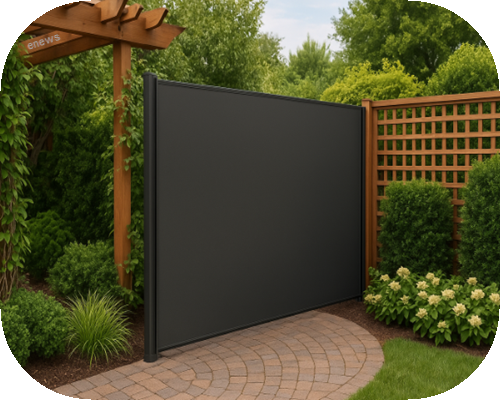
For landscapes without existing structures, freestanding posts offer flexibility in placement. These posts can be installed between planting beds, alongside stone pathways, or even within gravel areas to minimize impact on grass and gardens. The beauty of this approach is that you can position the posts to work around mature trees or established shrubs rather than removing them. Many homeowners opt for powder-coated aluminum or stainless steel posts that blend with modern landscapes, or wood posts that complement rustic garden designs.




Corner installations present another smart option, especially when you’re trying to block sightlines from specific angles. By mounting screens at the corners of patios or deck areas, you can create privacy barriers that follow the natural flow of your outdoor space. This method often requires fewer mounting points and allows your existing landscaping to fill in the gaps naturally.
How Do Different Screen Materials Complement Various Garden Styles?
Mesh fabric screens work exceptionally well in contemporary landscapes with clean lines and minimalist plantings. These screens come in neutral tones like gray, beige, and black that serve as a backdrop for colorful perennials and ornamental grasses. The semi-transparent nature of mesh allows some light and airflow while still providing privacy, which means your sun-loving plants near the screen won’t suffer from sudden shade.
For more traditional or cottage-style gardens, natural materials like bamboo or wood-slat screens create a warmer, organic feel. Bamboo screens pair beautifully with Japanese-inspired gardens featuring stone lanterns, water features, and carefully pruned shrubs. Wood-slat options complement English gardens and rustic landscapes, especially when stained to match existing fencing or pergola structures. These materials age gracefully and can develop a weathered patina that actually enhances the natural look of an established garden.
Vinyl and PVC screens offer durability and low maintenance, making them practical for coastal landscapes or areas with harsh weather conditions. While they might sound less aesthetically pleasing, modern options come in wood-grain finishes and various colors that can coordinate with your hardscaping. They’re particularly useful around pool areas where moisture and chlorine would damage natural materials, and they won’t warp or rot when positioned near irrigation systems or water features.
Climate considerations should guide your material selection. In subtropical regions like Central Florida, where humidity and intense UV exposure can degrade lesser-quality materials, homeowners near areas like Lake Underhill often choose Orlando retractable screens specifically designed for year-round tropical conditions. These systems resist mold, mildew, and sun damage while complementing the lush, year-round landscaping common to the region


What Positioning Strategies Minimize Impact On Existing Plants?
Strategic positioning starts with understanding sun patterns and plant needs in your existing landscape. Before installing any screen, observe how shadows move throughout the day and identify which plants can tolerate reduced sunlight. Shade-tolerant hostas, ferns, and hydrangeas can actually thrive near privacy screens, while sun-dependent roses or vegetable gardens should remain in unobstructed areas. Position retractable screens on the north side of gardens when possible, or choose locations where the screen’s shadow falls on hardscaping rather than planting beds during peak growing hours.
Root systems require careful consideration during installation. When digging post holes for freestanding screens, stay at least three to four feet away from established trees to avoid damaging major roots. Use a root barrier fabric if you must install closer, and consider above-ground mounting plates in areas with dense root networks. For gardens with extensive groundcover or perennial beds, plan your screen placement during the dormant season when you can more easily see what you’re working around and when plants are less vulnerable to disturbance.
Retractable screens offer the ultimate flexibility for seasonal adjustments. During spring and early summer, when gardens are at their peak, you can retract the screens during the day to showcase your blooms and extend them only when privacy is needed. In fall and winter, when many plants go dormant, the screens can remain extended more frequently without impacting plant health. This adaptability means you’re not permanently altering the light conditions of your landscape, giving you control over both privacy and plant vitality throughout the year.
Can Privacy Screens Enhance Rather Than Hide Your Landscaping?
Privacy screens don’t have to act as barriers that conceal your garden—they can actually frame and highlight specific landscape features when positioned thoughtfully. Use screens to create “garden rooms” that draw the eye toward focal points like specimen trees, water fountains, or sculpture pieces. By placing a screen behind a featured element, you create depth and contrast that makes that feature pop visually. A dark-colored screen behind a Japanese maple with bright red foliage, for example, creates a stunning backdrop that wouldn’t exist with an open view to a neighbor’s yard.
Vertical gardening opportunities open up when you treat privacy screens as living walls. Many retractable screens can support lightweight climbing plants like clematis, morning glories, or annual vines when extended for the season. Install a trellis panel in front of the screen or use adhesive hooks to guide vine growth. This approach softens the manufactured look of the screen while adding another layer of greenery to your landscape. Just ensure the plants you choose won’t damage the screen material or mechanism, and that they can be easily managed when you need to retract the screen.
Lighting integration can transform your privacy screen from a purely functional element into an evening focal point. Install uplights at the base to graze the screen’s surface, creating ambient lighting that showcases the texture of mesh or bamboo materials. String lights can be hung along the top edge, or you can mount small LED fixtures directly to the posts. This lighting not only highlights your landscaping after dark but also extends the usability of your outdoor space. When the screen is retracted, the lighting posts remain as permanent fixtures that illuminate pathways or seating areas.
What Should You Consider When Retrofitting Screens Into Mature Landscapes?
Mature landscapes present unique challenges because established plants, trees, and hardscaping have created an ecosystem that shouldn’t be disrupted carelessly. Start by mapping underground utilities and irrigation lines before any digging occurs. Many older properties have sprinkler systems, outdoor lighting wires, or drainage pipes that weren’t documented or have been forgotten over time. Hitting a water line during post-installation can cause significant damage and expensive repairs. Call 811 for utility marking, and use a handheld pipe locator for private irrigation systems.
The scale and proportion of your screen must match the maturity of your landscape. A thin, minimalist screen might look out of place in a garden dominated by large, established trees and substantial stone walls. Conversely, heavy wooden screens with thick posts can overwhelm a delicate garden with young plantings and subtle features. Take photos of your space from multiple angles and, if possible, use stakes and string to mock up the screen’s dimensions before purchasing. This visualization helps ensure the screen’s height and width feel balanced within the context of your existing landscape rather than appearing like an awkward addition.


Soil compaction and drainage patterns in mature landscapes have stabilized over the years, and new installations can disrupt this balance. If your existing garden has good drainage, avoid installing screen posts in low spots where water naturally collects, as this can redirect water flow toward plant roots that aren’t adapted to wet conditions. In areas with heavy clay soil that’s been amended over time, take care to backfill post holes with similar soil composition rather than introducing drastically different material. Consider professional installation if your landscape includes rare or expensive plants, as experienced installers can navigate around established root zones and minimize collateral damage to your garden investment.
Ready To Blend Privacy With Your Garden’s Beauty?
Take a walk around your outdoor space with a measuring tape and camera, documenting the areas where you need privacy while noting existing structures, mature plants, and sun patterns throughout the day. Use this information to consult with a landscaping professional or privacy screen supplier who can recommend specific mounting options and screen materials that will work harmoniously with what you’ve already built. The right integration plan starts with understanding your unique landscape, so gathering these details now will save you from costly mistakes and ensure your privacy solution enhances rather than detracts from your outdoor oasis.