

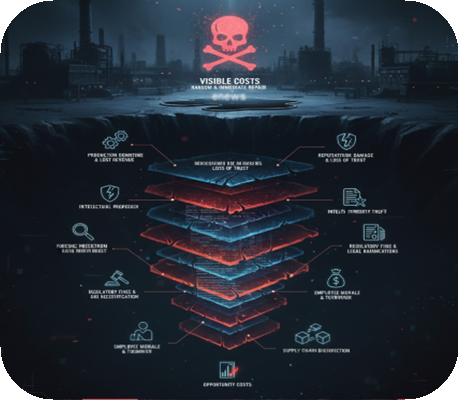
Manufacturing industries have faced an increase in cyber threats as the environment has become more interconnected. However, in most cases, businesses tend to prioritize physical production, but digital vulnerabilities can still cause significant disruptions. These incidents carry hidden costs that can impact operations and finances, as well as damage a favorable reputation. Manufacturers must understand these challenges and take protective measures.
Operational Disruptions
Cyber incidents can disrupt production lines immediately. Typically, a cyberattack initially impacts the manufacturing process itself. It is a case of machines not working; systems can freeze up. And lost productivity translates directly into lost revenue.
Manufacturers depend on finely tuned schedules and J.I.T. production models. But any disruption can cause a ripple effect, upsetting supply chains and leading to delays. Such an impact is enough to force clients to resort to short-term solutions and seek alternatives, which is perilous and can undermine the roots established by existing partnerships. Strengthen your network using advanced cybersecurity solutions for manufacturing to prevent data loss.
Financial Implications
When we consider operational losses, cyber incidents also incur significant additional costs. Firms must address immediate expenses, such as paying ransoms or repairing compromised infrastructure. Indirect expenses may be even greater. Legal fees, regulatory fines, and higher insurance premiums compound the financial burden.
Finally, if you suffer a cyberattack, recovering from it incurs costs, including investments in new security measures, such as updating software, training personnel, and hiring cybersecurity professionals. While necessary, these measures exhaust resources that could be used for growth and innovation.




Reputation Damage
Cyber incidents can damage an organization’s reputation and credibility. When news of a breach reaches the front lines, customer confidence tends to waver, coupled with stakeholder trust. Your clients rely on the protection of their data and information, and a single error can instill doubts and anxiety.
Creating a reputation, however, is a long and laborious path. Some companies may need to conduct public relations campaigns to repair their image. It becomes necessary, and NGOs ask for clarity on what you have here and what you are doing to prevent this type of incident from happening again.
Legal and Regulatory Challenges
Legal and regulatory issues are often associated with cyber incidents. Companies, therefore, must comply with the data protection regulations of the region in which they operate. A breach can lead to investigations or potential penalties for noncompliance. The law, however, is confusing, and these problems require the attention of someone who understands.
It may not only impose fines but also lawsuits from other affected parties. These legal battles can span months or years, diverting time and money away from the business at hand. Staying compliant and understanding your legal obligations is crucial to minimizing exposure to such risks.
Impact on Innovation and Growth
Cyber incidents can additionally dampen creativity and growth. Companies divert resources meant for driving new projects to secure existing ones. Focusing on compliance can cause delays in innovation and competitiveness, as it ties up critical resources necessary for delivering new products and technologies.


Secondly, the fear of subsequent violations may thus lead to a conservative approach. It could put companies off from using new digital tools due to the risk of exposure. This unwillingness can block the way for progress, expansion, and change as a whole.
Employee Morale and Productivity
The impact of cyber incidents on employees is also significant. Workers may feel excluded during and after an attack due to increased stress and uncertainty. It lowers morale and impacts productivity, as employees are uncertain about their retention and the company’s future.
These training programs, specifically designed to improve cybersecurity awareness, are essential. It fosters a strong understanding of best practices, mitigates risks, and empowers employees to recognize potential threats. Employees with the proper training are your greatest asset in avoiding incidents and the fastest way to achieve business continuity when they do happen.
Conclusion
Manufacturing cyber incidents have hidden associated costs beyond the immediate disruption. The consequences are extensive and heavy, from financial stress to reputational harm. Recognizing these challenges enables companies to prepare better and protect themselves. Strong security precautions, employee training, and open communication can reduce the risk of this happening. As the world becomes increasingly digitized, the manufacturing sector must take proactive measures to protect itself from the hidden costs of cyberattacks.