



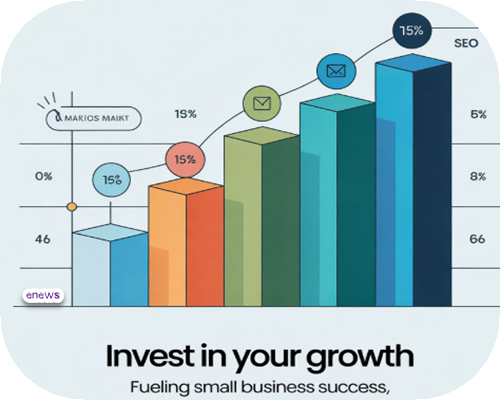
Small businesses across the United States are demonstrating remarkable resilience in their marketing investments, with a recent comprehensive survey revealing that marketing budgets have increased by an average of 15% over the past year, even as inflation concerns continue to weigh heavily on business owners’ minds. This counterintuitive trend suggests that entrepreneurs are recognizing marketing as an essential investment rather than an expendable luxury during challenging economic times.
The survey, which examined marketing spending patterns among over 2,500 small businesses nationwide, paints a picture of strategic adaptation rather than retreat. Despite facing elevated costs for materials, labor, and operational expenses, small business owners are choosing to maintain and even expand their marketing efforts, viewing customer acquisition and retention as critical to weathering economic uncertainty.
The Strategic Shift in Marketing Thinking
This increase in marketing budgets represents a fundamental shift in how small business owners perceive marketing’s role during economic turbulence. Rather than cutting marketing expenses as a quick way to reduce costs, business leaders are increasingly viewing marketing as an investment in future growth and stability. The data shows that companies prioritizing marketing during uncertain times often emerge stronger when economic conditions improve.
Small businesses are becoming more sophisticated in their approach to budget allocation, with many owners reporting that they’ve learned valuable lessons from previous economic downturns. The 2008 financial crisis and the COVID-19 pandemic taught many entrepreneurs that maintaining visibility and customer relationships during difficult periods often determines long-term survival and success.






Professional service industries have been particularly strategic in their marketing investments. For instance, a personal injury lawyer marketing agency recently reported that their clients have consistently increased their marketing spend by 20% year-over-year, recognizing that legal services remain in demand regardless of economic conditions. This sector’s commitment to marketing investment reflects a broader understanding that consistent brand presence and client acquisition efforts are essential for sustainable growth.
Digital Transformation Drives Efficiency
Much of the increased marketing spending is being directed toward digital channels, where small businesses can achieve greater measurability and return on investment compared to traditional advertising methods. The survey revealed that 68% of the additional marketing budget is being allocated to digital marketing initiatives, including search engine optimization, social media advertising, and email marketing campaigns.
This digital focus allows small businesses to stretch their marketing dollars further while gaining valuable insights into customer behavior and campaign performance. Business owners report that the ability to track and measure digital marketing results in real-time helps them make more informed decisions about where to invest their limited resources.
The shift toward digital marketing has also enabled small businesses to compete more effectively with larger corporations. Through targeted online advertising and strategic content marketing, small businesses can reach their ideal customers without the massive budgets traditionally required for television, radio, or print advertising campaigns.





Customer Retention Takes Priority
The survey data indicates that small businesses are increasingly focusing their marketing investments on customer retention rather than solely pursuing new customer acquisition. This strategic approach recognizes that retaining existing customers is typically more cost-effective than acquiring new ones, especially during periods of economic uncertainty when consumers may be more cautious with their spending.
Many small businesses are investing in customer relationship management systems, loyalty programs, and personalized communication strategies. These investments help businesses maintain stronger connections with their existing customer base while encouraging repeat purchases and referrals, which can be particularly valuable during challenging economic times.
Industry-Specific Trends
Different industries are approaching marketing budget increases in various ways. Retail businesses are heavily investing in e-commerce platforms and online advertising to capture consumers who have shifted their shopping habits toward digital channels. Restaurant and hospitality businesses are focusing on local marketing initiatives and social media engagement to attract customers in their immediate geographic areas.
Healthcare and professional services sectors are showing some of the most significant increases in marketing spending. These industries have recognized that consumers actively research service providers online before making decisions, making digital marketing presence crucial for business success. Legal firms, medical practices, and consulting services are particularly aggressive in their marketing investments, understanding that professional credibility and visibility directly impact their ability to attract new clients.
Measuring Return on Investment
Small business owners are becoming more sophisticated in measuring the effectiveness of their marketing investments. The survey revealed that 73% of businesses now use specific metrics to track marketing performance, compared to just 45% three years ago. This increased focus on measurement helps justify continued marketing spending even when other business expenses are rising due to inflation.


Business owners report using various metrics to evaluate marketing success, including customer acquisition cost, lifetime customer value, website traffic, and conversion rates. This data-driven approach enables them to optimize their marketing strategies continuously and allocate resources to the most effective channels and campaigns.
Future Outlook and Sustainability
Looking ahead, small business owners express cautious optimism about their ability to maintain current marketing spending levels. While inflation concerns remain significant, many entrepreneurs believe that consistent marketing investment is essential for long-term business sustainability and growth.
The survey suggests that small businesses planning to maintain or increase their marketing budgets are those that view marketing as a strategic business function rather than an optional expense. These businesses are more likely to have formal marketing plans, dedicated marketing budgets, and systems for measuring marketing effectiveness.
As economic conditions continue to evolve, small businesses that have invested in building strong marketing foundations are likely to be better positioned to adapt and thrive. The 15% increase in marketing budgets, despite inflation concerns, demonstrates the entrepreneurial spirit and strategic thinking that often enables small businesses to not just survive but flourish during challenging times.
This trend toward increased marketing investment, even in uncertain economic times, suggests that small business owners are learning to view marketing not as a cost center but as a growth engine that can help them navigate through difficulties and emerge stronger on the other side.