


China is focused on outpacing the United States as the world’s most powerful economy, with ambitions to be the largest manufacturer with cutting-edge industries.
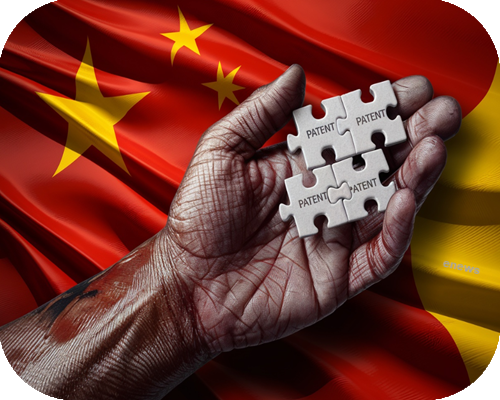
When it comes to China’s power, we ignore its intellectual property at our risk. Last year, most patents issued by the U.S. Patent and Trademark Office went to inventors abroad. China was a standout, receiving 30 percent more patents than the previous year — aided by the Chinese government spending hundreds of millions of dollars to subsidize patent filings. These patents are used to sue American employers across industries for monetary damages and block homegrown U.S. companies from selling products domestically.
Notwithstanding this threat to U.S. companies, efforts are underway to reshape the best tool U.S. inventors and businesses have to shield themselves from IP manipulation.
The patent office’s Patent Trial and Appeal Board (PTAB) involves expert patent judges reconsidering patents that were previously issued, checking them for quality. With the Government Accountability Office finding in April that 16 percent of recent patents are statutorily noncompliant, the PTAB’s work is crucial to strike thousands of problematic patents from the economy.
PTAB procedures are faster, simpler and much cheaper than typical patent litigation. They fix patenting mistakes at no cost to U.S. taxpayers, ensuring that wrongly granted patents can’t be used in litigation by foreign competitors against U.S. counterparts.





The PTAB also protects against lawsuits brought by non-practicing entities (NPEs), shell companies that own patents but do not make products. NPEs use litigation as a money-making scheme, weaponizing their patent portfolios by asserting patents against everyone from local retailers to the largest tech companies. This type of litigation is increasingly backed by outside investors like hedge funds, and although transparency is limited, we have evidence that foreign adversaries’ funds have financed NPE patent lawsuits in U.S. courts.
NPEs, also known as “patent trolls,” initiate more than half of all U.S. patent litigation, with companies like Apple and Google among those most frequently targeted. NPEs drain those they sue of $29 billion in direct costs annually and companies forced to pay NPEs reduce R&D investments by hundreds of millions of dollars afterward.
The PTAB consistently advances U.S. interests. More than 60 percent of PTAB reviews are requested by U.S. petitioners, while 67 percent to 80 percent of the patents challenged are controlled by foreign-owned corporations or their affiliates.
Now, the PTAB’s future is uncertain. At the patent office, the acting director has throttled the congressionally established review with a new administrative chokehold that petitioners must clear for their cases to be considered. Meanwhile, in Congress, the Promoting and Respecting Economically Vital American Innovation Leadership Act was reintroduced in May. This proposal would limit who can request review and dramatically expand the circumstances in which patent review would be denied.
These developments will lead to the same outcome: more innovators left vulnerable to NPEs funded by China and Chinese patentees weaponizing subsidized patents.






California’s senators, Alex Padilla and Adam Schiff, have vital roles to play. They each sit on the Senate Judiciary Committee, so they have direct input if the PREVAIL Act advances. Schiff’s oversight role on the IP subcommittee also gives him influence over patent office policy, including the acting director’s recent changes.
U.S. innovators can stay ahead of their foreign competitors, but we must prevent our patent system from being used to sabotage them. The PTAB is the best tool to thwart patent abuses. Our policymakers need to protect it.