

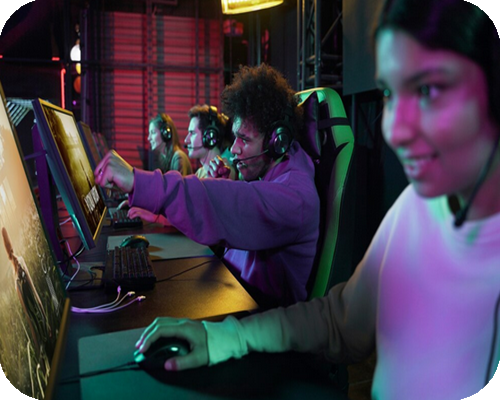
Globalization has completely transformed the gaming industry; in fact, it is now connecting the players with the makers. Within a game, no longer bound by the borders and cultural restrictions, games today are played and enjoyed by millions across different continents.
This article discusses the impact globalization has on shaping games, global releases of games, varied stories, and international esports competitions.
Games Can Now Reach Global Audiences
Before globalization, many games were offered in select countries. By now, my very favorite games are now getting released all over the world at the same time. Nintendo, Sony, and Microsoft sell their consoles and games in nearly every country.
Also, very efficient are digital stores like Steam and the App Store, wherein no matter where one is living, downloading games becomes a matter of clicks on the button. All this has helped evolve the industry into one of the multi-billion-dollar entertainment businesses.






Cultural Variety in Games
Globalization has added even more cultural variety to games. Developers take inspiration from traditions, myths, and histories to mold the art of their game. One can have a taste of worlds and perspectives through games like Ghost of Tsushima for Japan, Assassin’s Creed: Origins for Egypt, and Never Alone for the Alaska Native Culture. It also leaves a very educational approach toward learning about other cultures while having fun.
International Game Development
Game studios no longer work in only one country. Nowadays, big companies like Ubisoft have teams in various locations, such as France, Canada, and Singapore, working together on the same project. Indie developers are also coming together, using the internet to exchange ideas and skills across borders.
This global collaboration creates more innovative and high-quality games as people from different backgrounds bring new ideas into the open.
Universality of Esports
Esports tournaments may be seen as an international arena today, being held in cities from Los Angeles to Seoul. Players from all over the world fight for accolades in games like League of Legends, Dota 2, and Counter-Strike in a common arena.
More often than not, these tournaments are watched by millions through online portals, thus creating a different kind of international entertainment. Winning contests usually goes into the millions, converting esports into something very serious for top pros.






Localisation: Speaking the Player’s Language
To further increase the number of players, video games are now being translated into many languages. Accompanying the translated scripting are voice-overs, subtitles, and menus so people can play in their native language.
Some games would even change some of their content to fit a particular culture, like taking out symbols or humor. In this way, they befriend many homes around the world, allowing players to connect with players of different languages.
Online Gaming Connects the World
Perhaps friendship might be very unlikely to cross paths in the real world for most of these players, but nonetheless they are bonding across the virtual world. Alas, time zone differences as well as varying internet speeds sometimes prove not so helpful in this joining feature. Hence, it is very effective for players to visit the Daman Game official website to better connect with the online community.
By multiplayer gaming, others can get involved either as a team player or as a competitor with others from another part of the world. Around the globe, millions of players rank among daily players for Fortnite, Call of Duty, and Minecraft.
Conclusion
Globalization has made gaming bigger, more diverse, and more connected than ever. Players enjoy games from different cultures, compete in international esports, and make friends worldwide. While challenges remain, the future looks bright for a gaming industry that brings the world together one game at a time.