






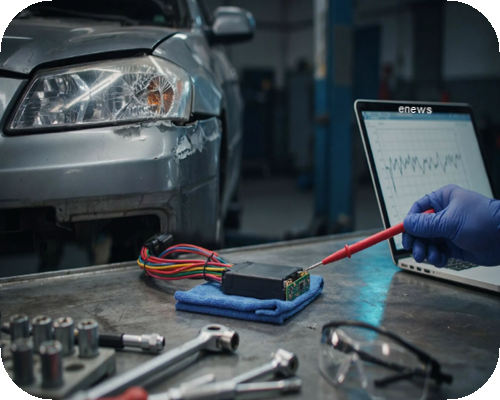
After a crash, everyone wants the same answer. Who did what? Drivers often tell different stories. Witnesses may not agree. Photos only show the scene after the damage is done.
Yet your car may have saved the truth already. Most newer vehicles carry a small device called an event data recorder. People often call it a black box. It works quietly in the background, and few drivers ever think about it.
This guide explains what the device saves, who controls the data, and how it can help after a wreck. It also shares simple steps to protect that data.
What an event data recorder really does
The device sits inside the car’s safety system. It does not film you. It does not record your talking. Instead, it saves a short list of facts when a crash happens.




Those facts often include speed, braking, throttle position, and airbag use. Many cars also log whether seat belts were buckled. The recorder usually keeps only a few seconds before the impact. However, that short window can say a lot.
Federal rules set what a recorder must capture if a car has one. As a result, the data follows a common format. Think of it as a tiny referee. It does not take sides. It only lists numbers.
Why those numbers can change a claim
Fault drives almost every car crash claim. In Louisiana, for example, the driver who caused the crash is responsible for damages. So proof matters. Stories can shift over time. Numbers usually do not.
If you were hurt in a Louisiana crash, a car accident lawyer in New Orleans can explain how to request this data the right way. A lawyer can also send a notice asking others to keep it safe. That matters because data can vanish fast.



Here is a real example. In a Kansas City case, police pulled data from a car’s recorder. It showed the driver was going 104 mph five seconds before impact, with the gas pedal fully pressed. That hard evidence told a clear story.
Most crashes are far less dramatic, of course. Still, the same tool can show whether a driver braked in time. It can also show whether someone sped up before a turn. That kind of proof can back up your side.
Big rigs add more layers
Crashes with large trucks are more complex. More than one party may share blame. The driver, the trucking company, and others may all play a role. Because of this, legal support after a truck accident often starts with fast action to protect proof. Early steps can decide how strong a case becomes. Photos, witness names, and a quick call for help all matter in the first days.
What the box cannot tell you
A recorder is helpful, but it has limits. It usually saves data only after a hard event, such as sudden braking or an airbag deployment. Small bumps may leave nothing behind.
It also cannot show a traffic light color. It cannot show who had the right of way. It cannot explain why a driver made a choice. Therefore, the numbers work best alongside police reports, photos, and witness names.
Also, the data can be lost. Repairs, sales, or a trip to the scrapyard can put it out of reach. Quick action helps. If you wait too long, a shop may fix the car or an insurer may close the file. Asking early keeps your options open.


Who owns the data
Many drivers worry about privacy. That is a fair concern. Here is the good news. In most cases, the data belongs to the car owner. Police usually need the owner’s consent or a court order to get it. Rules can vary by state, so ask before you agree to anything.
Some insurers may ask for access too. Read any request closely. If you feel unsure, pause and get advice first. You do not have to rush.
Simple steps to protect your claim
You can take a few easy steps after a crash. First, get medical care, even if you feel fine. Some injuries show up days later. Next, take photos of both cars, the road, and your dashboard. Then write notes while your memory is fresh.
After that, tell the repair shop and your insurer that you want to talk before any repairs or a total-loss sale. Do not try to pull the device yourself. It takes special tools to read. Finally, stay off social media. A casual post can be twisted later.
Also, ask for the police report number. Keep every receipt, bill, and letter in one folder.
Know your car before you need it
Check your owner’s manual today. It should say if your car has a recorder. Learn what your policy says too. A little time now can save stress later.
A crash is hard enough. You should not have to argue about the facts alone. Your car may already hold them. With calm steps and good advice, you can make sure they are heard.



Carl Black
Recent Articles
Prescott Regional Communications Center Earns Third Place Nationwide in T-Mobile Innovation in Community Competition
‘Art for Everyone’ Returns to Prescott
Prescott Valley Voters Shoot Down Local Propositions – Bill Williams
Arizona’s #1 Farmers Market Opens Its 13th Winter Season November 7