



The Supreme Court building in Washington on Oct. 9, 2026. Madalina Kilroy/The Epoch Times
The Supreme Court on Nov. 3 seemed sympathetic to arguments by Colorado Catholic preschools seeking to join the state’s universal preschool program while declining to enroll children based on sexual orientation or so-called gender identity—whether that of the child or the parents.
The case, St. Mary Catholic Parish v. Roy, asks whether Colorado can require Catholic preschools to follow its nondiscrimination rule on sexual orientation and gender identity if they want state preschool funding.
The schools argue that the rule clashes with the church’s religious beliefs and that the state already permits other exceptions.
Colorado says the rule is neutral and applies equally to every preschool taking public money, and that religious schools remain free to participate as long as they do not turn children away on those grounds. A ruling for the schools would make it harder for states to attach anti-discrimination conditions to public money that goes to religious schools. The Trump administration supports the Catholic schools in the case.





The petitioners sued in August 2023. Citing Employment Division v. Smith (1990), a federal district court declined to apply strict scrutiny—the most demanding constitutional test—to what it termed the “sexual-orientation and gender-identity aspects of the equal-opportunity requirement” of the preschool program. It instead held that those aspects were “neutral and generally applicable,” according to the petition, and ruled for the state.
The U.S. Court of Appeals for the 10th Circuit affirmed, also citing Smith. It held that Carson v. Makin (2022) and related cases did not apply because Colorado’s rule did not explicitly exclude religious schools. The court also concluded that the program’s various exceptions and preferences did not undermine the general applicability of the rule, so the requirement was subject to a less demanding form of constitutional scrutiny known as rational basis review. In Carson, the Supreme Court held that Maine couldn’t exclude religious schools from a tuition assistance program simply because they’re religious.
During the Nov. 3 oral argument, justices pressed Colorado to explain how the state policy did not discriminate against religious schools.
“Explain what the difference is between [explicitly excluding religious schools] and then choosing to impose a condition that you know that those schools will be unable to agree to,” Justice Amy Coney Barrett asked Helen Norton, Colorado’s deputy solicitor general.
Norton said the state welcomes religious preschools but requires that they meet the same equal opportunity conditions as every other public or private preschool.


Justice Samuel Alito listed three First Amendment religion cases from recent years in which the Supreme Court struck down Colorado laws for interfering with religious freedom.
The justice asked Norton, “What should we make of all of this?”
Justice Brett Kavanaugh followed up by pointing out that there are 2,000 participating schools and only 34 of them are Catholic.
He asked Norton why Colorado had “provoked” a confrontation, when there was a “win-win” available. The justice pointed to the program’s other enrollment preferences—such as allowing schools to prioritize children of single parents, or those interested in STEM or vegetarian diets—and asked why religious schools couldn’t receive similar flexibility.
“It seems like this is … a would-be solution in search of a problem. And I’m just trying to figure out … why we’re here,” Kavanaugh said.
Conservative justices questioned why Colorado needed to condition funding for the program on an equal opportunity mandate, as they raised concerns about nondiscrimination laws being used in an indirect way to discriminate against religious beliefs.
“When a state imposes a condition that it knows certain religions cannot accept, the only question that is presented is whether that was done with the intent to discriminate against those religions,” Alito said.
Liberal justices framed the case as one that could open the door to discrimination.


“What you’re basically saying is we can exclude people merely because of exposure to them,” Justice Sonia Sotomayor said to Principal Deputy U.S. Solicitor General Sarah Harris.
“We can exclude children of same-sex marriage,” the justice said. “We can exclude children who might … have transgender feelings or beliefs because exposing other children to them creates a problem.”
The Supreme Court is expected to rule on the case by June or July 2027.

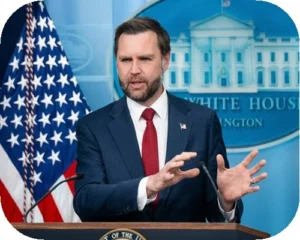

Matthew Vadum | THE EPOCH TIMES
Recent Articles
Handel’s Ice Cream Brings Fresh, Handmade Ice Cream to Historic Downtown Prescott
Chino Valley Police Dept. Awarded $22,408 in Governor’s Office of Highway Safety Grants
Upcoming Community Meeting for the Effluent and Wastewater Pipelines & State Route 89 Improvements Project – City of Prescott
The Pine Ridge Prowl is Coming on October 24