




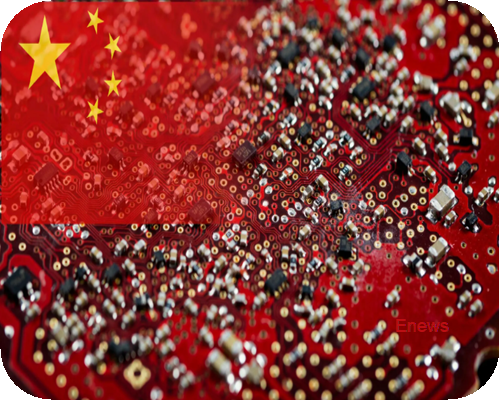
As the Director of National Intelligence and new AI czar, Jay Clayton convenes the first Super Intelligence Force, and one trade policy area should come under scrutiny and review. Specifically, Clayton and colleagues should examine whether a protectionist posture around AI models and chips would do more harm than good for America.
History offers a useful lesson. At the start of the Industrial Revolution, Britain was the world leader in mechanized textile production. The British treated machinery and manufacturing know-how as strategic economic assets and enacted laws restricting the export of textile machinery and the emigration of skilled artisans who possessed specialized manufacturing knowledge. Despite their best efforts, the American textile industry grew.
British export controls created an incentive to develop American domestic capability, and America ultimately overtook Britain in industrial production as the world bought not only our products but built with our manufacturing equipment.
As we enter the next industrial revolution, the United States must avoid making the same mistake with AI chip and model markets that Britain did many years ago.
When in office, President Joe Biden more or less took the British approach. In November 2021, he signed the Secure Equipment Act to prevent companies like Chinese telecom giant Huawei from receiving new equipment authorizations in the United States. This was followed by sweeping restrictions in October 2022 on China’s access to advanced AI chips, chipmaking equipment, and certain foreign-produced products using U.S. technology. And in 2025 he extended restrictions far beyond China when he enacted the AI Diffusion Rule, which imposed new licensing requirements and caps on advanced AI chip exports to much of the world.


China has reacted much the same as America responded to those mercantilist British laws. Billions of yuan have been poured into domestic artificial intelligence, chip design and chip manufacturing, and Chinese chip manufacturers are rapidly gaining market share.
This charge is being driven by Huawei, which is supported by the Chinese government and has expanded its investment in chip development. Today, it is one of NVIDIA’s largest competitors and outspent it on research and development, spending $27.5 billion compared with NVIDIA’s $18.5 billion.
In May, Huawei Deputy Chairman Xu Zhijun acknowledged the role that U.S. export controls played in enabling the growth of the Chinese semiconductor industry, noting that he was “grateful to the US for enabling our country’s semiconductor industry chain to truly grow. Now the momentum is very good, and everyone recognizes and supports it.”
Meanwhile, Beijing-based artificial intelligence chip designer Cambricon Technologies has been nicknamed “little NVIDIA”. The company illustrates the threat posed by limiting U.S. sales and how quickly China is moving to fill the void. The company reportedly aims to more than triple its production of AI chips in 2026 and is developing its sixth-generation AI chip architecture, with support for Chinese AI models.
This competition will not stop at China’s borders. As Chinese companies build scale at home, they will be better positioned to sell their AI technology abroad. At the same time, if America continues restricting exports of AI technologies to adversaries and allies alike, countries building their AI infrastructure could increasingly turn to Chinese chips, models and software, giving Beijing greater influence over the technology and standards underpinning the next industrial revolution.



What now? The United States has begun pursuing policies that enable controlled expansion of exports of the American technology stack. Its July 2025 executive order promotes full-stack exports to allies and partners, and its January 2026 licensing changes allow case-by-case review of certain chip exports to China.
However, executive actions alone are insufficient, especially in light of pending pieces of legislation in the National Defense Authorization Act such as the AI Overwatch Act, which would reverse that progress by locking elements of the Biden administration’s counterproductive export-control strategy into law.
The Super Intelligence Force and Congress must work together to implement clear frameworks for our export approval systems for China and worldwide markets. We must adjust our existing AI model and chip controls to distinguish between sensitive capabilities that require national security safeguards and those suitable for wider commercial use. Further unnecessary constraints will hand China these growing markets at the expense of America’s global leadership and national security.



Ron Wright | INSIDE SOURCES
Recent Articles
Upcoming Community Meeting for the Effluent and Wastewater Pipelines & State Route 89 Improvements Project – City of Prescott
The Pine Ridge Prowl is Coming on October 24
New 4-way stop at Granite Street and Willis Street
Freaky Foot Tours Presents the Prescott Haunted History Tour