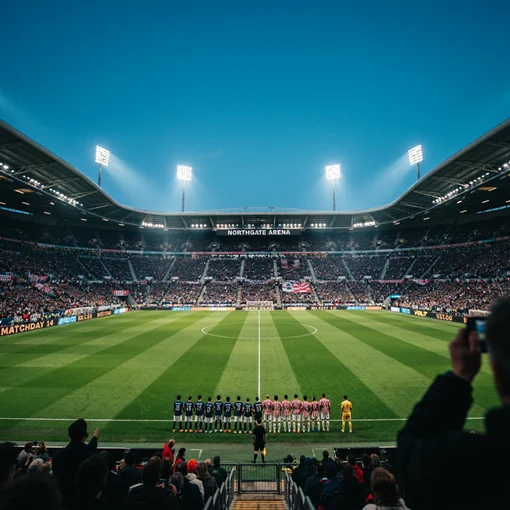
Commercial properties, like those formerly occupied by malls, have been virtual catnip for multi-use projects. Not surprisingly, sports stadiums have been elbowing their way into the mix as well.
Redevelopment examples include:
Constructed on a former mall site, Ballparks of America in Branson, MO, includes five full-scale baseball fields, plus restaurants, a pro shop, and entertainment spaces, according to sportsfacilities.com.
In the aftermath of the demolition of Valley View Mall, the North Dallas-based Dallas Mavericks entered into option agreements for 104 acres of land, according to espn.com. Planned is an arena for basketball exclusively, as well as an entertainment district including restaurants, green spaces, and family-friendly attractions. The completion date is targeted for 2031.
What’s driving this?
“Many of the malls — particularly indoor malls — have had a decline in attendance,” Jack Hill, project executive at Hill Sports and Entertainment Consulting in Dallas, told The Mortgage Note. With the popularity of door-to-door delivery services and big-box lagging sales, “these mall stores are looking for economic drivers to attract a wide variety of customers to the site.”
“Similar to adding movie theaters or other non-shopping venues to the mall, mall owners need opportunities to bring in a wide variety of customers through the doors,” Hill explained.
Brian Connolly, founder and CEO of both Victus Advisors and Feasibly, told The Mortgage Note that, “broadly, this is happening because the old mall anchor model has broken down. Department stores used to be the primary traffic drivers for malls, but many of those anchors have been closing or shrinking.
At the same time, he continued, consumer demand has shifted toward experiences, events, recreation, and places where people can gather. “Sports teams and sports-related operators are a natural fit for that shift because they create activity, programming, and repeat visitation in a way a traditional department store often no longer can.”
Beyond that, malls are ideal for outdoor sports fields and stadium infrastructure due to their ample plots that are centrally located. Since office space is being used by fewer companies, developers are tapping into sports venues as a competitive alternative.
And talk about serendipity. Connolly said malls are attractive because they already have many of the ingredients these projects need: large land parcels, big-box footprints, parking, highway visibility, utility infrastructure, and surrounding retail and restaurant space that can benefit from spillover traffic.
“In many cases, the land’s underutilized but still well-located within a regional trade area. That makes it easier to reposition the property into a sports, entertainment, or mixed-use district than to assemble a new site from scratch,” Connolly said.
Malls have the spaces sports teams need.
James O’Neil, a director and the sports and entertainment practice group leader for Cushman and Wakefield’s valuation and advisory group based out of Atlanta, said “malls sit on large, single-owner parcels that are already assembled and entitled – often 80-150+ acres in prime locations close to the population base a team needs. That combination’s rare to find anywhere else in a built-out metro, and it lets developers skip years of buying out multiple landowners.”
With anchor department stores closing or shrinking, he added, “these sites are also underperforming relative to the value of the land, so owners are often willing to trade weak retail income for a much higher-value mixed-use redevelopment.”
Keven Rowe, a partner and chair of the Real Estate Finance Practice Group at Buchalter’s Salt Lake City office, said large parcels of land like these can be undervalued based upon performance struggles of this type of asset class.
“A lot of malls have had performance issues with online retailing expansion. So a sports team can acquire a large commercial parcel without the hassle of assembling smaller pieces of property,” Rowe said.
Connolly explained another upside is sports and entertainment anchors “can turn a struggling retail property back into a destination by generating repeat visits beyond traditional shopping hours and outside the immediate trade area.” Professional sports, concerts, youth sports, community events, and food-and-beverage programming can create steadier weekday and off-peak traffic while boosting demand for adjacent restaurants, small-shop retail, hotels, multifamily, and entertainment uses, he pointed out.
So, what’s the catch?
Okay, but just like in a ball game, there’s going to be catches when it comes to turning former mall sites into sports stadiums. The “two big ones” are public resistance to traffic, noise, and light from event days – even on already commercially zoned land – and taxpayer exposure.
Many of these projects, explained O’Neil, “seek public infrastructure funding or tax incentives, which shifts real financial risk onto the public to support what’s ultimately a private franchise’s real estate play.”
Other disadvantages include meshing the sports operations with the existing mall operations as well as related traffic and mixed-use issues, like operating sports facilities in the middle of a commercial mall, noted Rowe.
Added Connolly, “These projects are far more complex than simply backfilling a vacant anchor box.” They require consistent programming, sophisticated operations, and a realistic understanding of visitor demand; “without that, even a high-profile pro team facility or sports complex can sit quiet for much of the week.”
The biggest risk is overestimating the market by relying too heavily on local demographics while underestimating regional draw, visitor behavior, and conversion into retail spending. “If the tenant mix, parking, infrastructure, financing, or public-private partnership structure is misaligned, the project can become difficult to execute and may underperform,” he noted.
In the next three to five years, 25% of the country’s malls will call it a day, based on estimates from Coresight Research, according to sportsfacilities.com