


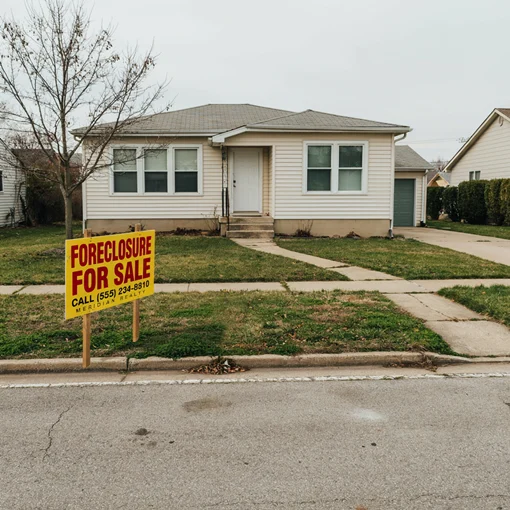
Rising foreclosures offer an opportunity for affordability-stressed buyers to find steep discounts, especially in hot markets as housing costs strain American homeowners.
That’s according to a new report from Realtor.com, which found that foreclosures are increasing from extreme pandemic lows, with the current rate bouncing back to roughly 2019 levels.
While this increase reflects the difficulties many homeowners are facing in today’s economy, it remains far below the spike during the 2008 financial crisis.
The rise in foreclosures is tied to increasing housing costs. Monthly expenses are going up due to higher rates, rising property taxes, higher insurance premiums, and HOA fees. At the same time, living costs are increasing faster than wages.
Together, these factors are making it harder for some homeowners to keep up with payments.
Buyers who purchased their homes after 2023 are at a higher risk of foreclosure because they have built less equity and have not benefited from price appreciation.
Some may owe more than their home is worth, making it harder to sell or refinance if they run into financial trouble.
“Homeowners who purchased near the peak of the market with small down payments are most exposed when prices soften, because they had very little equity buffer to begin with. If the estimated value of their home falls while their loan balance stays largely fixed, they can slip into negative equity territory quickly,” Realtor.com senior economic research analyst Hannah Jones explained in a related report.
In May 2026, 1.5% of all U.S. mortgages were underwater– the homeowners owed more than what the house was worth– up a half percentage point from April.
Many former pandemic boomtowns have seen a significant correction, with home values plummeting, leaving the people who bought while prices were high with mortgage payments on a house with far less value. Cape Coral-Fort Myers, Florida, and Austin have seen prices slip by 18.9% and 27.3%, for example.
Realtor.com notes that, after foreclosure, homes are typically auctioned. If they do not sell at auction, they become “Real Estate Owned” (REO) properties and are listed for sale by the lender.
As of April 2026, REO homes made up about 1.3% of all homes for sale, and final prices were 27.2% below estimated market value.
Foreclosed homes are typically sold at a discount due to risks such as limited inspections, cash-purchase requirements, and potential legal complications.
Buyers can find foreclosure auctions and REO online or through local resources. Experts recommend treating the house like a normal purchase: get an inspection, learn about the house’s history, and think carefully about the cost of any repairs.
Double-check on lien issues, and remember that foreclosures can take longer to close than other homes.