
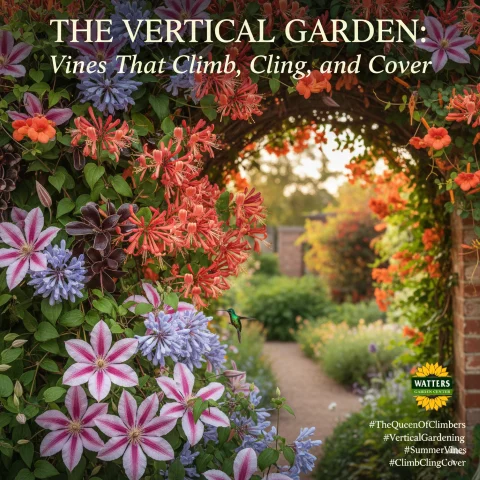
When we think of gardening, we often focus on what happens at our feet, the perennials, the mulch, the low-lying shrubs. But to truly transform a garden from a collection of plants into an immersive outdoor room, you have to look up. Climbing vines are the architects of the garden; they soften harsh fence lines, provide privacy “walls” of living green, and drop tapestries of color from heights that ground-bound flowers simply cannot reach.
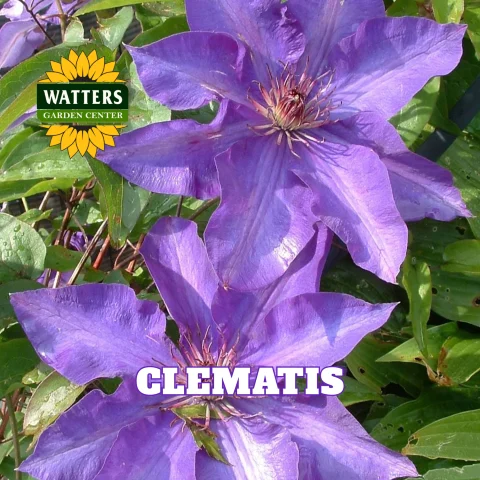
The Queen of Climbers: Clematis
No discussion of vertical gardening is complete without the Clematis. Often called the “Queen of Climbers,” this genus offers a diversity that few other plants can match. From the massive, plate-sized blooms of the ‘Nelly Moser’ to the delicate, nodding bells of the Clematis viticella varieties, there is a clematis for every corner of the yard.
The secret to a thriving clematis lies in an old English gardening adage: “Feet in the shade, head in the sun.” These vines crave sunlight to produce their spectacular flowers, but their root systems are sensitive to heat. Mulching heavily or planting low-growing perennials around the base of the vine keeps the soil cool and moist.
One of the most rewarding aspects of Clematis is the staggered bloom times. By planting a mix of Group 1 (early spring bloomers), Group 2 (large-flowered mid-summer hybrids), and Group 3 (late summer bloomers), you can have “The Queen” reigning over your garden from May until the first frost.





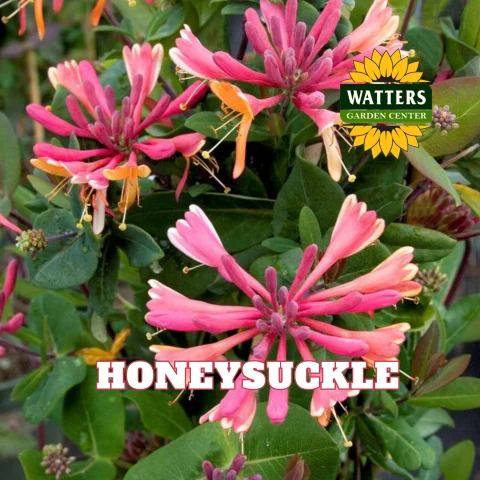
The Scent of Summer: Honeysuckle
While Clematis provides the visual drama, Honeysuckle, Lonicera, provides the atmosphere. As the sun sets and the air cools, the perfume of honeysuckle drifts across the patio, creating that quintessential summer evening feel.
Kids grow up sucking the nectar from the butter-yellow flowers of Japanese Honeysuckle. It’s easy to grow as a climber up walls or groundcover over banks. ‘Major Wheeler,’ a selection of Lonicera sempervirens, offers stunning coral-red trumpets that are a magnet for hummingbirds. Unlike some vines that can become woody and sparse at the bottom, honeysuckle stays lush, making it an excellent choice for covering chain-link fences or wrapping around porch railings.
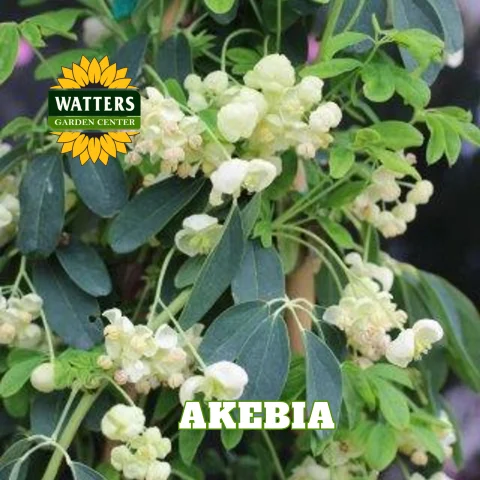
Exotic Elegance: Akebia and Trumpet Vine
If you are looking for something a bit more unconventional, consider Akebia quinata, also known as the Chocolate Vine. It earns its name not just from the deep, brownish-purple hue of its vanilla-scented flowers, but from its delicate, five-leaf clusters that look elegant even when the plant isn’t in bloom. It is a vigorous grower, capable of covering an arbor in just a couple of seasons, and it thrives in the dappled shade where other flowering vines struggle. Evergreen and completely deer-proof.




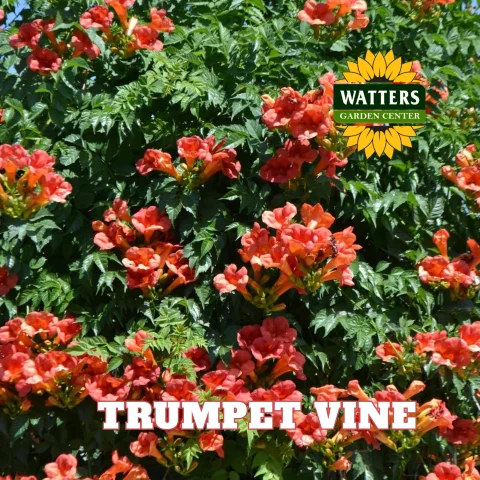
Trumpet Vine, Campsis radicans, is a bold, tropical statement. Its fiery orange and red tubular flowers are high-energy bursts of color that thrive in the heat of July and August. Be warned, however: this vine is a “clinger.” It uses aerial rootlets to grip surfaces, allowing it to scale brick walls and sturdy wooden structures without the need for twine or wire. Because of its sheer strength and weight, ensure your support system is built to last.
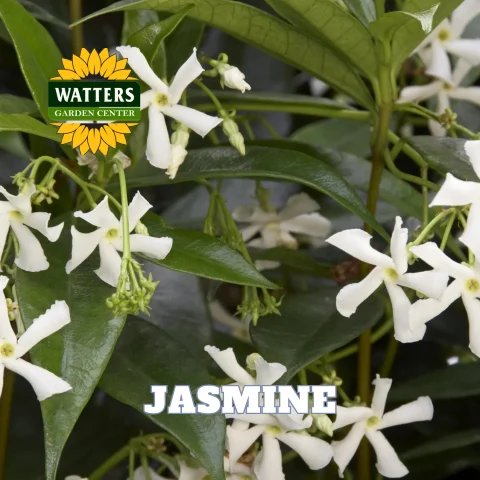
Summer Star: Jasmine
For those gardening in Hardiness Zone 8+, consider Star Jasmine, Trachelospermum jasminoides, which offers a blanket of white, pinwheel-shaped flowers. It is often used as a “living wallpaper” for its dense, evergreen foliage and intoxicating fragrance.
Tips for Vertical Success
- Match the Support to the Method: Know how your vine climbs. Clematis uses “twining petioles” (leaf stems) and needs thin wire or mesh. Trumpet vines use “holdfasts” and need solid surfaces.
- Pruning is Power: Don’t be afraid to prune. Most summer-blooming vines benefit from a haircut in early spring to encourage new growth, which is where the flowers typically form.
- Water Deeply: Because vines often grow against walls or under eaves, they can be in a “rain shadow.” Check the soil moisture at the base regularly, even after a light rain.
By incorporating these vertical wonders, you aren’t just planting a garden; you’re creating an environment. Whether it’s the sophisticated bloom of a clematis or the wild, untamed reach of a trumpet vine, these climbers invite us to lift our gaze and appreciate the garden in three dimensions.

Free Gardening Classes Every Saturday @ 9:30 am
Join us for these upcoming topics:


- June 6: Top 10 Hydrangea of Spring
- June 13: Clematis and the Flowers that Climb, Cling, and Cover
- June 20: Flutterfest – Flowers that Attract Many Butterflies
Until next week, I’ll be helping gardeners plant fast-growing vines here at Watters Garden Center.
Ken Lain can be found throughout the week at Watters Garden Center, 1815 Iron Springs Rd in Prescott, or contacted through his website at WattersGardenCenter.com or Top10Vines.com.