

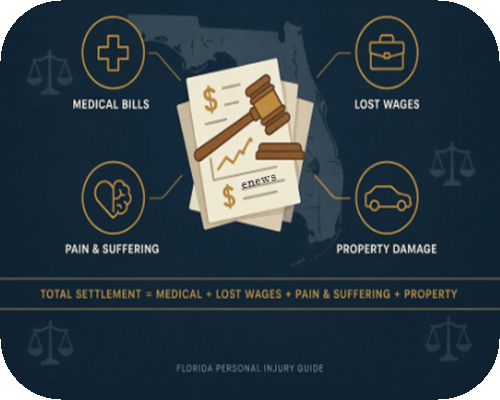
Florida personal injury settlements are calculated by considering both economic damages, such as medical expenses and lost income, and non-economic damages, including pain and suffering. The state’s comparative negligence system can reduce a victim’s compensation if they are found partially responsible for the accident. In addition, recent legislative changes have affected how settlements are calculated and the time limits for filing claims, making it increasingly important to understand the factors that influence compensation.
Understanding how settlements are calculated in Florida personal injury cases is essential if you’ve been involved in any type of accident. From the extent of injury to changes in state law, several factors impact the final compensation amount. Navigating these complexities becomes easier with skilled representation from legal professionals, such as The Florida Firm Accident and Injury Lawyers. Their expertise can make a significant difference in securing fair compensation for your injuries and losses.
In Florida, the law sets out specific rules and factors that must be considered when negotiating a settlement. Whether you have suffered minor injuries or significant harm, knowing what influences the value of your case can help you make informed decisions throughout the process.
Types of Damages in Florida Personal Injury Cases
When you pursue a personal injury case in Florida, damages are generally divided into two categories: economic damages and non-economic damages.




Economic damages cover direct financial losses resulting from an accident. These damages commonly include medical expenses, rehabilitation costs, prescription medications, lost wages, diminished earning capacity, and property damage. Because these losses can be documented through bills, receipts, and employment records, they often form the foundation of a settlement demand. Medical expenses may include both current and future treatment costs, while lost income can include missed wages and reduced earning capacity.
Non-economic damages compensate for losses that do not have a precise financial value. These damages may include pain and suffering, emotional distress, anxiety, depression, loss of enjoyment of life, and other personal hardships resulting from an injury. Although more subjective than economic damages, they can represent a substantial portion of a settlement, particularly in cases involving severe or permanent injuries.
Proper documentation and supporting evidence play an important role in determining the final settlement amount.
The Role of Comparative Negligence
Florida’s comparative negligence law determines whether and how much a settlement is reduced by your own share of fault. If you are partly responsible for the accident, your compensation is decreased in proportion to that responsibility. For example, if you are 20% at fault, your settlement is reduced by 20%.






Under Florida’s modified comparative negligence rule, individuals who are found more than 50% responsible for an accident generally cannot recover damages. Because of this rule, establishing liability is one of the most important aspects of a personal injury claim. Strong evidence is important because fault directly affects compensation.
Impact of Recent Legislative Changes
Recent reforms in Florida’s legal landscape have introduced tighter deadlines and stricter fault rules. Injured individuals now have less time to pursue negligence-based personal injury claims, making it essential to act promptly when seeking compensation. Changes to comparative negligence standards also mean that individuals found primarily at fault in an accident may be barred from recovering damages.
These legal developments can significantly affect both the outcome and timing of personal injury settlements. Prompt action can help preserve evidence and protect a victim’s right to compensation.
Calculating Settlement Amounts
A variety of factors are weighed during settlement negotiations and calculations.
Medical expenses play a major role in determining settlement value. This includes emergency treatment, hospitalization, surgeries, rehabilitation, medications, physical therapy, and future medical care that may be necessary because of the injury. Thorough medical documentation is essential for demonstrating both current and future treatment costs.
Lost income is another key consideration. Settlements often account for wages lost during recovery as well as any reduction in future earning capacity if the injury affects a person’s ability to work. For individuals with permanent disabilities or long-term impairments, future income losses can substantially increase the value of a claim.


Injury severity plays a major role in settlement calculations. Serious injuries generally result in higher compensation because they involve greater financial losses and long-term effects.
Insurance policy limits frequently establish the practical upper boundary of a settlement. Even when damages exceed a certain amount, available insurance coverage may affect what can realistically be recovered. Understanding these limitations is important when evaluating settlement offers and potential litigation strategies.
Every personal injury case is unique, and these individual circumstances make a significant difference in the amount you may ultimately receive. Outside resources, such as Nolo, provide helpful overviews on how pain and suffering damages are assessed nationwide.
Settlement values vary based on liability, injury severity, medical costs, and insurance coverage.
Average Settlement Amounts
While there is no universal answer for how much a settlement will be worth, some averages help illustrate typical ranges in Florida. Minor soft tissue injuries often result in settlements ranging from approximately $2,000 to $20,000, depending on the severity of symptoms and the length of treatment required. Cases involving broken bones frequently settle between $25,000 and $100,000, particularly when surgery or extensive rehabilitation is necessary. More severe cases, such as traumatic brain injuries, can result in settlements exceeding $100,000 and, in some circumstances, reaching well over $1 million due to the long-term effects and substantial medical needs involved.
These figures are only estimates. Actual settlement amounts depend on the facts of each case.
Steps to Take After an Injury
Taking the right steps after an accident not only protects your health but also strengthens your injury claim.
Seeking immediate medical attention should always be the first priority. Prompt treatment helps ensure injuries are properly diagnosed and treated while creating medical records that can serve as critical evidence in a personal injury claim.
Gathering evidence as soon as possible can strengthen your case. Photographs of the accident scene, visible injuries, witness contact information, and official reports can help establish liability and document the circumstances surrounding the incident.
Consulting a personal injury attorney can also be beneficial. An experienced attorney can evaluate your claim, negotiate with insurance companies, gather supporting evidence, and help ensure that important deadlines and procedural requirements are met throughout the legal process.
Conclusion
Settlement calculations in Florida personal injury cases depend on a range of factors, including medical costs, lost wages, injury severity, fault allocation, and available insurance coverage. Recent legal developments have also made it more important to act quickly when pursuing compensation.
The strength of the evidence and the degree of responsibility assigned to each party can significantly affect the final settlement amount. By seeking prompt medical care, preserving evidence, and understanding the settlement process, injured individuals can better position themselves to pursue fair compensation and make informed decisions about their claims.