

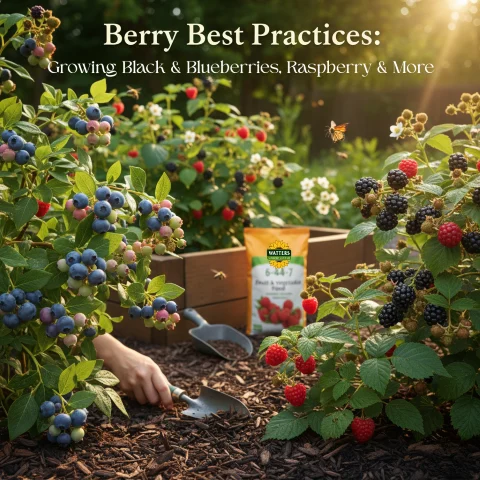
There is a specific kind of magic that happens in a backyard garden when the morning sun hits a cluster of ripening berries. It is the transition from a simple landscape to a “snackable” sanctuary. Whether it is the tart snap of a fresh raspberry or the deep, sweet juice of a sun-warmed blueberry, growing your own fruit is the ultimate reward for any gardener.
In our neck of the woods, berries are more than just a treat; they are a long-term investment in your health and your home’s value. But to get that bumper crop, the kind where you have enough for the birds, the grandkids, and a few jars of jam, you have to start with the “Berry Best” practices.
The Foundation of Fruit
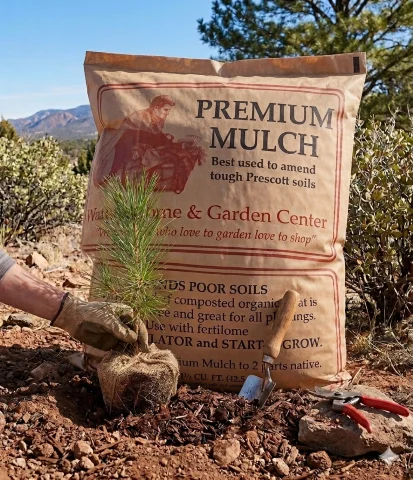
Most berries are remarkably hardy, but they have one non-negotiable requirement: drainage. Whether you are planting in the ground or in a raised bed, berry roots hate “wet feet.” If your soil is heavy clay, I always recommend amending it with Watters Premium Mulch to improve soil structure.
Blueberries are a bit more particular. They are the “acid-lovers” of the fruit world. They crave a low soil pH to thrive. If your soil is alkaline, don’t fight nature; grow them in containers! It is much easier to control the environment in a pot than it is to change the chemistry of your entire backyard.






Perfect for Pots: Container Varieties
You don’t need an acre of land to be a fruit farmer. Plant breeders have made incredible strides in developing compact, “bush” varieties that feel right at home on a patio.
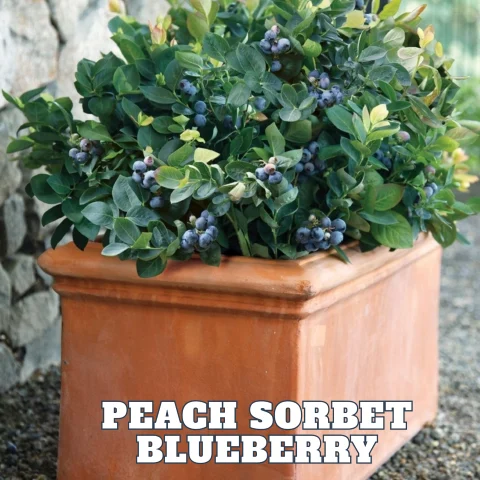
- Bushel and Berry ‘Peach Sorbet’ Blueberry: This is a showstopper. It stays compact, reaching only two feet tall, but it produces a heavy crop of sweet, tropical-tasting berries. The foliage is the real kicker; it transitions from peach and pink to a deep emerald green.
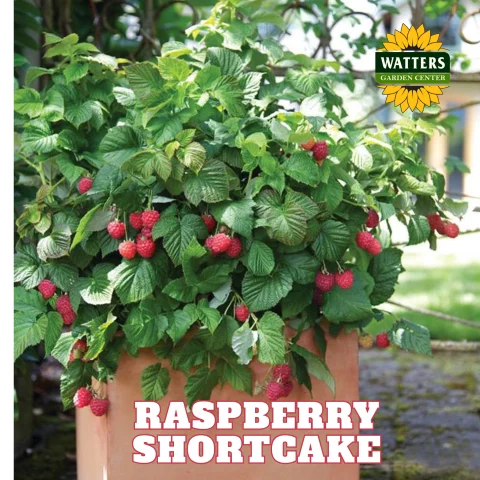
- Dwarf ‘Raspberry Shortcake’: If you have ever avoided raspberries because of the thorny, sprawling canes, this is your plant. It is thornless and forms a tidy, rounded mound. It’s a “primocane” variety, meaning it fruits on new wood, making pruning a breeze.
Garden Tip: Top 10 Berries for Container Gardens
Secret to the Harvest: 6-4-4-7 Fertilizer
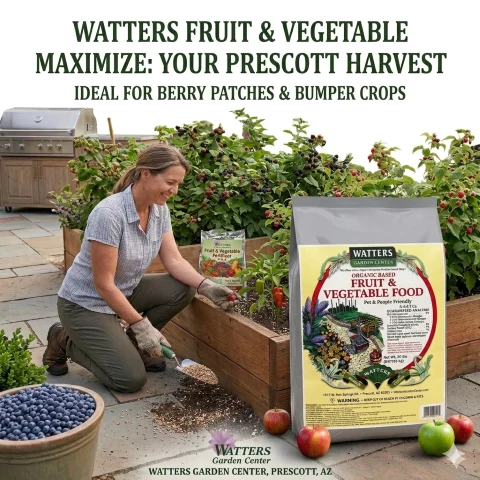






I often get asked, “Ken, my bushes look green, but where are the berries?” The answer is almost always nutrition. To produce fruit, a plant needs a precise balance of minerals, and that is where 6-4-4-7 Fruit & Vegetable Food comes into play.
Let’s break down those numbers.
Nitrogen – The 6 (Nitrogen) provides the green energy for leafy growth.
Phosphorus & Potassuim – The 4 (Phosphorus) and 4 (Potassium) are essential for strong root systems and blossom development.
Calcium – But the real secret weapon in this formula is the 7—the Calcium.
Calcium is the “glue” that holds cell walls together. In berries, extra Calcium prevents early fruit drop and ensures your harvest is firm and flavorful rather than mushy.
How to Fertilize:
Timing: Start feeding in early spring just as the new buds begin to swell.


Application: For berries in the ground, sprinkle the granules around the plant’s “drip line” (the outer edge of the branches). For containers, a light handful spread evenly across the soil surface is plenty.
Water it in: This is the most crucial step. Fertilizers need moisture to begin the “breakdown” process so the roots can actually drink in the nutrients. Always water thoroughly after feeding.
Repeat: Feed again in mid-summer after the first big harvest. This gives the plant the strength to set next year’s fruiting buds.
Earthy Wisdom for the Trail
Gardening is a conversation with the seasons. Don’t be discouraged if your first year is a bit lean. Most berries take a season or two to find their footing. Mulch heavily with pine bark or Premium Mulch to keep the roots cool during the heat of June, and keep your pruners sharp to remove any dead wood in late winter.
Garden Tip: Pollinator Power: Inviting the Bees to Your Berry Patch
When you grow your own, you aren’t just eating fruit; you are eating the sun, the rain, and a little bit of your own hard work. There is nothing sweeter than that.
Free Gardening Classes Every Saturday @ 9:30 am
Join us for these upcoming topics:
- June 6: Growing Better Berries & Grapes
- June 13: Top 10 Flowers that Love Summer Heat
- June 20: Best Trees for Bushels of Fruit
Until next week, I’ll be helping gardeners’ plant sweeter berries here at Watters Garden Center.
Ken Lain can be found throughout the week at Watters Garden Center, 1815 Iron Springs Rd in Prescott, or contacted through his website at WattersGardenCenter.com or Top10Berries.com.