



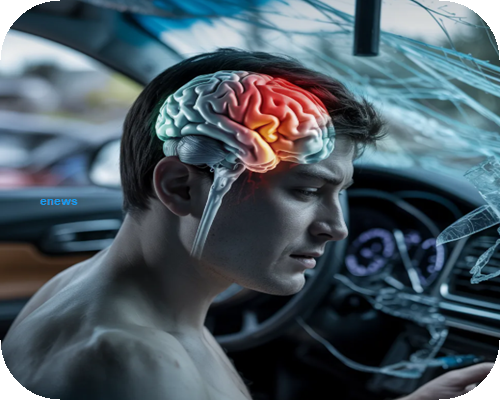
Every year, thousands of car accident victims walk away from a crash feeling shaken but physically fine. No broken bones, no visible wounds, just the adrenaline rush of a close call. They decline the ambulance, drive themselves home, and assume the worst is behind them. But for a significant number of those survivors, the most serious injury they sustained never showed up at the scene. It was happening quietly, inside their skull.
Brain injuries are among the most misunderstood consequences of car accidents. Unlike a fractured wrist or a lacerated forehead, they don’t always announce themselves immediately. Understanding the full scope of common brain injuries from car accidents is the first step toward making sure you or someone you love doesn’t become a statistic in a category that should have been preventable.
Why Brain Injuries Are So Easy to Miss
The human brain is suspended in cerebrospinal fluid inside the skull. In a car crash, even at moderate speeds, the sudden deceleration causes the brain to shift and collide with the inner walls of the skull. That impact can bruise brain tissue, tear nerve fibers, or cause bleeding — all without leaving a single visible mark on the outside of the body.
What makes this especially dangerous is how the body responds in the immediate aftermath of a crash. Adrenaline suppresses pain signals. Shock blunts your ability to assess yourself clearly. Accident victims are often focused on the practical chaos around them — exchanging insurance information, checking on passengers, dealing with police reports — while a concussion or something worse quietly takes hold.





Emergency responders at the scene are trained to look for obvious trauma. But unless a victim loses consciousness, displays severe confusion, or reports intense head pain, a brain injury may not be flagged for further testing. Many victims are cleared and sent home with no imaging, no neurological screening, and no follow-up instructions specific to head trauma.
The Symptoms That Show Up Later
This is where the danger compounds. Traumatic brain injury (TBI) symptoms are often delayed by hours or even days after the initial event. Victims may go to sleep that night feeling tired but otherwise okay, only to wake up the next morning with a relentless headache, sensitivity to light, or difficulty forming sentences.
Common delayed symptoms include:
Persistent headaches or pressure behind the eyes
Memory gaps or difficulty concentrating






Mood changes, irritability, or sudden emotional swings
Nausea or dizziness that doesn’t improve
Sleep disturbances — either excessive fatigue or inability to sleep
Slurred speech or trouble finding words
These symptoms are frequently misattributed. Headaches get blamed on stress. Mood changes get chalked up to the emotional shock of the accident. Fatigue is dismissed as the body recovering. By the time a pattern becomes undeniable and a doctor is consulted, days or weeks may have passed — complicating both diagnosis and legal documentation.
The Spectrum of Severity
Not all brain injuries are catastrophic, but none of them are trivial. A mild TBI — commonly known as a concussion — still represents an actual injury to brain tissue. Repeated concussions, or a concussion that goes untreated, can produce lasting cognitive effects that alter a person’s quality of life for years.
More severe injuries on the spectrum include diffuse axonal injury, where the nerve fibers throughout the brain are stretched or torn; cerebral contusions, which are essentially bruises on the brain tissue itself; and intracranial hemorrhage, where bleeding occurs inside the skull and can become life-threatening without immediate intervention.


Understanding the full range of common brain injuries from car accidents — from mild concussions to hemorrhagic strokes triggered by blunt force trauma — helps victims and families recognize that there is no such thing as “just a bump on the head” when a vehicle is involved.
What to Do If You Suspect a Brain Injury After a Crash
The most important thing you can do following any car accident is get a full medical evaluation, regardless of how you feel at the scene. Specifically request that the examining physician consider neurological symptoms and, if warranted, order imaging such as a CT scan or MRI.
Keep a written log of any symptoms that develop in the days following the crash — no matter how minor they seem. That record becomes valuable for your treating physician and, if it comes to it, for any legal proceedings.
It also matters who you speak to about your rights. Victims who suffer brain injuries often face long recovery timelines, lost income, and medical bills that extend well beyond what initial insurance estimates cover. Consulting with a personal injury attorney who understands the full picture of common brain injuries from car accidents can make a meaningful difference in whether a victim receives the compensation they actually need — not just what’s easiest to settle quickly.
The Broader Cost of Missing These Injuries
When brain injuries go undiagnosed, the consequences ripple outward. Victims return to work too soon and worsen their condition. Families don’t understand why their loved one has changed. Employers lose reliable employees to an invisible disability. And insurance companies — who are well aware of how often these injuries are underreported — use that gap to minimize payouts.
Public awareness is part of the solution. Communities like Prescott, where Highway 89 and surrounding rural roads see their share of serious collisions, benefit when residents understand that a crash doesn’t have to look catastrophic to cause catastrophic harm. The brain is the most complex organ in the human body. It deserves more than a cursory glance and a “you seem fine” at the roadside.
If you’ve been in a crash, trust your instincts if something feels off. Advocate for proper screening. And don’t let the invisible nature of brain trauma convince you that nothing is wrong.