


Each May, the National Military Appreciation Month structures a national moment of attention around military service—bringing visibility to a population whose dedication has shaped communities and institutions across the country. In practice, however, this annual observance extends far beyond ceremonies because it also raises a broader concern about how well existing systems are equipped to respond to the long-term health outcomes of decades of active duty. Correspondingly, such a question carries particular weight in Northern Arizona, where countless veterans continue to navigate serious conditions following an extended contact with perilous substances, such as Agent Orange, asbestos, per- and polyfluoroalkyl substances (PFAS), lead, radiation, and volatile organic compounds. But though some toxic-related illnesses have already been formally recognized within federal benefits frameworks, others—specifically those stemming from PFAS exposure—remain in a more uncertain position, leaving victims facing significant barriers in attaining timely care. Against this backdrop, lawmakers have begun advancing targeted proposals aimed at easing this issue. And among these is the Veterans Exposed to Toxic (VET) PFAS Act, a measure that intends to streamline access to medical services and benefits direly needed by impacted veterans and their families.
Toxic Exposure and the Evolving Health Burden on Veterans in Northern Arizona
The long-term health landscape facing about 34,000 veterans in Northern Arizona reflects alarming consequences tied not to a single moment but to sustained contact with hazardous environments over time. That is because historically, training grounds, shipyards, airfields, and maintenance facilities have involved materials that—while operationally necessary—carried long-term risks that were not fully understood or addressed at the time. In fact, asbestos remains one of the clearest examples of such a dynamic. Once widely employed for insulation and fireproofing, this natural mineral became prevalent in ships, barracks, and mechanical systems installed in facilities like Fort Whipple in Prescott, especially throughout much of the 20th century. However, extensive asbestos reliance has later placed generations of service members at risk of mesothelioma, asbestosis, and lung cancer—debilitating illnesses that cost over 5,100 deaths in broader Arizona, including more than 330 fatalities in Yavapai County, just between 1999 and 2017.
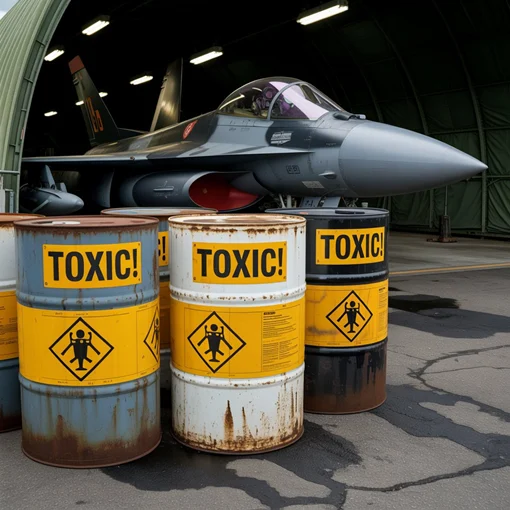
Also, a similar trajectory is evident with PFAS, synthetic chemicals engineered to withstand heat as well as repel water, oil, and grease. With these remarkable capabilities, such compounds became very suited for use in aqueous film-forming foam (AFFF), a tool developed by the Navy in the 1960s to rapidly suppress liquid flammable fires. Since then, the country’s Department of Defense has been among the largest users of this equipment globally. Unfortunately, repeated utilization of AFFF has led to pervasive contamination at roughly a dozen installations in Arizona, most notably Camp Navajo northeast of Chino Valley. As a result, service members deployed to these sites have become susceptible to various types of cancer, including those affecting the lungs, breast, brain, testicles, kidney, prostate glands, ovaries, endometrium, thyroid, colon, and lymphatic system. Ultimately, this toxic legacy underscores the growing need for a more responsive system that ensures victims and their families are not left to navigate the consequences alone.
Advancing an Accountable Framework for Toxic-Related Conditions






In recent years, there has been measurable progress in how the federal government addresses toxic exposure among veterans. Through legislation such as the Honoring Our PACT Act, the country’s Department of Veterans Affairs (VA) has established presumptive service connections for specific illnesses to help alleviate the evidentiary burden placed on victims seeking care and compensation. But even these advancements fall short since not all forms of toxic exposures have been incorporated into this framework. Such is particularly apparent in cases involving PFAS, where impacted individuals are often still required to demonstrate a direct link between their illnesses and active duty—despite growing scientific evidence and documented contamination at numerous bases.
It is within this evolving policy landscape that the VET-PFAS Act has emerged as a targeted legislative response. Currently under consideration in Congress, the bill would mandate the VA to extend medical services as well as potentially disability compensation to veterans and their families who were stationed at installations with confirmed PFAS contamination. Also, a central component of the proposal is the establishment of presumptive service connections for certain PFAS-related conditions—thereby streamlining access to benefits and reducing delays in care. Notably, the proposal reflects an effort to translate established environmental and health findings into a more consistent administrative standard for affected veterans.
As these policy discussions move forward, they likewise underscore a broader expectation that recognition of military service must extend beyond acknowledgment alone. And the National Military Appreciation Month provides a timely framework to consider this responsibility in practical terms. Essentially, it highlights that recognition of service is most meaningful when it is matched by systems that respond effectively to its long-term consequences. Advancing the VET-PFAS Act—alongside continued efforts to address the broader spectrum of toxic exposures encountered in military service—would represent a concrete step toward ensuring that veterans in Northern Arizona and across the country are met with the support their service warrants.