


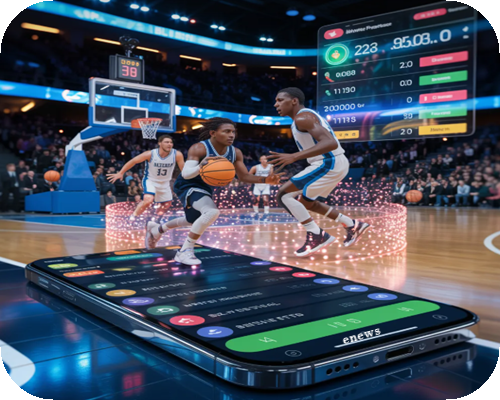
Watching a game used to be a one-way street. You followed the action, waited for the big moments, and reacted after the whistle blew. That’s just one layer of the experience now. Scores update in a heartbeat. Stats are constantly in flux. The flow of information moves as fast as the players on the field.
You really feel this shift when tracking a sportsbet on a platform like Betway. These updates don’t feel like an after-the-fact report. They’re synced with the match. Numbers move while the play is still unfolding. That alone has changed how closely people actually watch the game.
Forget the “Before and After”
There used to be a clear line in the sand. You checked the odds, made your choice, and waited. Real-time data has scrapped that timeline completely. Now, everything stays live throughout the match. The experience doesn’t just stop once the game starts.
This changes the way people watch and place a sportsbet. Instead of just staring at the scoreboard, the focus shifts to the fine details. Possession turns. Momentum swings. Individual player movements. These micro-moments feed directly into what you see on your screen in real-time.
The Engine Behind the Updates
For this to feel seamless, the backend tech has to be incredibly sharp. Sports betting platforms rely on live data feeds that track events the second they happen. This data doesn’t just travel in a straight line. It is processed and adjusted through overlapping steps to ensure it is accurate before it hits your device.






This is where things like low-latency delivery and distributed servers come in. Instead of a single system trying to do everything, the workload is spread out. That keeps things from lagging during the high-traffic moments of a big game. Edge delivery also helps by keeping data physically closer to the user, which cuts down the travel time for every update. It all happens out of sight, but it is the reason the info stays relevant.
Timing is Everything
When data arrives fast enough, it stops feeling like a notification. It starts feeling like part of the broadcast. It is a subtle difference, but it completely changes the energy.
If a team builds pressure or the tempo suddenly shifts, you see it on your device immediately. You aren’t catching up on the news later; you’re seeing the shift while it’s still happening. It makes the whole experience feel more connected. The platform isn’t trailing the game. It’s moving right alongside it.
Speed Needs Stability
Speed is great, but it is useless without stability. Live sports create massive bursts of activity, especially during a goal or a turnover. If a platform cannot handle those spikes, the whole experience falls apart.
That is why sites like betway keep their processes separate. Data handling, the user interface, and live updates all run on different paths.






The New Standard
Once you have experienced instant updates, there is no going back. Even a few seconds of delay feels like an eternity now. It is not that we have become impatient. It’s that our expectations have shifted.
Real-time data has turned digital sports from a staged process into a continuous stream. The goal now isn’t just to deliver information faster. It’s to make that data feel like an inseparable part of the live event. Moving forward, this isn’t just an “extra feature.” It is simply how we follow sports.