

With Artemis II, humans recaptured an opportunity they abandoned a half-century ago. When the Apollo missions ended, Americans put quotes around the words “space exploration,” never again venturing farther from Earth than New York is from Pittsburgh. To avoid fumbling the opportunity a second time, we need to take seriously something that we’ve been politely ignoring.
We need to decide who owns the moon.
The topic sounds academic because lunar travel is still extraordinarily expensive. It won’t always be so. Costs fall. Technology improves. And when the cost of reaching the moon drops enough, settlement will follow. Property rights will be established. The question is whether they will be established peacefully before the scramble begins, or contentiously — possibly violently — after the fact.
Property rights are not some legal ornament we add after the interesting work is done. They are what make the interesting work possible. On Earth, global wealth took off like a rocket when property rights came to be regarded as the birthright of all people, not just the rich and powerful. When people are secure in their property, markets emerge. Markets facilitate exchange. Exchange creates wealth. And when property rights are defined and broadly accepted, people are more likely to cooperate than to fight.
That is why the question of who owns the moon matters now. Well-defined and widely accepted property rights give entrepreneurs and investors reasons to take risks. They encourage experimentation by allowing people to keep the gains of their successes. And they encourage prudence by requiring people to bear the costs of their failures. The fact that we don’t know what people might do with the moon is not an argument against assigning ownership. It is the best argument for doing so.





The alternative is to leave the question to governments. Governments don’t allocate resources economically or even neutrally. They allocate them politically, often to the powerful and the well-positioned. The Homestead Act is instructive here. In the 19th century, Congress opened western land to private ownership, yet today the federal government owns over half of the American West. Political systems have a way of reserving the best seats for politicians. There is no reason to think lunar real estate would prove an exception.
Any workable system of lunar property rights should do three things. It should spread initial claims broadly enough that no government or consortium of governments can carve up the moon for themselves. It should make those claims personal and transferable, so ownership can move from people who value it less to people who value it more. And it should establish those claims before large-scale settlement and investment begin, while rules can still be accepted as rules rather than denounced as theft.
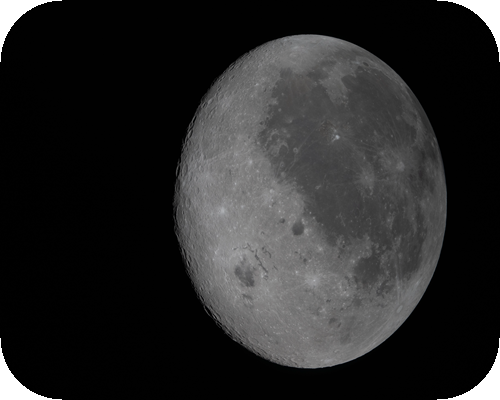
A simple way to accomplish this is also the most egalitarian: divide the moon into equal parcels and randomly assign one parcel to each person on Earth. The moon contains more than 9 billion acres. That is enough for every person alive today to receive an acre, with ample land left over for common purposes or future distribution. Some people would keep their claims as novelties, some as investments. Others would sell or ignore them. Over time, ownership would move through voluntary exchange rather than political favoritism.
The obvious objection is that assigning ownership means nothing unless people honor the assignments. But broad distribution is precisely what gives the system a chance of working. A rule that benefits almost everyone stands a better chance of being broadly defended than a rule that benefits only states and their favorites. If each person has a stake, then each has a reason to recognize the system’s legitimacy.
The mechanics are not beyond us. A transparent public registry, possibly blockchain-based, is well within present technological capabilities. Identity verification is more difficult, but not impossibly so. Governments and private institutions already verify identity every day through passports, tax IDs, biometrics and other tools. The hard part is not technological. The hard part is deciding to do this before vested interests arrive on the moon.


Leave ownership undefined, and the moon will become a playground for politicians and their cronies. Establish property rights before the scramble begins, and entrepreneurs and investors will have incentives to discover uses the rest of us cannot yet imagine. We do not need to wait for politicians to bless the arrangement. With the tools already at our disposal, the people of Earth can make it so.