


For many years, the discussion about Puerto Rico’s political future has typically been seen in Washington as straightforward: Puerto Ricans desire statehood, and Congress will eventually approve it. This idea, often reiterated in political speeches, congressional hearings and advocacy efforts, has influenced American perceptions of the debate over the island’s status.
However, recent evidence indicates that this story is increasingly misaligned with reality.
Support for Puerto Rico’s statehood is stagnating on the island and declining among Puerto Rican communities in the United States, even in areas once seen as strongholds. A recent survey from the University of Central Florida’s Puerto Rico Research Hub shows a notable shift. In Florida, one of the largest and most politically active Puerto Rican diaspora communities, only 13 percent support statehood.
Meanwhile, 27 percent support independence, and 29 percent prefer the current territory status, often called “commonwealth.” Additionally, 9 percent support sovereignty in free association, a status option in which a sovereign Puerto Rico would negotiate a Compact of Free Association with the United States, a highly beneficial arrangement such as those of Palau, Micronesia and the Marshall Islands.
When considering the “sovereignty in free association” category alongside independence, about 36 percent of Puerto Ricans living in Florida support some form of Puerto Rican national sovereignty — surpassing the statehood and commonwealth options. Similar voices in support of Puerto Rican sovereignty are also being heard in diaspora communities in the United States and overseas.


This development has significant political implications. Puerto Ricans living in Florida are not powerless colonial subjects; they are citizens who participate in federal and state elections, influence public opinion and affect congressional representatives. Florida has traditionally been a stronghold of pro-statehood sentiment due to its sizable Puerto Rican community and its role as a key electoral battleground. However, within that community, the political dialogue is evolving.
The change is particularly noticeable among younger Puerto Ricans, professionals and individuals who matured during the economic and political crises of the last 20 years. For many of these groups, statehood no longer seems like the inevitable or most appealing option it was once presented as.
There are several developments that help clarify why.
Puerto Rico’s pro-statehood leadership, primarily the New Progressive Party, faces a major decline in political credibility and major corruption scandals. The current government was elected with just 39 percent of the vote, highlighting a divided political environment and significant discontent with establishment figures.
Corruption scandals, dark-money networks, mismanagement and public protests have continually undermined trust in leaders who have historically promoted statehood, welfare and more dependency as Puerto Rico’s future.



For many Puerto Ricans, this raises a core question: If the movement supporting statehood struggles to govern effectively under the current system and remains plagued by corruption scandals, why should it be trusted to lead Puerto Rico into the American Union?
Second, the contentious role of the Fiscal Control Board, an unelected entity created by Congress in 2016 under the PROMESA law, has significantly reshaped the political debate.
The board (called “la junta” by Puerto Ricans) was established to address Puerto Rico’s fiscal crisis and oversee the restructuring of the island’s large public debt. However, its extensive control over budgets, public expenditure and economic policy has reinforced the view that Puerto Rico remains under colonial oversight.
For many Puerto Ricans, especially younger generations, the presence of an external authority that can supersede elected officials highlights the limitations of the current territorial setup. Instead of showcasing the benefits of greater integration with the United States, this experience has led many to believe that genuine democratic control depends on national sovereignty, the only path through which Puerto Ricans can finally gain the authority and freedom to lead their own republic and economy.
Third, tensions related to culture and society have recently grown as more Americans move to Puerto Rico, often drawn by attractive tax incentives. Although investment and migration are generally positive, many Puerto Ricans resent the perception that wealthy American and foreign outsiders are benefiting more from the island’s economy than Puerto Ricans.
Incidents in which newcomers try to privatize or restrict access to public beaches (long safeguarded by Puerto Rican law as shared natural resources) have sparked widespread outrage. Puerto Rican activists and community groups have organized to protect beach access, viewing it as a matter of national pride and cultural rights.
Reports of American visitors insulting, attacking and disrespecting Puerto Ricans or telling them to “speak English” have circulated widely on social media. These incidents amplify feelings that Puerto Rican identity is not fully respected and tolerated within the broader American framework.
Whether isolated or systemic, these experiences foster a rising belief among many Puerto Ricans believe that their culture and language are more secure and respected in a sovereign nation than in a political system that views Puerto Rican culture and language as inferior, and the island as a subordinate and marginalized territory.


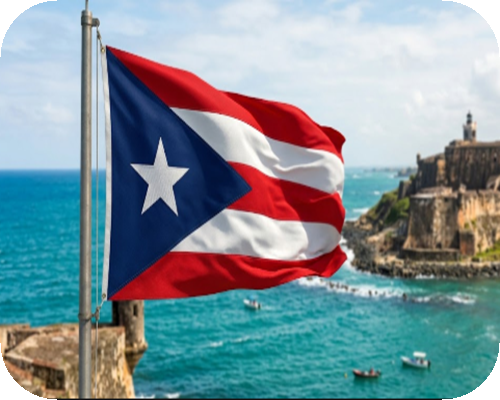
An unexpected catalyst has arisen from sports and culture, as Puerto Rico’s involvement in international events, especially the World Baseball Classic, serves as a strong symbol of national pride. In recent tournaments, scenes of Puerto Rican fans waving Puerto Rican flags, singing the patriotic song “Preciosa” and celebrating their national team spread well beyond the stadiums.
Additionally, Bad Bunny’s Super Bowl halftime performance — which showcased Puerto Rican culture, aspirations and patriotism on the world stage — helped boost Puerto Rican pride and nationalism. For many, these moments symbolize a broader cultural and patriotic revival.
The Puerto Rican national pride shown during these events highlights a reality often ignored in American political discussions: Puerto Rico already considers itself, and operates, as a nation in cultural and other spheres. Its language, traditions, music and symbols inspire strong loyalty among Puerto Ricans in Puerto Rico and abroad.
When that Puerto Rican identity is recognized globally, it reinforces the notion that Puerto Rico has all the characteristics of a nation, except for formal sovereignty.
Overall, these changes indicate a shift in the political landscape in support of the statehood movement. The idea that statehood would solve Puerto Rico’s economic problems, ensure political equality, and safeguard the island’s future no longer holds the same appeal it once did.
For many Puerto Ricans, statehood symbolizes forced assimilation, continuing dependency, poverty and the betrayal of our nation, leading to Puerto Ricans becoming a marginalized minority within their own country, similar to what occurred in Hawaii.
A growing number of Puerto Ricans, fiercely adamant in not becoming the next Hawaii, are now considering options based on national sovereignty, such as complete independence or a negotiated free association with the United States. These approaches would enable Puerto Rico to maintain strong economic, cultural and security ties with the United States while also gaining full democratic and sovereign authority over its internal affairs, economy and international relations.
This changing landscape offers an important lesson for Americans and policymakers in Washington: Puerto Rico’s political future cannot be determined by outdated assumptions about what Puerto Ricans allegedly desire.
As support for statehood continues to decline on the island and among politically active diaspora communities, the discussion in Congress will need to change, particularly as support for sovereignty has risen to 43 percent and continues to grow. Historically, the United States has backed decolonization efforts worldwide as a form of democratic self-determination. Puerto Rico should be no different.
Instead of seeing sovereignty as a drastic shift, American leaders may soon realize it is the most practical and mutually advantageous way forward.
In Washington, debate around Puerto Rico’s independence is shifting from the fringes to serious policy discussions. Rep. Tom McClintock, R-Calif., has announced plans to introduce legislation in Congress regarding Puerto Rico’s independence, reflecting growing interest among some policymakers in considering sovereignty as the most viable solution. This change follows earlier conversations during President Trump’s first administration, when memos and a draft executive order reportedly explored options for resolving Puerto Rico’s status through independence, aligned with U.S. strategic interests.
More recently, a leaked memo circulated in policy circles and congressional offices, after the failed and widely criticized pro-statehood summit organized by Puerto Rico’s territorial leadership, indicates that the topic remains actively discussed in Washington, especially among national security and defense analysts assessing the long-term strategic effect of Puerto Rico’s political status. These developments demonstrate that discussions on Puerto Rico’s independence are moving beyond academic or activist debates and are now part of serious governmental and strategic policy considerations.
The discussion about Puerto Rico’s political status is evolving. As more Puerto Ricans reconsider the failed notion of statehood, the concept of national sovereignty (and its opportunities), previously seen as peripheral, is increasingly becoming central to the debate.