You clean your toilet, step back, and think the job is finished. But a few days later, you spot it again. That dark ring, or those black or pink spots, just keep coming back. It can be really frustrating.
Toilet bowl mold is more common than most people realize. It doesn’t mean your bathroom isn’t clean. Usually, it happens because of moisture, poor airflow, or small habits that are easy to miss.
The good news is you can fix this problem. Once you know why mold keeps coming back, it’s much easier to handle and prevent.
Here’s what you need to know.
What Does Mold in a Toilet Bowl Look Like?
Mold often appears as black, green, or even pink stains. You might see it around the waterline or under the rim, where cleaning is tougher. It can look slimy or form a ring that returns even after scrubbing.





Sometimes people confuse mold with hard water stains. The difference is mold tends to feel softer or slippery, while mineral buildup feels rough and chalky.
Either way, if it keeps coming back, there’s a reason behind it.
Is Mold in Your Toilet Bowl Dangerous?
In most cases, toilet mold isn’t highly dangerous, especially if you’re healthy. But that doesn’t mean you should ignore it.
Mold can trigger allergies, cause irritation, and make your bathroom smell musty. For kids, older adults, or anyone with breathing issues, it can be more of a concern.
So, while there’s no need to panic, it’s best to take care of it as soon as you can.


6 Common Reasons for Mold in Your Toilet Bowl
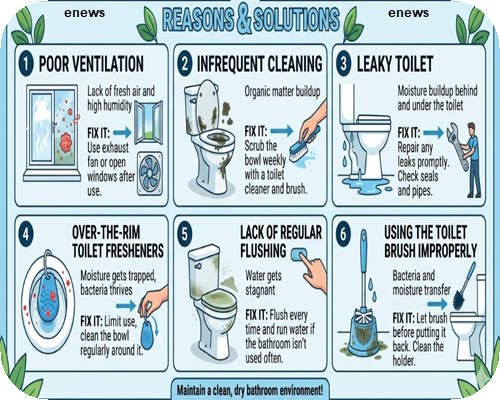
If mold keeps showing up, it’s usually tied to one or more of these causes.
Infrequent Cleaning
The most common reason is not cleaning often enough. Mold grows well in damp places, and your toilet bowl is a perfect spot. If you don’t clean it regularly, even once a week, mold can build up quickly. You might clean it and think it’s gone, but the spores can stay and grow back.
Hard Water and Mineral Deposits
Another big factor is hard water. If your home has mineral-heavy water, those minerals can stick to the surface of your toilet bowl. Over time, they create tiny rough spots where mold can latch on and grow. So even if you clean, it comes back quicker than expected.
Poor Bathroom Ventilation
Poor ventilation also plays a role. Bathrooms that don’t get enough airflow tend to stay humid longer. That trapped moisture creates the perfect condition for mold. If you don’t have a working exhaust fan or you rarely open a window, the humidity just sits there.
Standing Water in the Bowl
Standing water is another reason. Toilets that aren’t used often, like those in guest bathrooms, are more likely to develop mold. Without regular flushing, the water just sits and becomes a breeding ground.
Dirty Toilet Tank
Many people overlook the toilet tank, but it’s important. Mold can start inside the tank and spread to the bowl each time you flush. If you only clean the bowl, you might miss the real source.
Leaks or Hidden Moisture Issues
Finally, leaks or hidden moisture problems can make things worse. Even a small leak can raise humidity around your toilet. This constant moisture helps mold grow and makes it harder to remove.
How to Remove Mold From Your Toilet Bowl
Getting rid of mold isn’t complicated, but you do need to do it properly.


Begin by using a strong cleaner. You can use a bleach-based product or vinegar if you want a natural option. Cover all the spots where you see mold, especially under the rim.
Let it sit for about 10 to 15 minutes. This part matters because it gives the cleaner time to break down the mold.
After that, scrub thoroughly. Don’t rush it. Focus on the waterline and hidden areas where mold tends to stick. Once you’re done, flush the toilet and check if anything is left.
If you still see stains, repeat the process. Sometimes you need to clean more than once to get rid of all the mold.
How to Prevent Mold in Your Toilet Bowl
Once it’s clean, the goal is to keep it that way.
Cleaning your toilet at least once a week makes a big difference. It doesn’t have to take long, but consistency helps stop mold before it builds up.
Improving airflow in your bathroom also helps more than you’d think. Turn on the exhaust fan when you shower or open a window if you have one. Less moisture in the air means less chance for mold to grow.
If you have a toilet that isn’t used much, try to flush it every few days. This keeps the water fresh and lowers the risk of mold.
You can also check your toilet tank once in a while. If there’s buildup inside, cleaning it can stop mold from spreading into the bowl.
And if you notice any leaks, even small ones, fix them right away. It might seem minor, but it can make a big difference over time.
When to Call a Professional
Sometimes, no matter what you do, the mold keeps coming back. That’s usually a sign something deeper is going on.
If you’re dealing with repeated mold growth, a strong musty smell, or signs of moisture in other parts of your bathroom, it might be time to get help.
Working with experts like Spartan Restoration Inc. gives you access to effective mold removal methods that go beyond basic cleaning. They can check for hidden leaks, ventilation problems, or mold growth you might not see. Catching it early can save you a lot of time and stress later.
Conclusion
Mold in your toilet bowl is annoying, but it’s not unusual. It usually comes down to moisture, airflow, and small habits that are easy to fix.
Once you understand the cause, you can deal with it quickly and stop it from coming back. A little consistency goes a long way here.
Keep it clean, keep the air moving, and stay on top of small issues before they turn into bigger ones.