

Artificial intelligence has moved from science fiction into daily life with surprising speed. People use it to draft emails, plan vacations, brainstorm ideas, edit photos, and even talk through difficult emotions. For many, it feels helpful, efficient and even comforting.
As AI becomes more integrated into our routines, there is a quieter question worth asking: How might it shape our sense of connection to one another?
In my work advising organizations on the responsible development and governance of AI systems, I often see how quickly tools designed for convenience begin to influence deeper patterns of behavior. That is not inherently negative, but it does require awareness.
For the typical person just beginning to use AI, the most important thing to understand is that these systems are designed to feel responsive. They generate language that sounds natural. They can mirror tone. They can simulate empathy. However, they do not possess awareness, lived experience or emotional understanding. They are predicting the next most likely word based on patterns in data.
That distinction matters.





When AI is used as a tool to organize thoughts, solve problems or explore ideas, it can be remarkably empowering. The concern arises when it begins to replace human friction altogether.
Friction is not always comfortable, but it is a part of growth. Disagreement sharpens perspective. Misunderstanding forces clarification. Emotional complexity builds resilience. If we slowly shift more of our conversations to systems that are optimized to be agreeable and efficient, we may unintentionally reduce opportunities to practice patience, compromise and nuance with real people.
This is not a call to reject AI. It is a call to use it consciously.
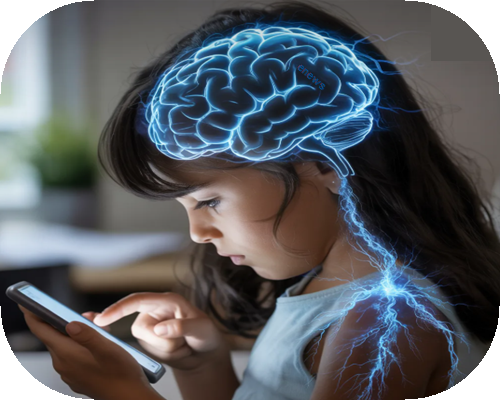
Parents, in particular, should pay attention to how children interact with these systems. AI can be a valuable learning support. It can help a child practice a foreign language, walk step by step through a math problem, or brainstorm ideas for a writing assignment in a way that feels less intimidating than speaking up in class. Used thoughtfully, it can build confidence and curiosity.
At the same time, young people are growing up in a world where digital companions can answer questions instantly and respond without judgment. That can feel safe. It can also subtly reshape expectations about communication.


Children should understand that AI responses are generated, not felt. When a chatbot offers encouragement, it is producing language, not care. When it gives advice, it is predicting patterns rather than exercising wisdom. Helping children grasp that difference does not require technical depth. It requires conversation.
It is also worth watching for displacement. If a child increasingly turns to AI for reassurance, problem-solving or companionship while withdrawing from peers, that may signal a need for balance. Technology should expand a young person’s world, not narrow it.
Another practical consideration is privacy. Many AI tools collect data to improve performance. Families should be aware of what information is being shared and with whom. Teaching digital boundaries is as important as teaching physical ones.
None of this means AI is inherently harmful. Like most powerful tools, its effect depends on context, design and usage. The risk is not that machines will suddenly replace human relationships. The risk is more subtle: that convenience and simulated responsiveness may gradually erode the habits that sustain meaningful connection.
The opportunity is equally real. AI can help people learn faster, think more broadly, and access information that once felt out of reach. It can support creativity and productivity in ways that previous generations could not have imagined.
The question is not whether AI belongs in our lives. It already does. The question is how we integrate it without losing the skills that make us deeply human.
Connection requires effort. Empathy requires practice. Relationships require unpredictability. No system can substitute for that.
As we move further into an AI-enabled world, awareness may be the most important safeguard we have.