



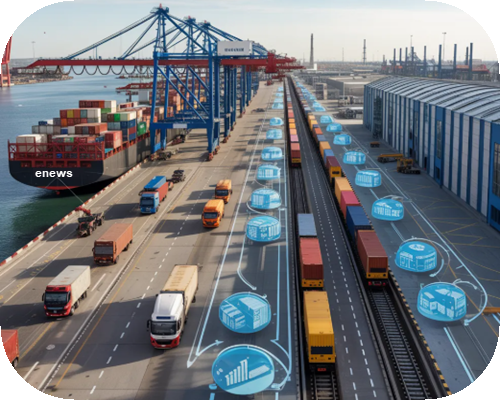
Logistics is commonly regarded as the foundation of international trade; however, this description does not fully convey the scope of logistics. Logistics is an extensive system consisting of many components, including transportation modes, compliance policies, warehouse and inventory systems, and digital coordination tools. The logistics of today involve much more than simply taking physical products from Point A to Point B; they involve accuracy, risk reduction, and gaining a competitive edge.
As international trade continues to expand, so does global supply chain interdependencies; therefore, logistics has transformed into a strategic discipline that impacts profitability, resiliency, and customer satisfaction.
Transportation Planning: The Foundation of Flow
Transportation is the part of logistics that people notice the most. It is not easy to manage. To choose the way to transport something you have to think carefully about how much it costs how fast it needs to get there what kind of thing is being transported and what might go wrong. Every decision you make affects how fast something gets delivered and also how stable the whole supply chain is.
If you need to get something fast and it is very valuable or time sensitive air freight is a good option. If you have a lot of something to transport and it does not need to get right away ocean freight can be a cheaper way to do it. Rail transport is a choice for large shipments that need to stay within a country because it is stable and cost effective. Trucking is flexible. Works well for getting things to their final destination.




The hard part is making all these different ways of transporting things work together smoothly. For example something might travel across the ocean get on a train to go to a different part of the country and finally get on a truck to get to its final destination. To make all these changes happen without delays or problems you need to plan and be able to see what is happening in real time.
Now we have software that helps people who manage logistics plan the best route for their shipments. This software can look at lots of possibilities and choose the best one. By looking at things like traffic, fuel costs, weather and how busy ports are companies can change their transportation plans before problems happen of just dealing with them after they occur. Transportation, like air freight and ocean freight and rail transport and trucking are all parts of logistics and need to be managed carefully.
Warehousing and Distribution in Motion
Warehouses are not places where things are stored anymore. They are now like centers where things are always moving. Inside these warehouses people. Package goods, label them and then send them on their way in a very organized way.
Machines have really changed how warehouses work. Robots can pick things up. Get orders ready really fast and they make fewer mistakes than people do. We use codes and tags to keep track of everything so we always know what we have and where it is. Managers can see how everything is going on computers. They can fix problems before they get too big.





One thing that really helps with getting things done in warehouses is something called cross-docking. This means we do not store things for a time. Instead we take things that come in and send them back out to where they need to go. This way we do not have to handle things much and we can get them to the people who need them faster. For companies that make things and need them away this can be a really big deal.
By making warehouses work better companies can get rid of stuff they do not need and respond to things faster. This is really important for companies that want to be successful with getting things from one place to another. Warehouses are now like flexible centers that help companies get things done. They are not places where things sit around.
Companies that use warehouses in this way can really improve the way they do things. They can make sure they have what they need and they can get things to the people who need them really fast. This is what modern warehouses are, about. They are distribution hubs designed for speed and precision and they are helping companies succeed.
The Complexity of International Shipping
International shipping intensifies these challenges. Moving goods across borders introduces regulatory layers that can shift without warning. Tariff codes must be classified accurately, product documentation must align with local regulations, and compliance standards vary from country to country. A single misfiled form can halt an entire shipment. For this reason, businesses engaged in global trade often rely on the expertise of a seasoned freight forwarding agent who understands not only transportation logistics but also the intricacies of customs clearance, cargo insurance, and international compliance frameworks. Their coordination ensures that shipments move efficiently through ports, inspection points, and distribution centers without unnecessary delays.
Risk Management in an Unpredictable Environment
Global supply chains are naturally subject to disruption. The unpredictable nature of severe weather, political unrest, worker rights issues, and failed infrastructure result in supply disruptions without notice. Rigid supply chains are typically slow to recover from these types of events.
Logistical strategies that allow for resiliency integrate contingency planning into their design such as diversifying suppliers, holding excess inventory, and establishing alternative means of shipping. Many firms that practice near-sourcing (the movement of production facilities to be closer to their primary market) now do so in an effort to reduce reliance on far away suppliers. In international operations, coordination with a skilled freight forwarding agent also strengthens resilience by ensuring alternative routing options, regulatory compliance adjustments, and faster response when cross-border disruptions occur.


Logistics preparedness is no longer optional; it has become an inherent aspect of the sustainability of logistical systems.
Building Long-Term Logistics Resilience
Future-ready logistics strategies emphasize adaptability, partnership, and continuous improvement. Companies that treat logistics as a strategic investment rather than an afterthought position themselves for stability in uncertain markets.
Strong collaboration between suppliers, carriers, and distribution partners creates transparency and shared accountability. Data-driven insights guide refinement, while diversified transportation options provide protection against disruption.
Ultimately, logistics represents far more than the physical movement of goods. It is the structural framework supporting global commerce. When managed strategically, it enhances profitability, safeguards reputation, and sustains operational momentum.
In a world defined by speed and interconnected markets, logistics is not simply about delivering products—it is about delivering reliability.