



The U.S. online casino industry looks set to clear $1 billion in monthly revenue for the first time, with December shaping up as the month it finally happens. After generating over $874 million in October, the seven states where online casinos are legal only need a modest push to cross the line, and historical data suggests that push is coming.
While states like Michigan, New Jersey, and Pennsylvania are powering the current growth in online casino revenue, the ripple effects go further than just the states already in the game.
The bulk of that October total came from just three states: Michigan, New Jersey, and Pennsylvania. Combined, they generated more than $770 million, with each posting their own in-state record for the month. These three consistently lead the pack, and their growth patterns are a solid indicator of what’s likely to happen next. For places like Arizona, where online casino play is still off-limits, this could be a push for legislators.
Some of the biggest gains in player activity recently have come from platforms that make it easier to get started. In international markets, for instance, where it’s allowed, no registration casinos have become a draw. By skipping lengthy sign-up forms and jumping straight into gameplay, they remove one of the main drop-off points for new users. For states still weighing whether to open up their online casino laws, this kind of model shows there’s more than one way to approach onboarding and access without compromising on oversight or security.




Revenue jumps late in the year are nothing new in these markets. The end of the year has consistently been the strongest stretch for commercial gaming in the U.S. In 2023, the fourth quarter alone brought in $17.53 billion, marking a 10.2% year-over-year increase. December stood out as the biggest month ever recorded, hitting $6.31 billion in nationwide revenue, a 15.1% jump from the year before. These are some of the best the industry has ever seen. That pattern supports the idea that December 2025 could be the first to cross the $1 billion mark in online casino revenue, especially if online performance mirrors these broader seasonal trends.
November might come close, but historically it hasn’t provided the same lift that December does. This can be seen across industries, too. Many businesses in the U.S. see a boost in revenue around November and December. According to recent data, the two‑month holiday period typically accounts for about 19–20% of total annual retail sales.
Reaching the billion-dollar mark would mark a new high for the industry, not just in terms of revenue, but as a signal of how far online casinos have come in the U.S. It also opens the door for bigger goals down the line. Just a few years ago, this kind of figure would have sounded out of reach. Now, it’s just a matter of waiting for the final tally to drop next month.
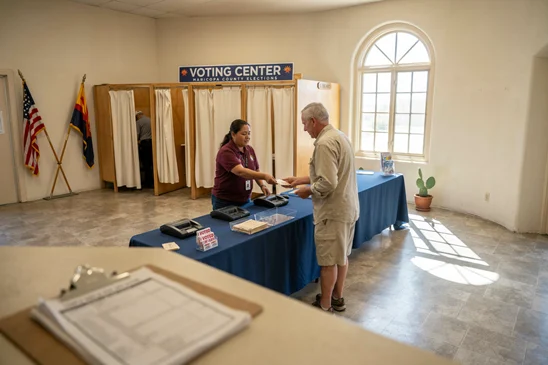
Arizona already has a regulated market for online sports betting, which went live in 2021. It’s seen solid traction since then, with operators working under licenses issued by the state’s Department of Gaming. But unlike the seven states pulling in monthly casino revenue, Arizona doesn’t currently allow real-money online slots or table games.
That hasn’t stopped the conversation. It’s only natural that other states start asking what a piece of that might look like for them. For Arizona, it’s not just a question of if, but when the political and regulatory appetite shifts.


What happens in the bigger markets can set the tone for what’s possible elsewhere. If states like New York or Illinois decide to join the online casino pool, and there are early signs they might, it could put more pressure on holdout states to reconsider their stance. That includes Arizona, where any move toward legalisation would likely require new legislation and coordination with tribal operators.
At the same time, Arizona regulators have already shown they’re keeping an eye on the space. Recent enforcement actions against unlicensed casino-style apps suggest the state wants to protect its gambling market, and possibly lay the groundwork for something more formal down the line.
For now, Arizona sits just outside the circle. But if online casino revenue keeps climbing, and more states get involved, it may not stay there for long.
Behind the headline numbers, what’s powering the U.S. online casino surge is an entire layer of digital infrastructure that rarely gets mentioned. The back-end systems that support licensed casino platforms, from payment tech to fraud prevention, are becoming a sector of their own, feeding innovation and supporting hundreds of third-party vendors.
Payments are a major part of the puzzle. Unlike retail casinos, online platforms rely on secure, high-speed digital transactions. That’s led to growth in partnerships with fintech companies offering verified, real-time deposit and withdrawal systems. With millions of users moving money through platforms monthly, speed and reliability aren’t just nice-to-have features, they’re essential.
Compliance tech is another fast-growing area. Every licensed operator in the U.S. must meet state-specific rules for everything from age verification to anti-money laundering. Many operators rely on external compliance providers that integrate directly with their platforms to handle live monitoring, automated reporting, and regulatory alerts. As more states adopt online gaming, demand for these services is rising, creating new momentum around the regulatory tech sector.
Equally important is identity and location verification. Before anyone can play, platforms must confirm who they are and where they are. This is not just for user protection, but to meet state-by-state legal requirements. That’s why geo-verification and KYC tools are so important. These services have become essential parts of the U.S. iGaming infrastructure, with several providers now expanding internationally, backed by the sector’s growth.
Fraud prevention adds another layer. With real money moving through accounts daily, platforms invest heavily in systems that detect unusual activity, flag multiple account attempts, and stop potential abuse of bonuses or payment flows. Many of these tools are built using machine learning and behavioral analytics, often provided by U.S.-based firms that have grown alongside the industry.


Online casinos operate within a much broader digital framework that extends well beyond the games themselves. They’re built on systems that connect finance, data security, and real-time automation. These all play a major role in keeping platforms running smoothly. For states like Arizona, expansion into online casinos means entering an ecosystem already driving growth across multiple tech and service industries.